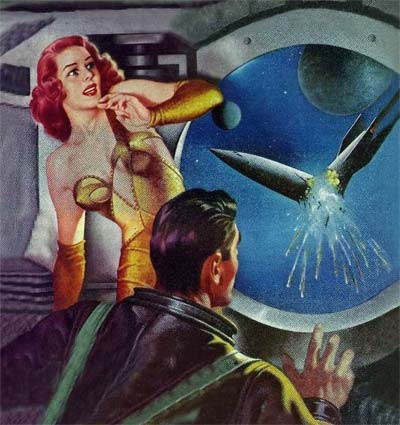
 THE FUTURE OF THE DISTANT PAST
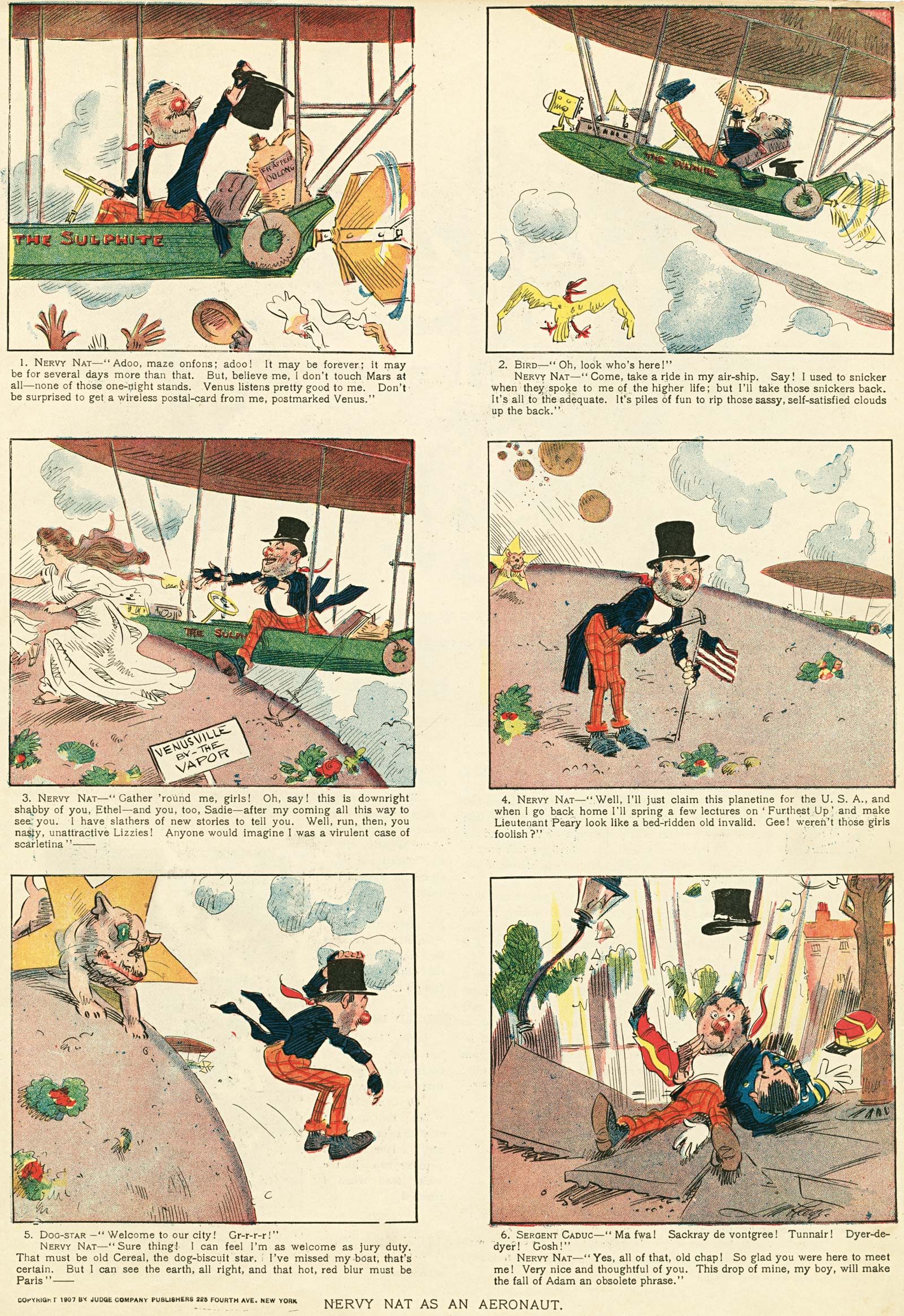
Last week, I posted an article on James Montgomery Flagg’s “Nervy Nat”, a comic strip that ran in Judge magazine from 1903 to 1907. The page below was part of that post. It depicts a trip to Venus by zeppelin. For the past few days, I’ve been thinking about this comic and what it says about the way mankind’s vision of the heavens has changed in the past century.
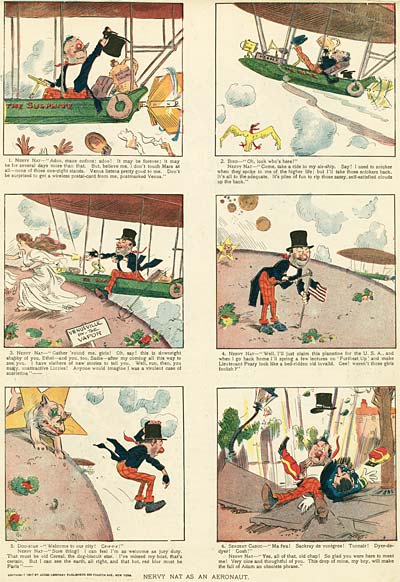
In previous generations, outer space was thought of in terms of symbolic mythology. Mars was the god of war- Venus, the goddess of love. The stars in the sky formed the shapes of the signs of the Zodiac. The concept of traveling to another planet was unthinkable- as fantastic as the trip to the underworld, purgatory and paradise in Dante’s Divine Comedy. When people of the past envisioned what the inhabitants of other planets might be like, they conceived of gods and spirits who lived lives like those of the heroes and villains found in fables and ancient myths.
In Disney’s 1957 television program, “Mars And Beyond”, director Ward Kimball explored this concept…
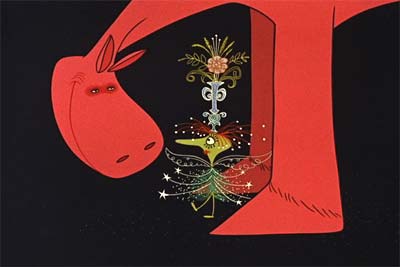
People On Other Planets
“Mars & Beyond” (Disney/1957)
(Quicktime 7 / 13.3 MB)
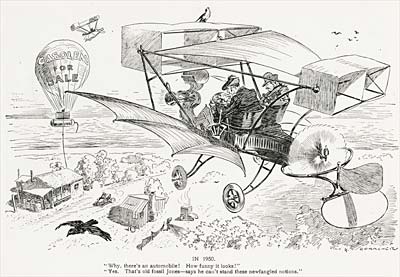
Around the turn of the 20th century, mankind’s conception of the world underwent a huge shift. Advances in technology were occurring at an unprecedented rate. These changes affected the way people lived their lives and the way they thought about their place in the universe. Technology was enabling people to travel faster, further and more comfortably than ever before. For the first time, ordinary folks were able to travel all around the globe. People began to think there might be no limit to the number of amazing changes technology was going to bring to them in the next hundred years.
They were right.
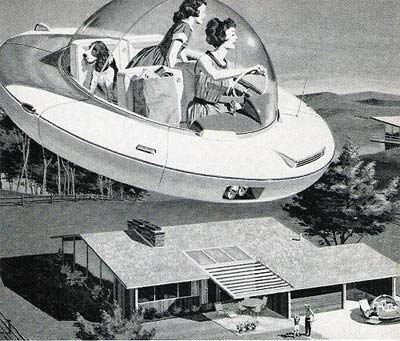
By the midpoint of the 20th century, things that had seemed unthinkable a generation before had become commonplace… trains, planes and automobiles carried people to every point on earth. Electricity powered a wide range of household appliances. Television, phonographs and radio enabled pictures and sound to be captured and broadcast to every household in America. The lives led by the average family in the year 1950 would have seemed like wild, futuristic dreams to the generations that preceded them.
But society wasn’t through dreaming…
CHESLEY BONESTELL’S TRIP TO VENUS
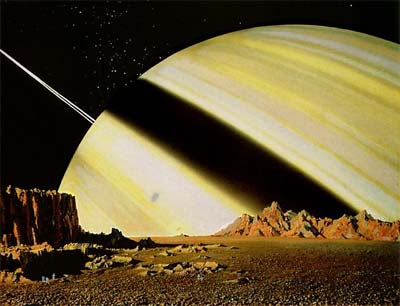
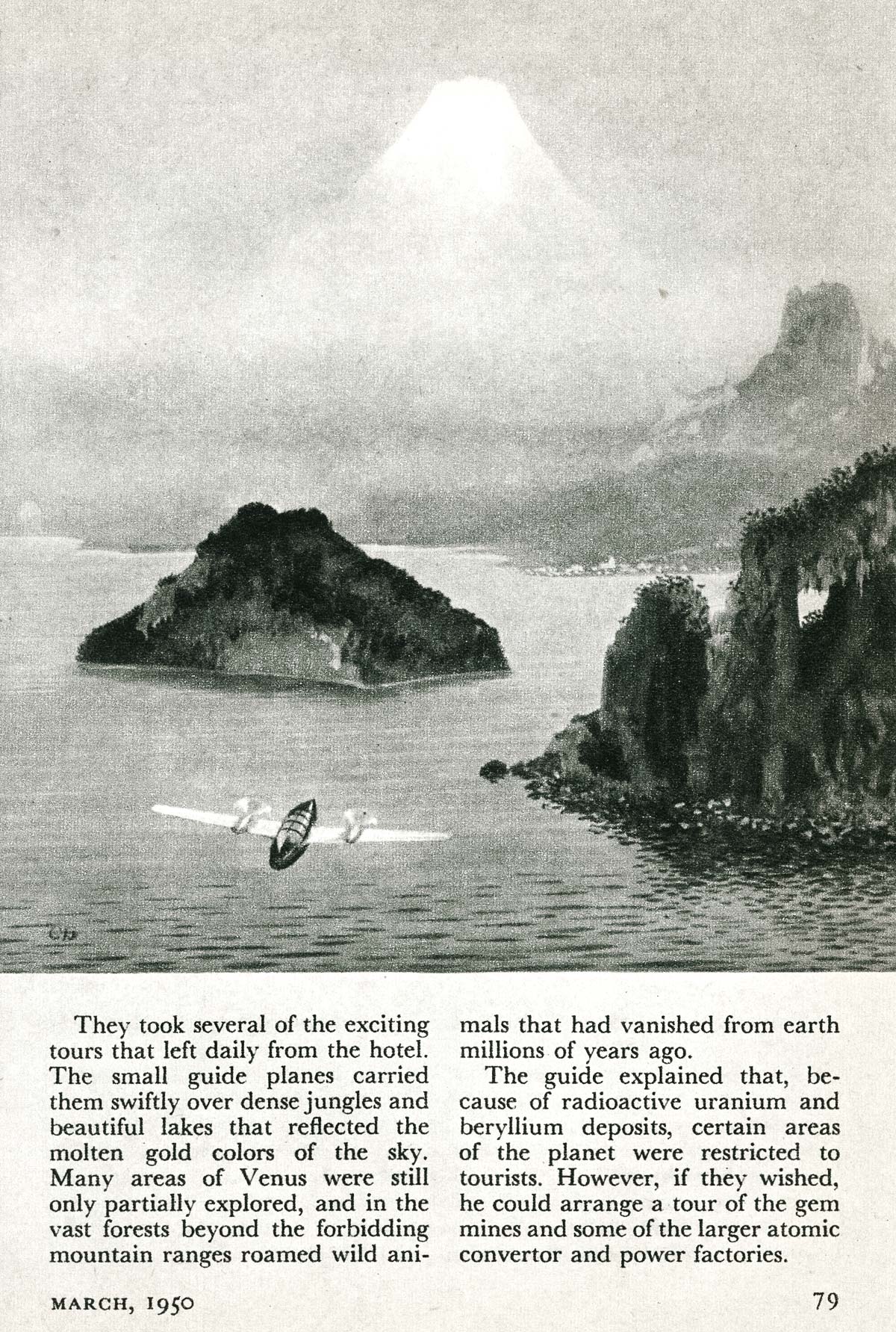
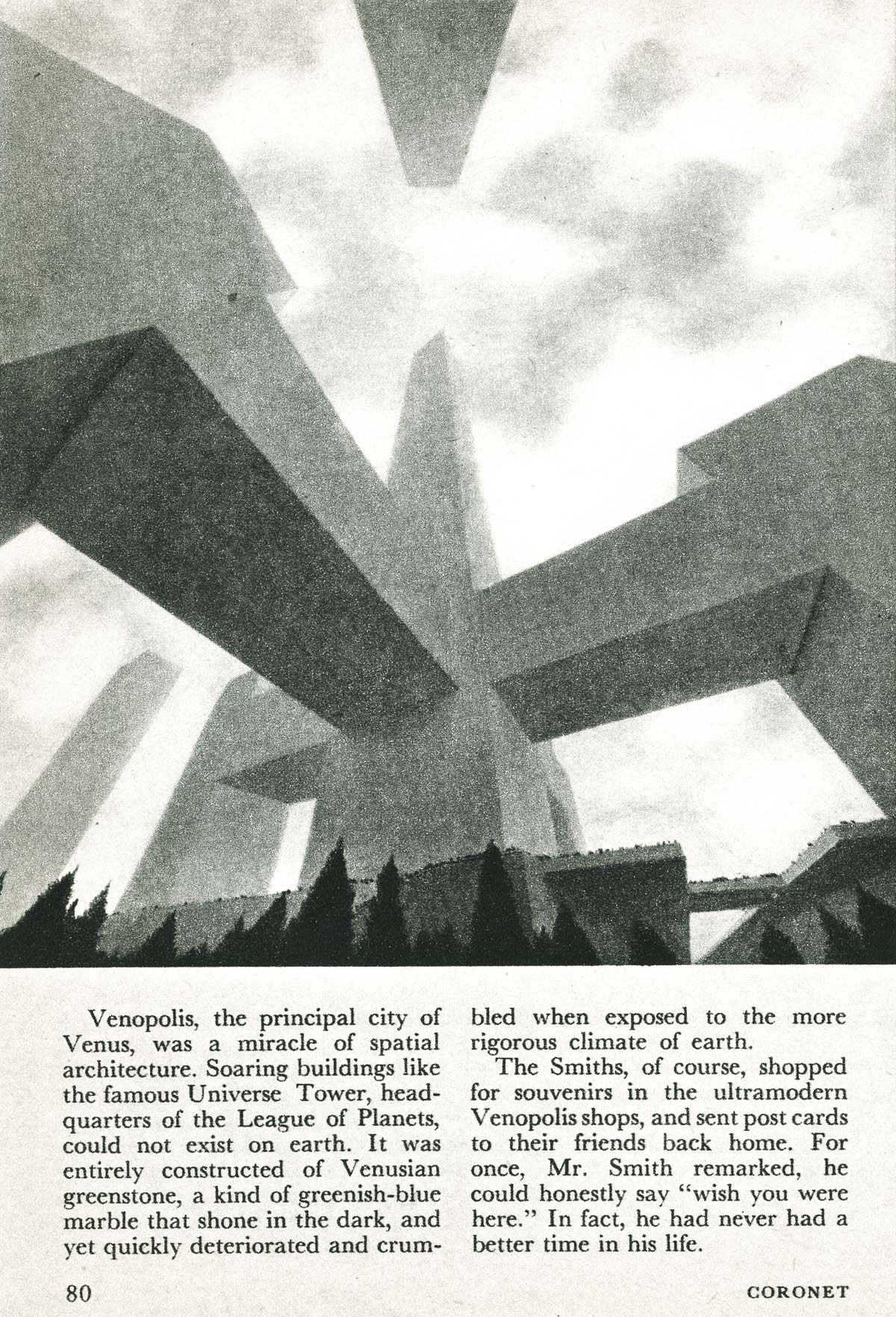
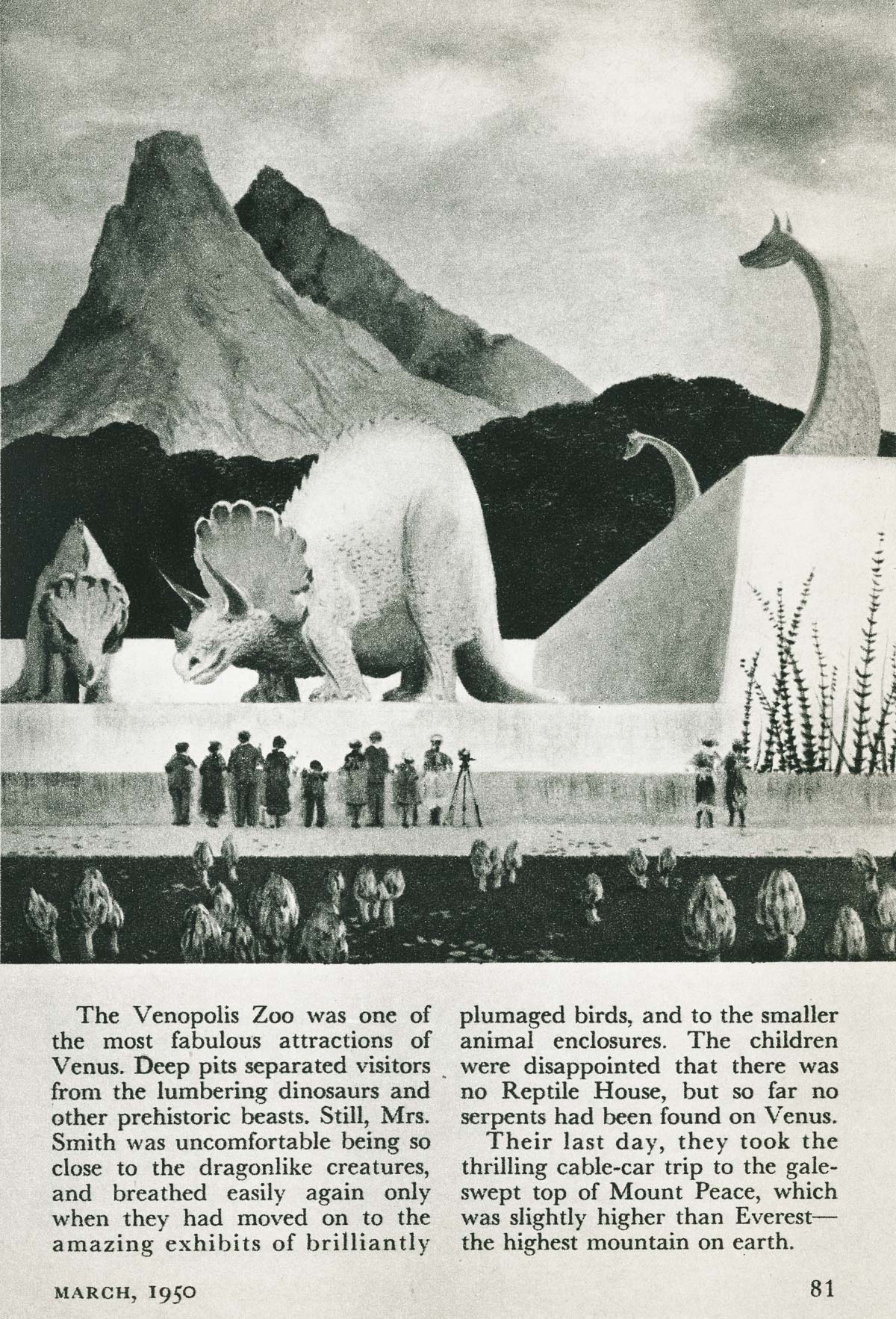
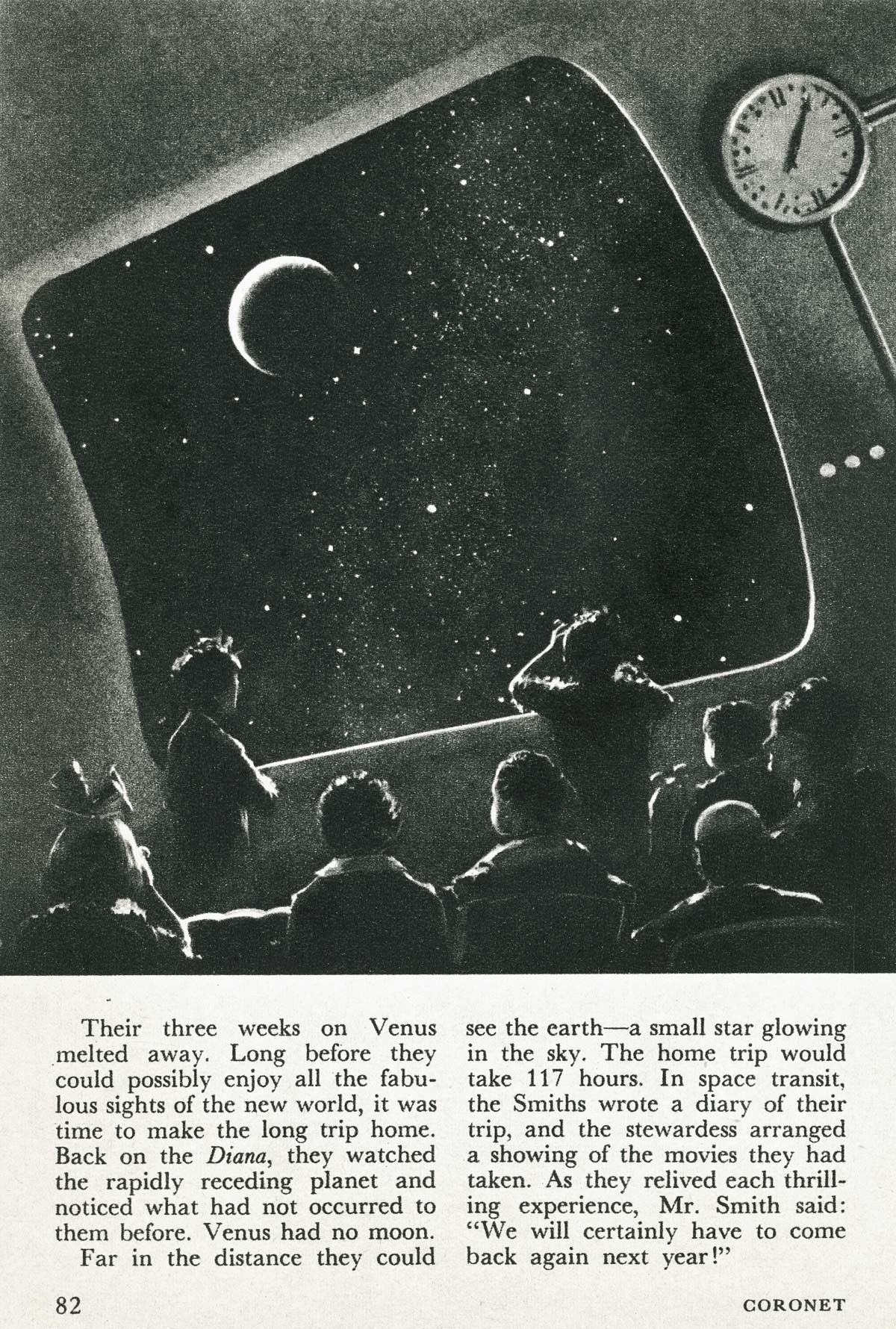
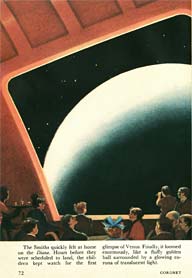
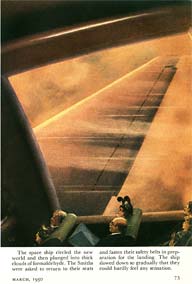
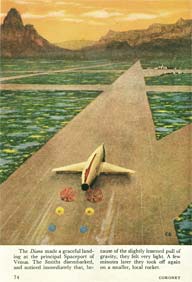
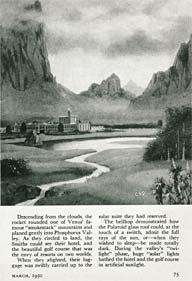
Chesley Bonestell was trained as an architect. He designed the art deco facade and gargoyles for the Chrysler Building in New York, and was the first to create an architectural rendering of what the Golden Gate Bridge would look like spanning the opening of San Francisco Bay. In the late 30s, he created matte paintings for movies like Citizen Kane and The Hunchback of Notre Dame. But an interest in astronomy soon led him to his most well known work: illustrations depicting space travel.
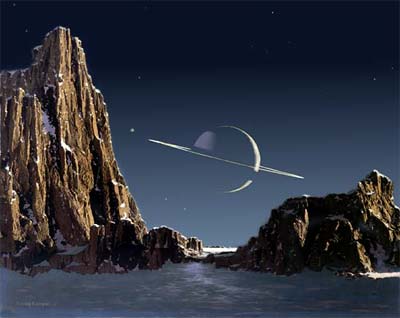
In 1944, Bonestell created photorealistic paintings of Saturn for Life magazine that caused a sensation. This led to a series of illustrated articles which were eventually collected in an anthology titled, The Conquest of Space. Bonestell worked with George Pal as a designer on Destination Moon and War of the Worlds.
When the famous scientist, Wernher Von Braun was preparing a series of articles for Colliers on the topic of manned space exploration, Bonestell was his first pick to illustrate. Von Braun had dedicated himself to informing the American public that space travel was not just a dream- it could become a reality- all that was needed was money and will. Remember those two things… I’ll be coming back to them in a moment.
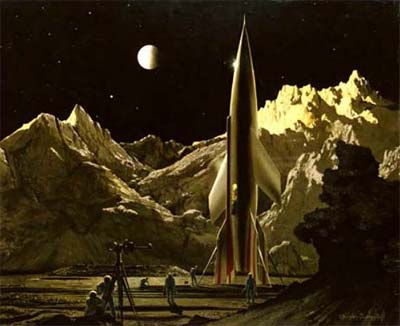
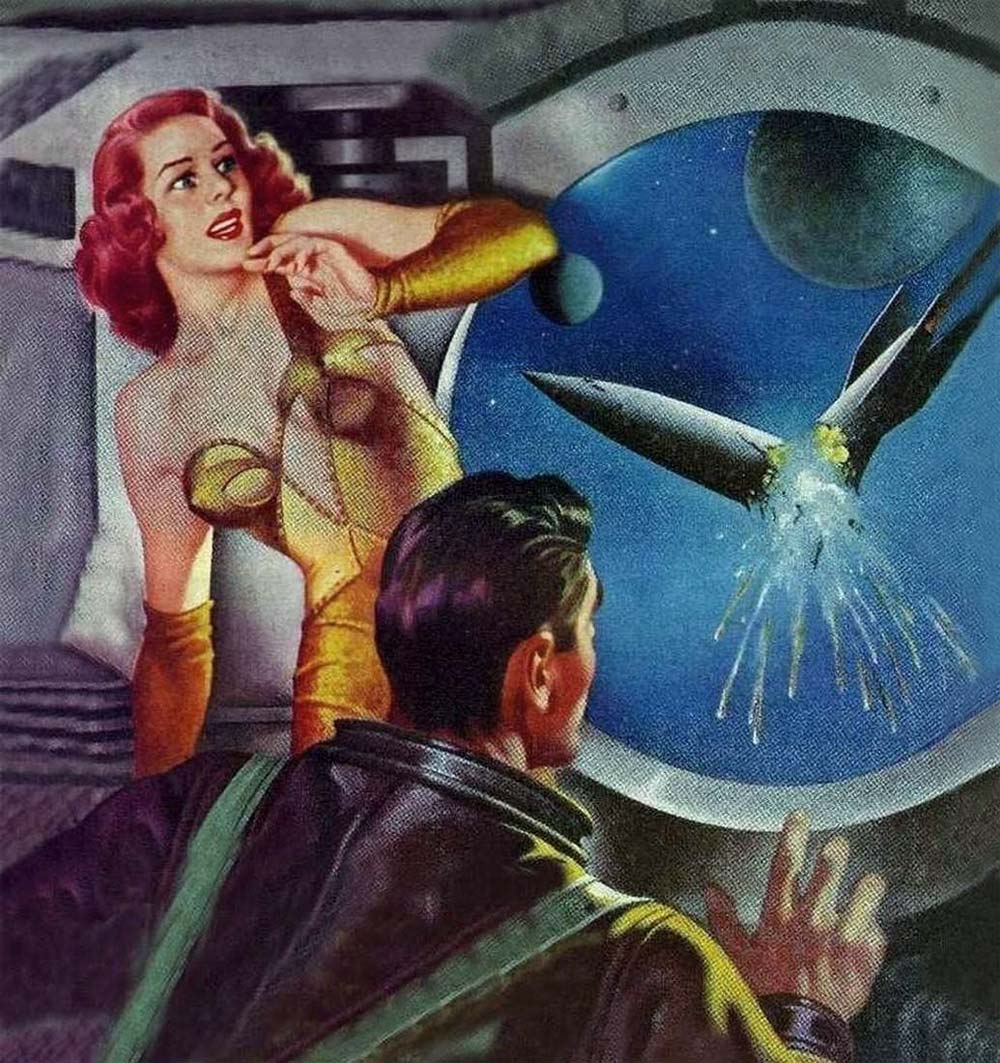
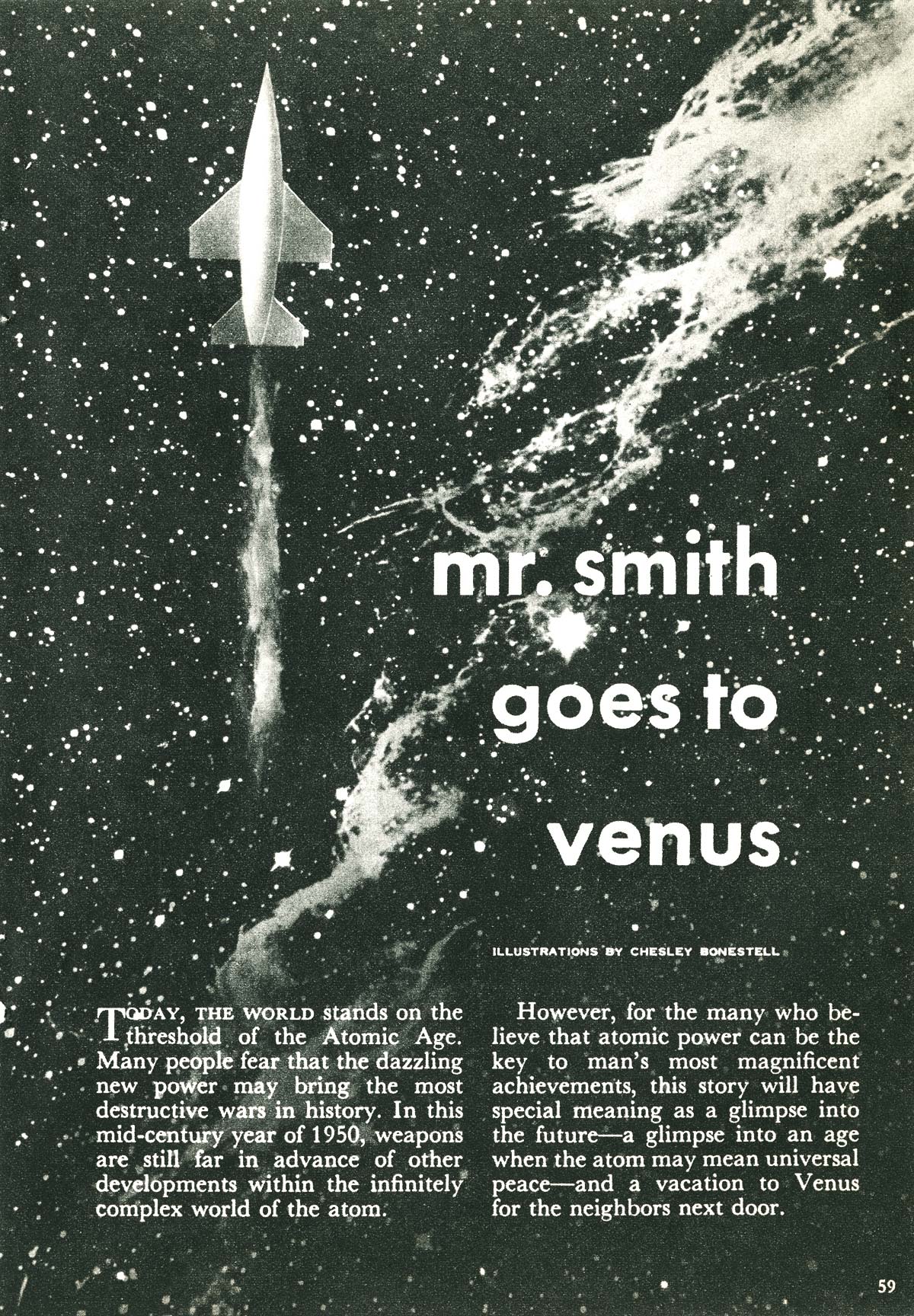
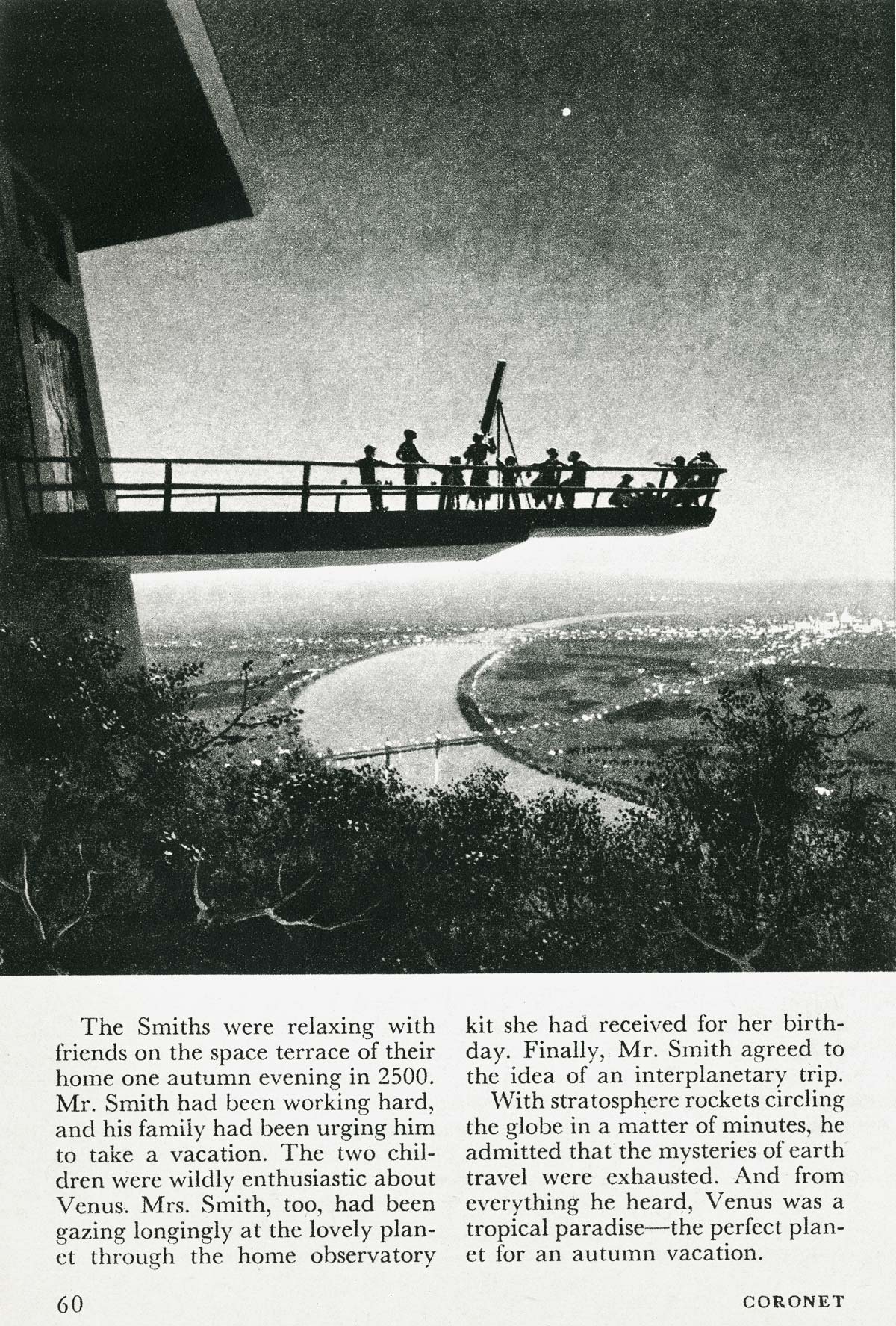
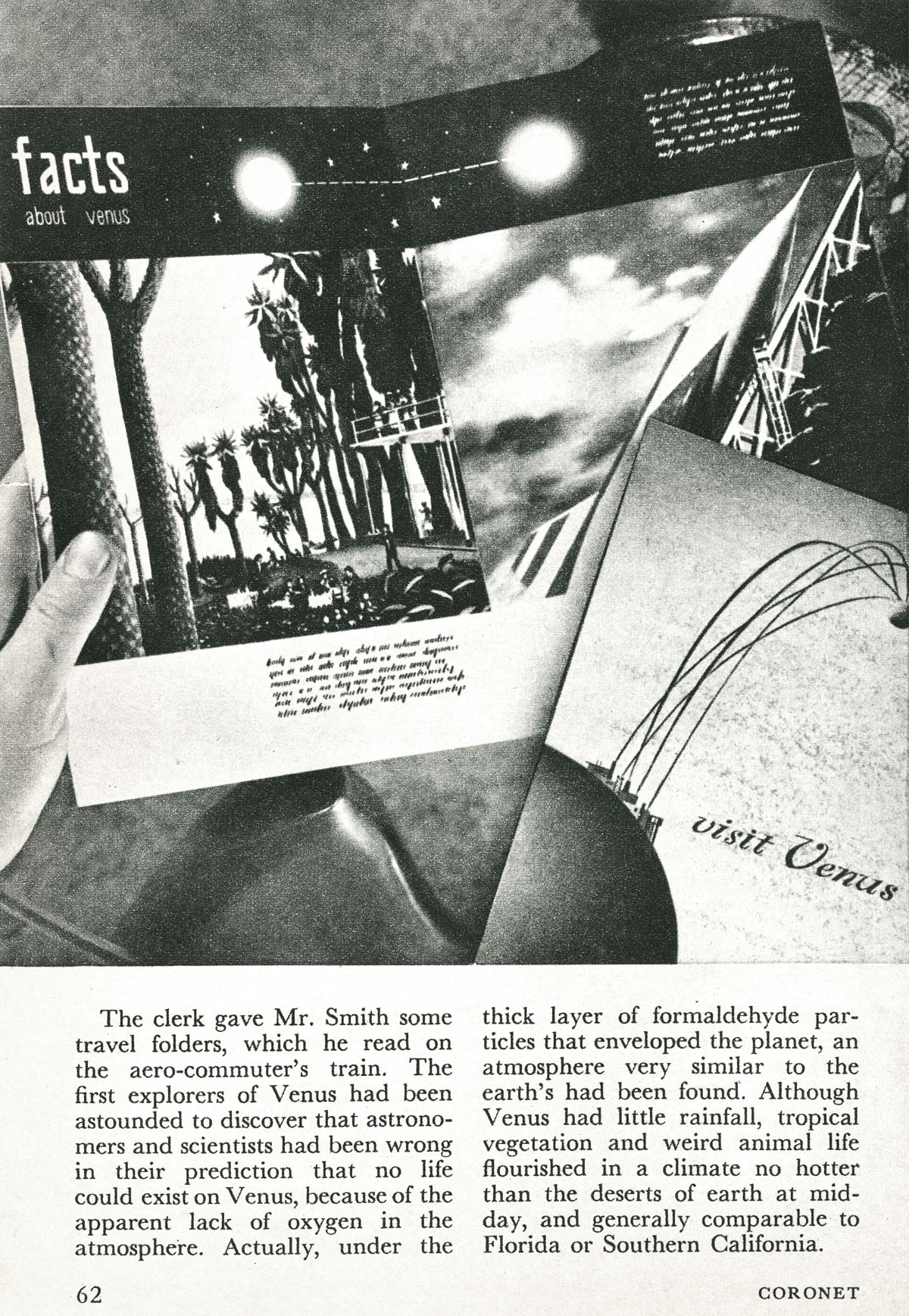
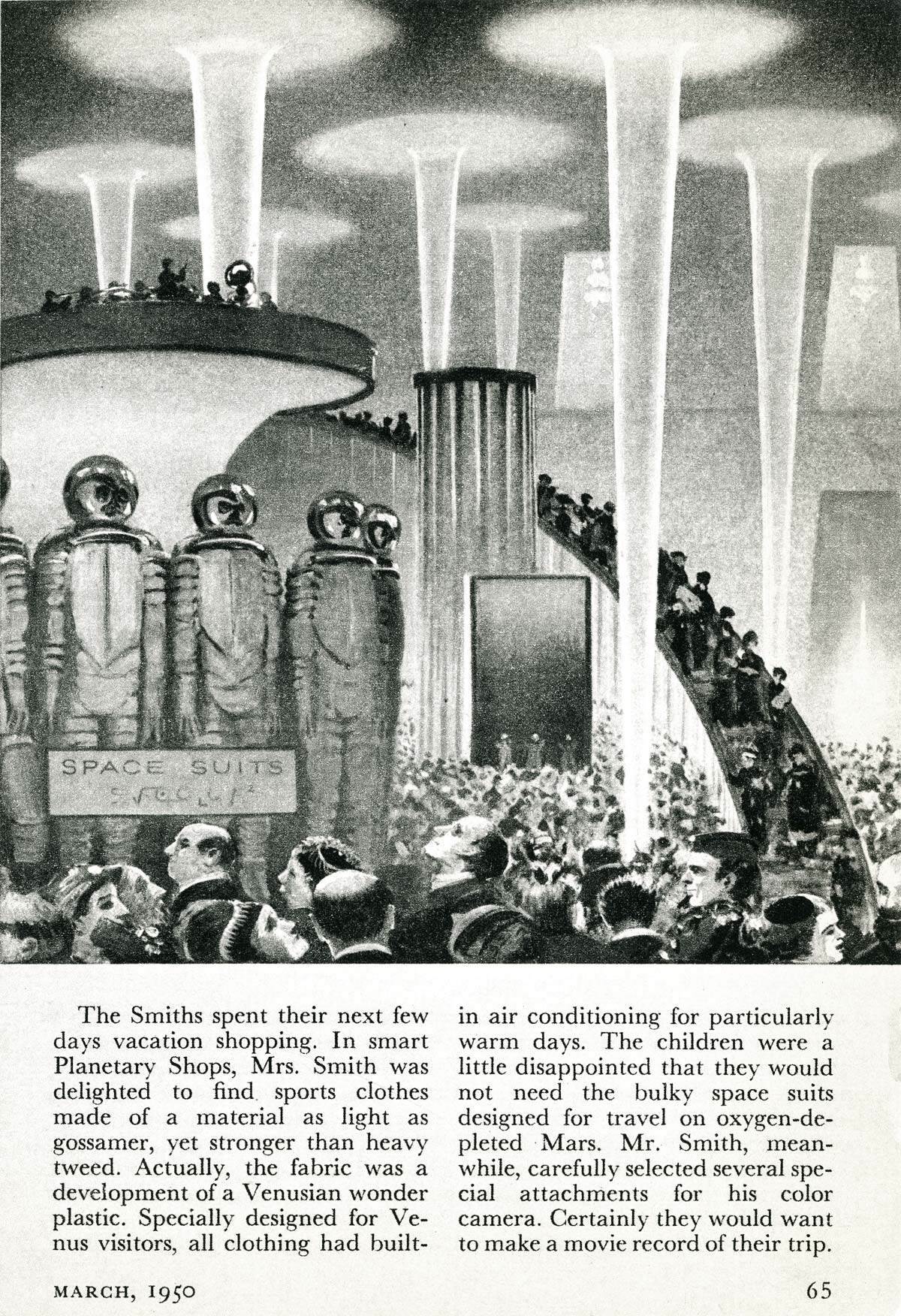
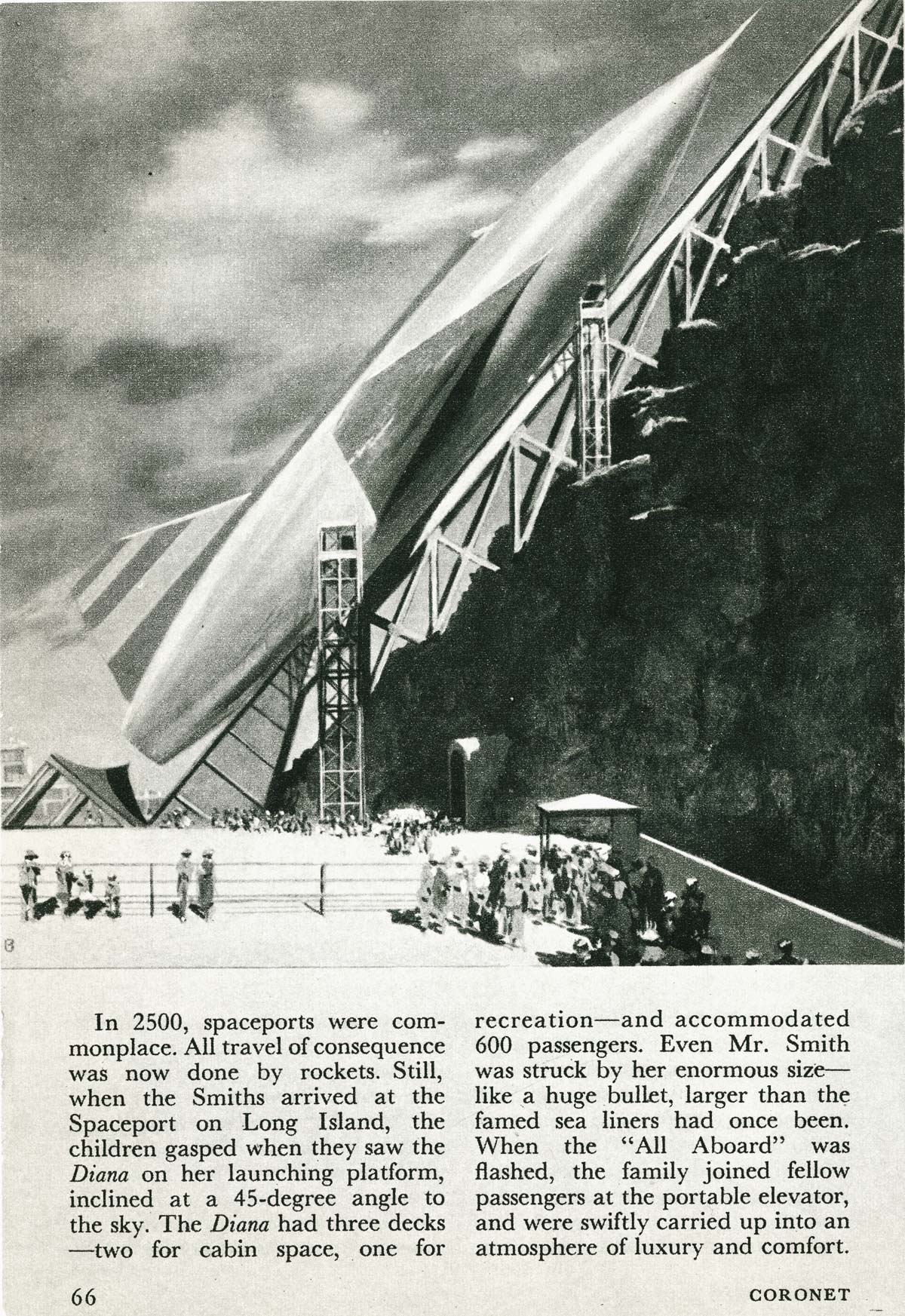
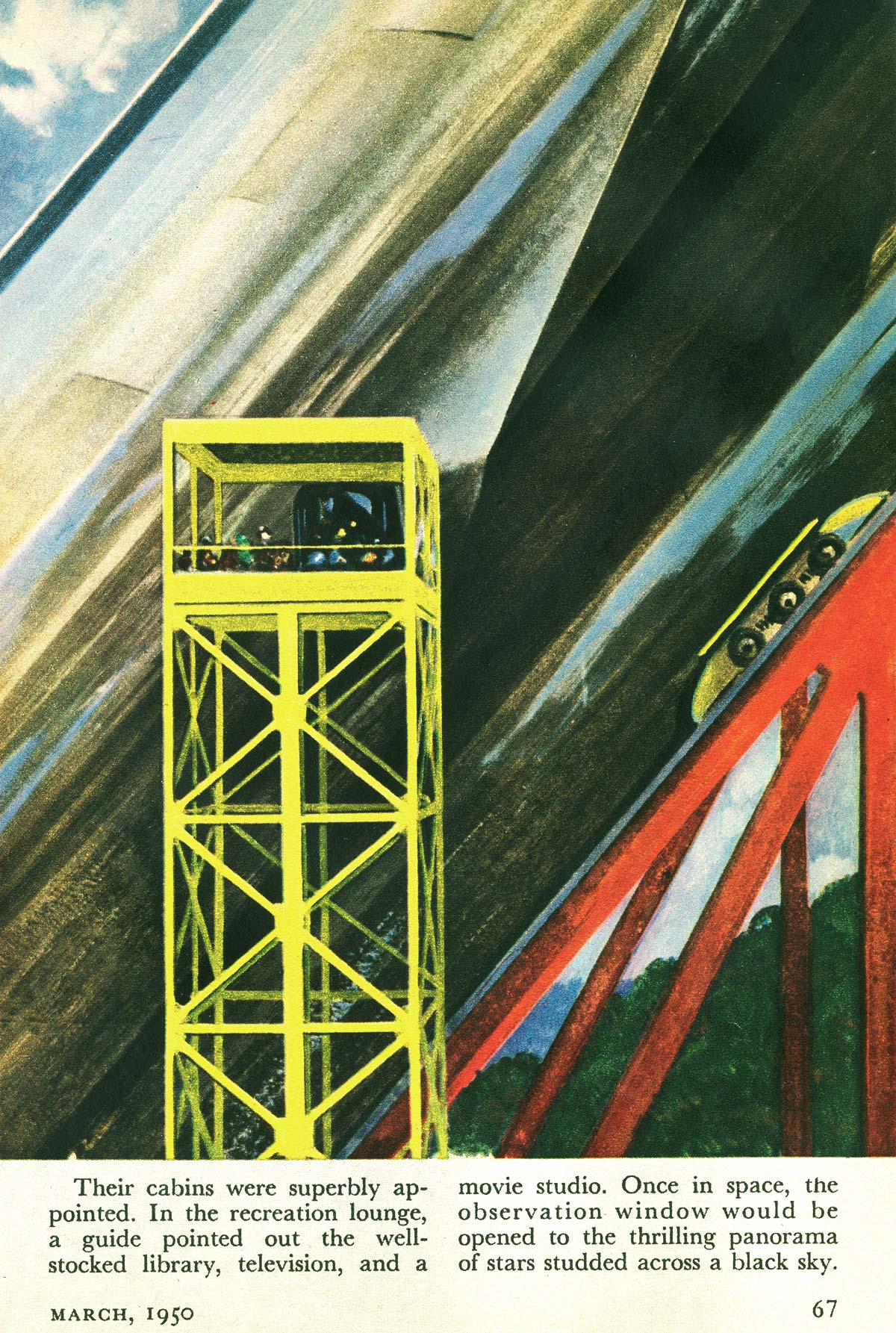
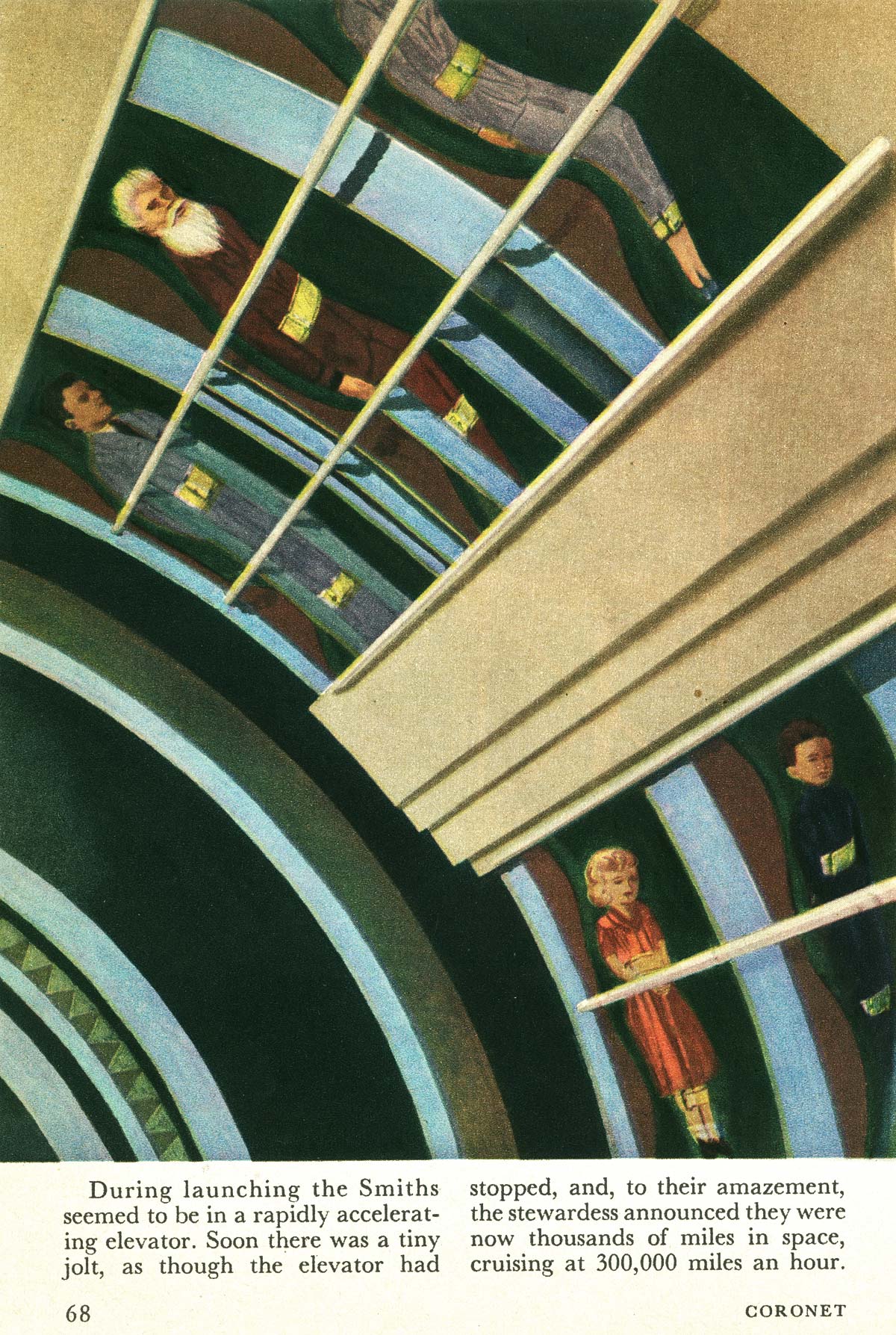
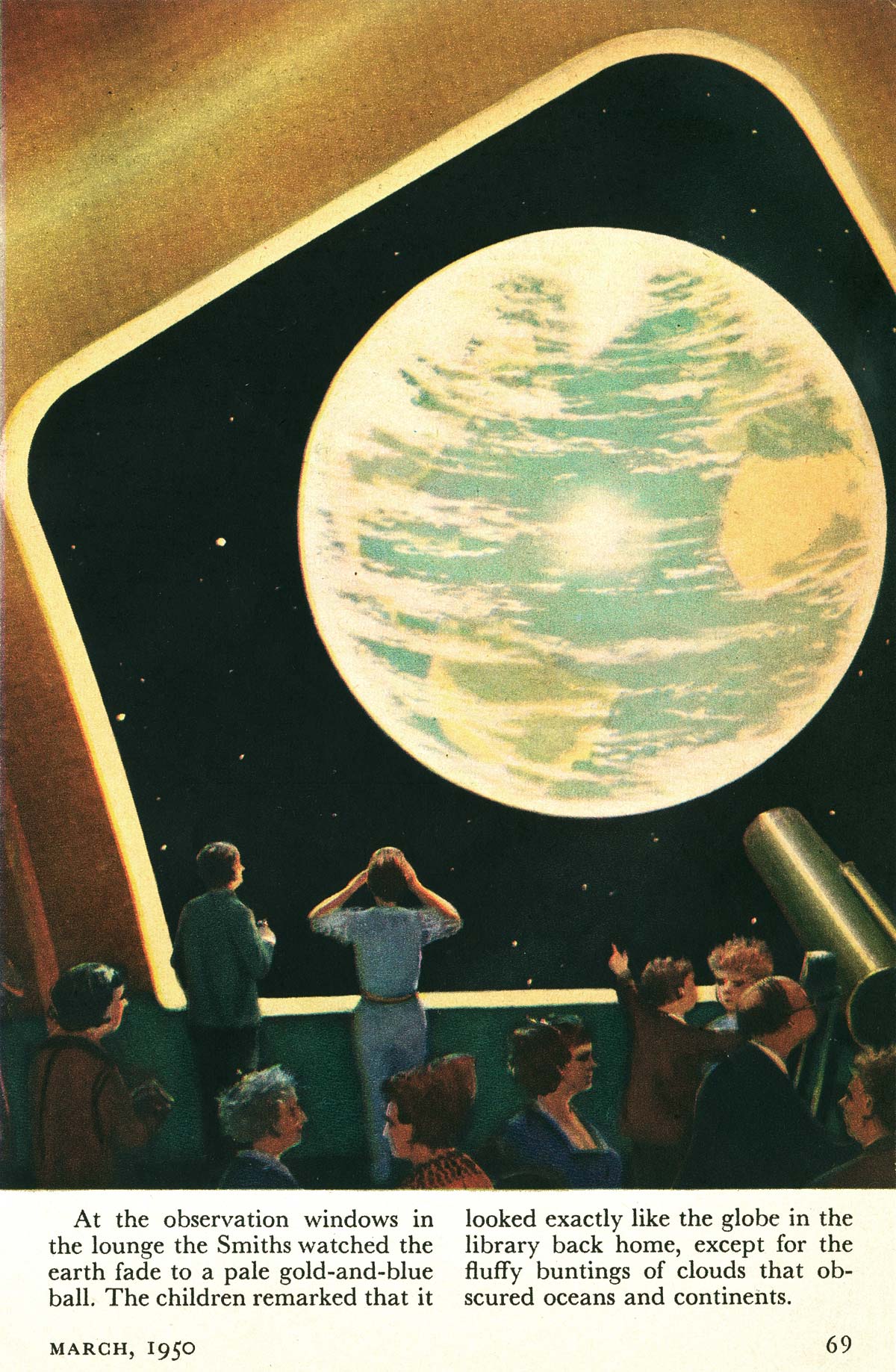
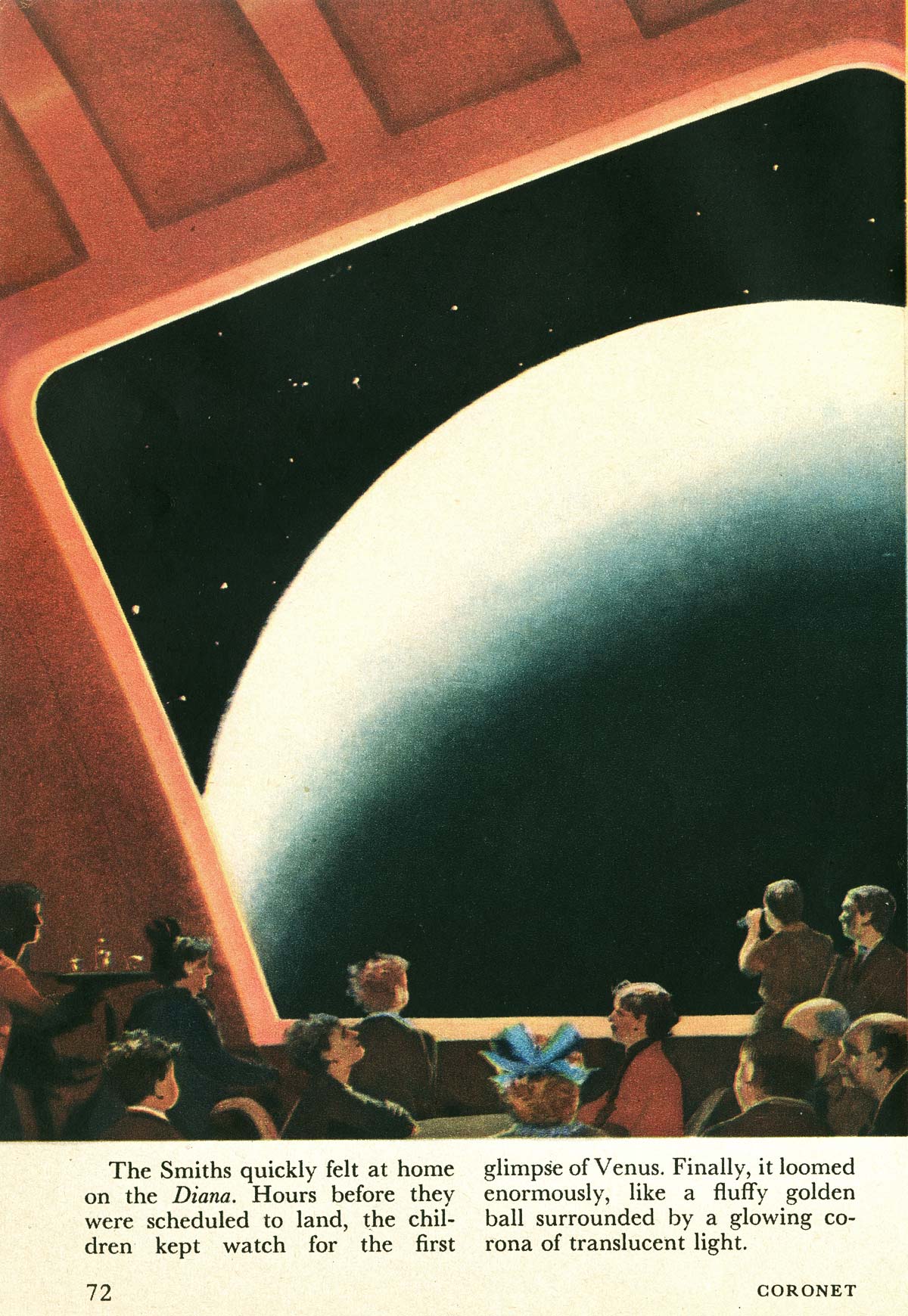
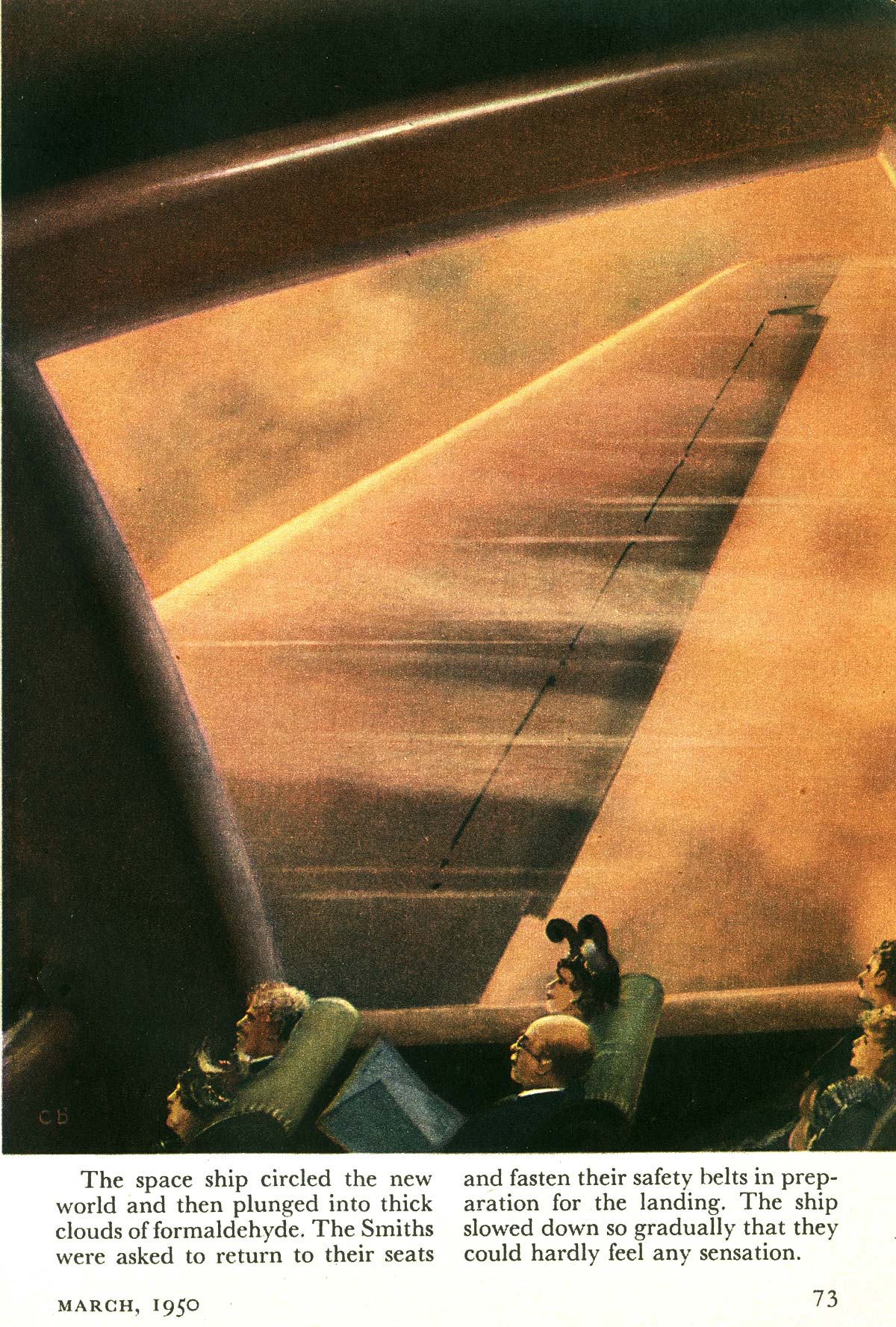
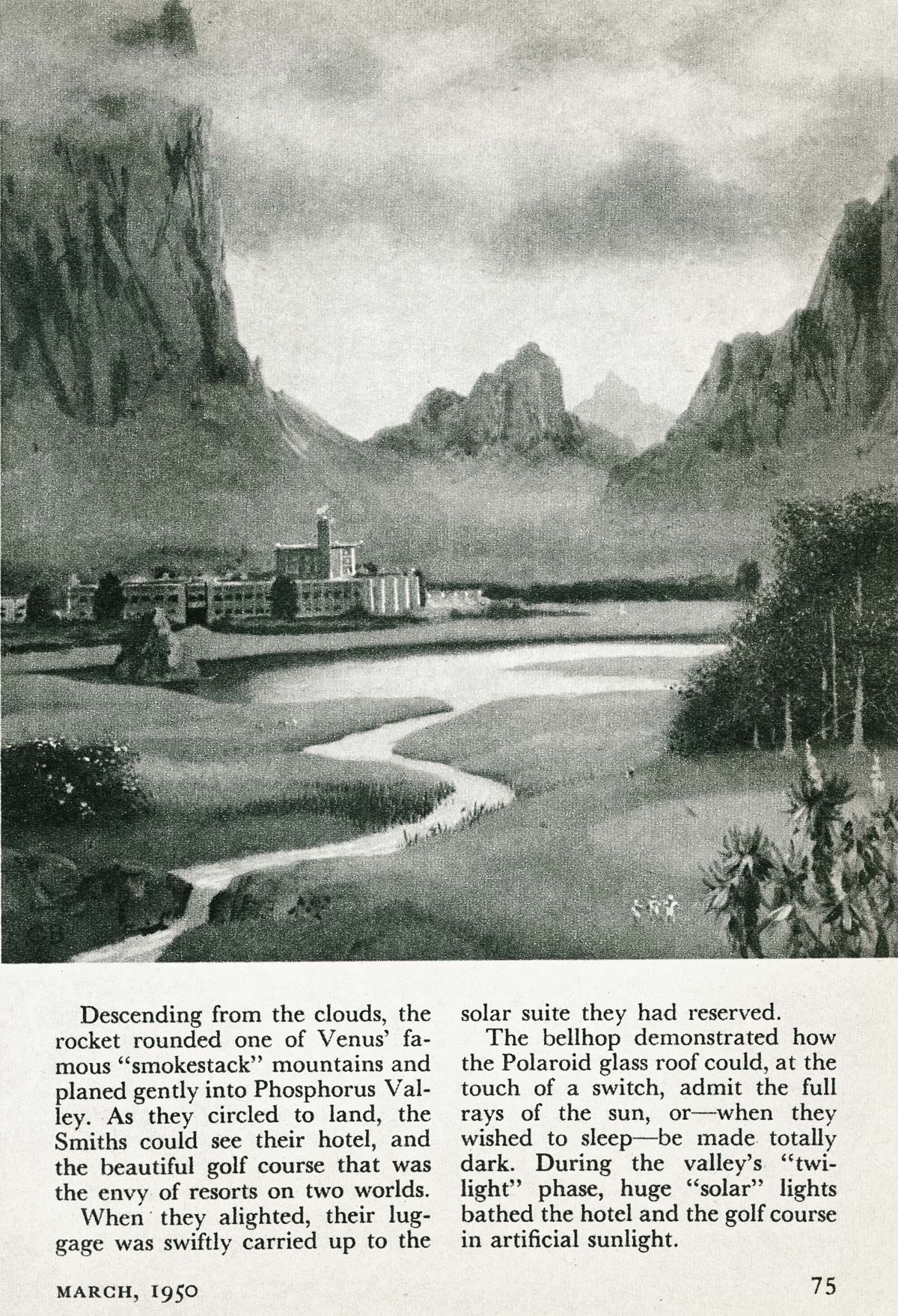
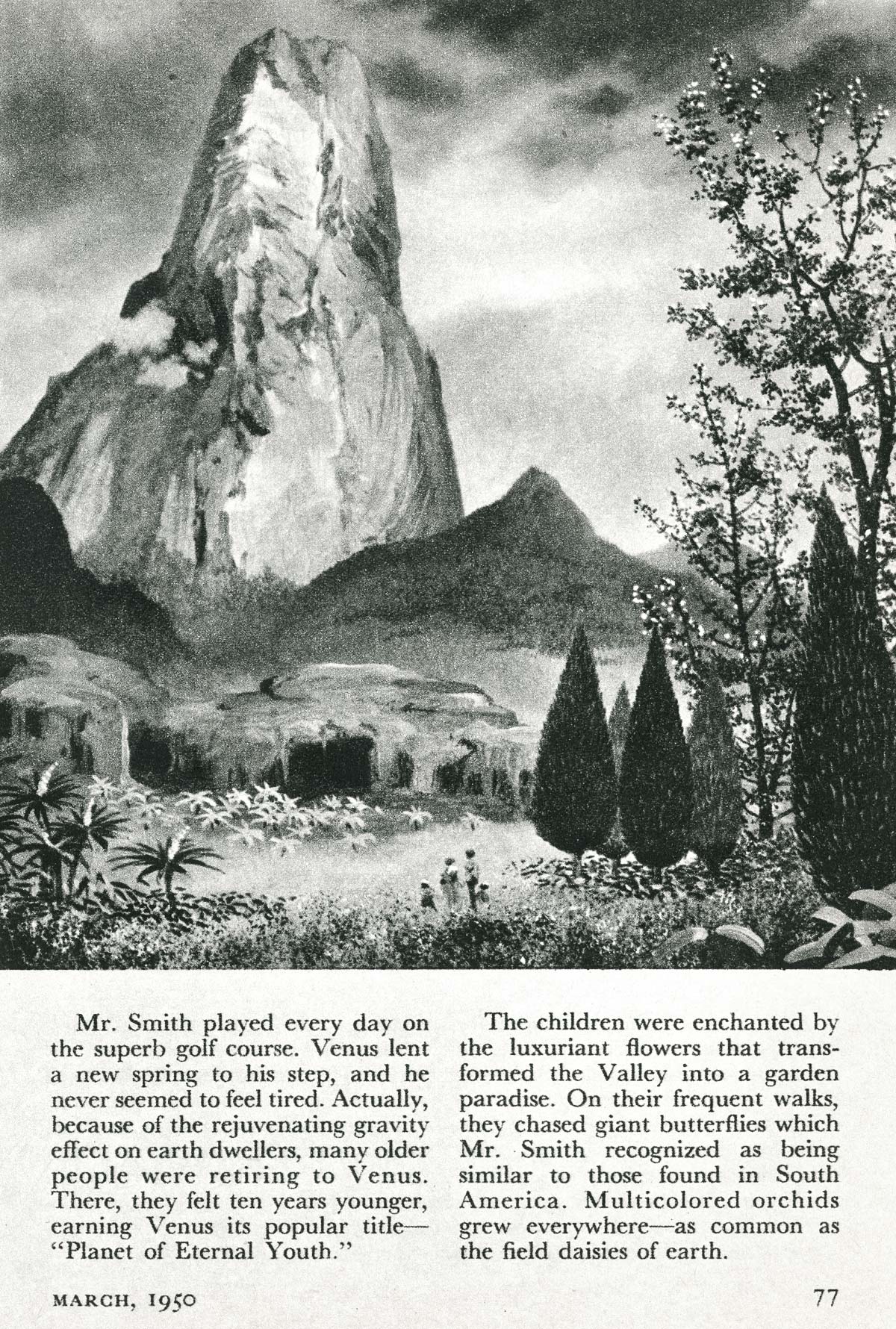
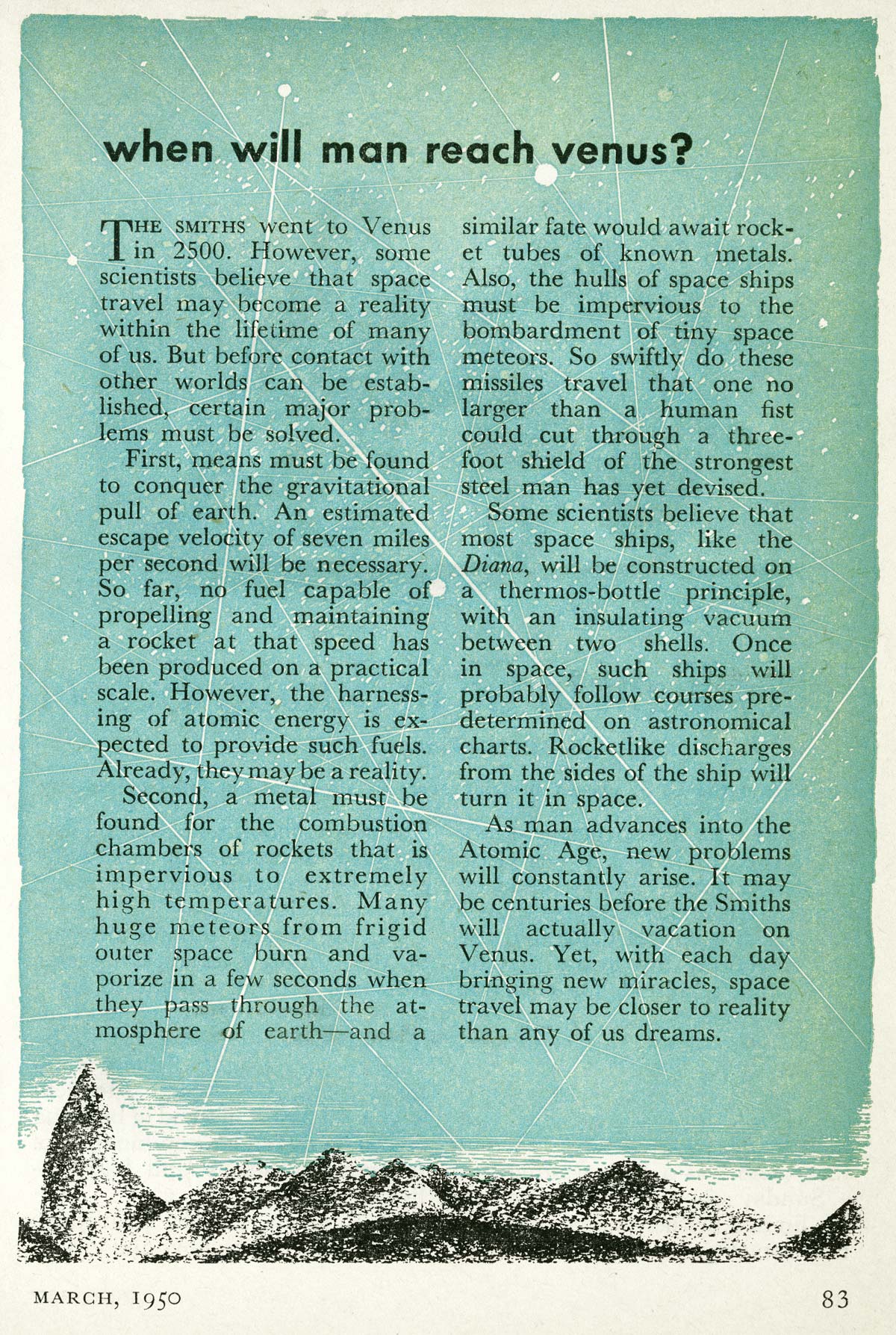
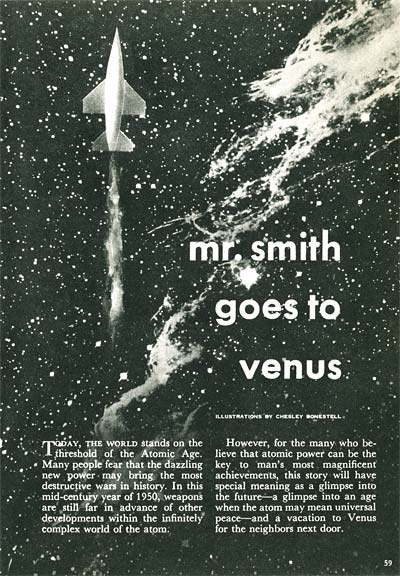
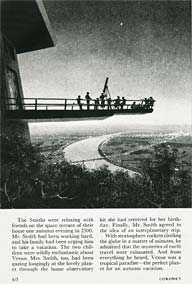
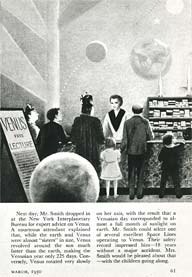
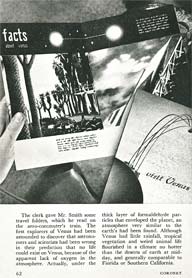
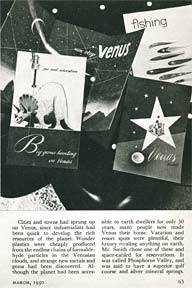
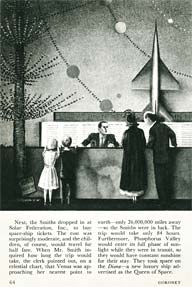
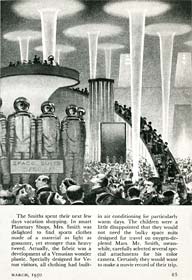
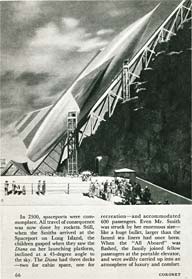
Here is an article from the March, 1950 issue of Coronet magazine. Illustrated by the “father of modern space art”, Chesley Bonestell, this fantastic vision of a vacation trip to Venus in the year 2500 doesn’t just offer suggestions for what sort of technology might exist; it shows how that technology might be incorporated into our everyday lives.
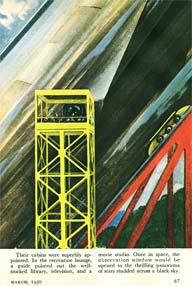
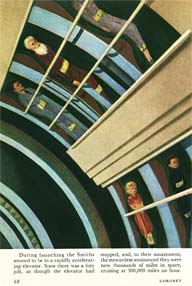
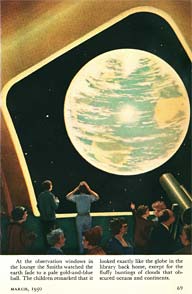
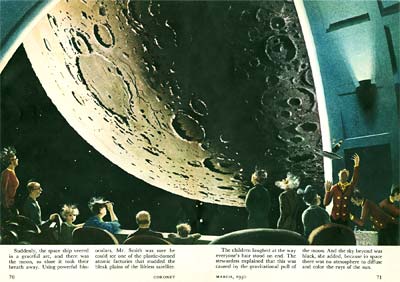
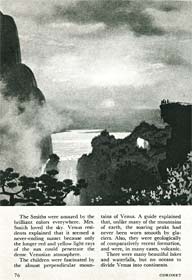
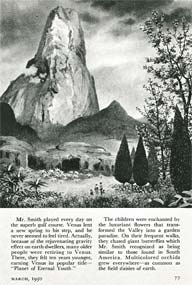
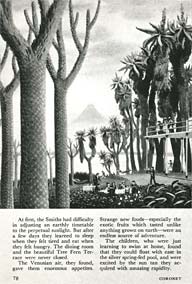
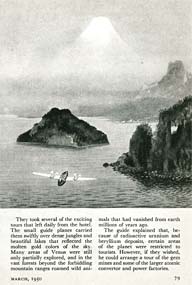
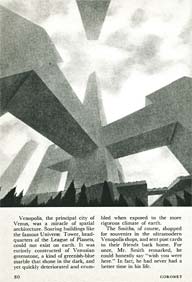
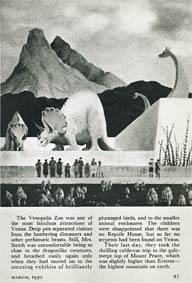
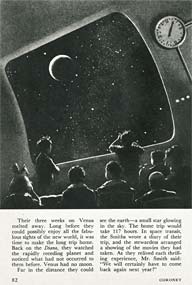
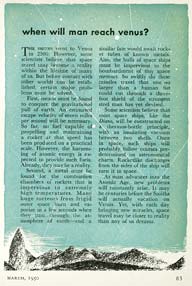
ANIMATION EXPLORES DISTANT WORLDS
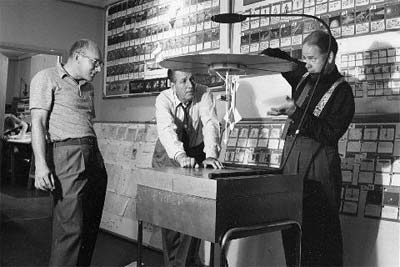
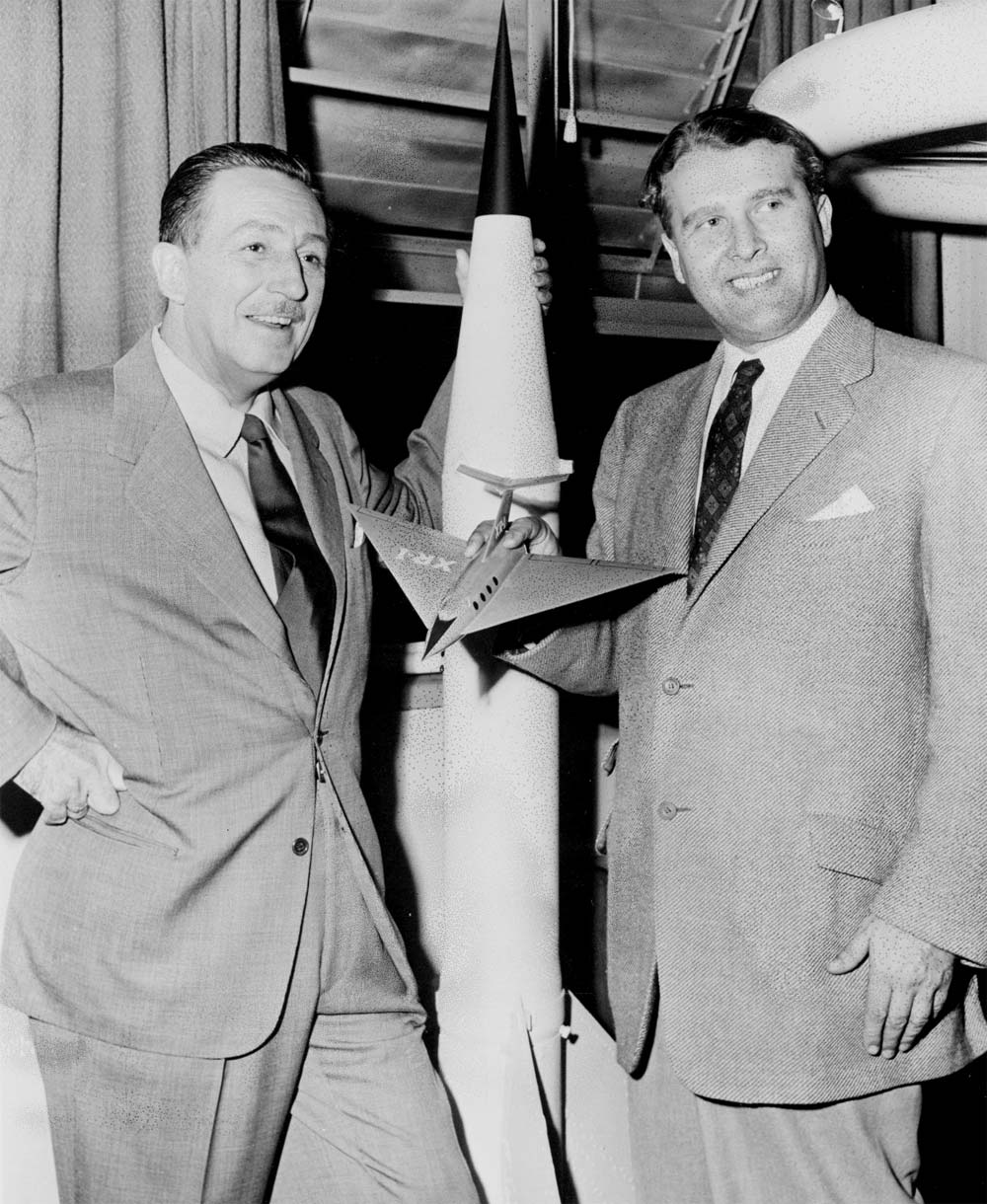
Director/animator Ward Kimball (far right) saw Bonestell’s illustrations in Colliers and encouraged Walt Disney to produce a television program based on Wernher von Braun’s vision of the future. Disney, Kimball and von Braun came together to create three episodes of the Disneyland television series- “Man in Space”, “Man and the Moon” and “Mars and Beyond”.
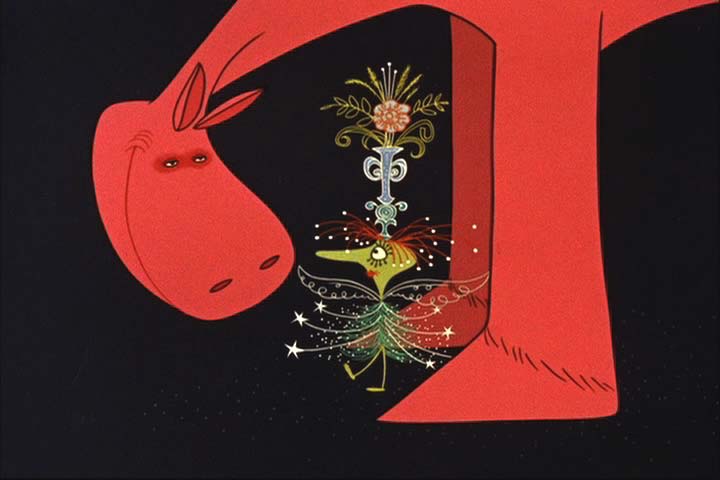
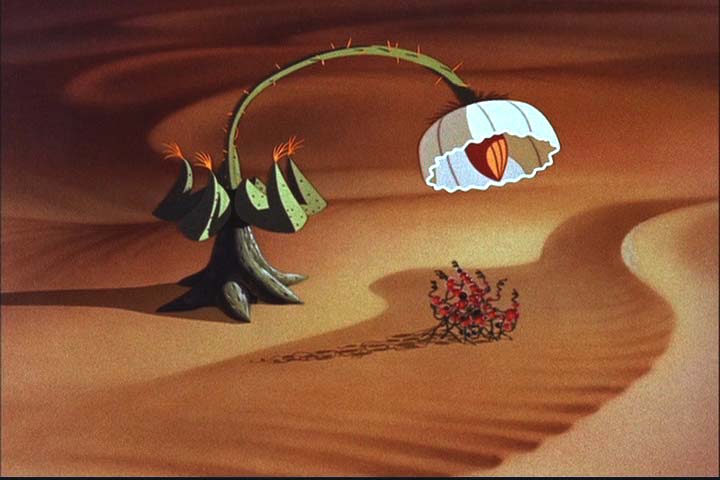
In this segment from “Mars and Beyond” the Disney animators speculate on the strange forms alien life might take…
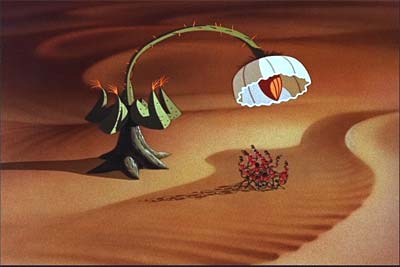
Life Forms On Other Planets
“Mars & Beyond” (Disney/1957)
(Quicktime 7 / 11 MB)
It’s impossible to overstate how important the Disney space shows were to the American space program. President Dwight Eisenhower requested a copy of “Man in Space” to screen for his top military officers to convince them that space travel was indeed possible. Six months after “Mars and Beyond” aired, congress passed the National Aeronautics and Space Act which established NASA. The launch of Russia’s Sputnik satellite in October 1957 might have been the immediate impetus for the swift passage of the funding for the program, but the groundwork for the concept behind NASA was laid by Wernher von Braun and Walt Disney.
THE MEN WHO TOOK US TO THE MOON
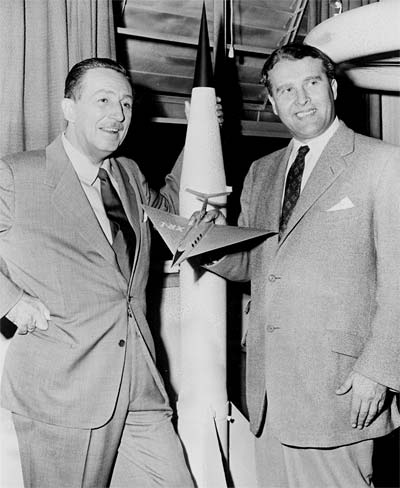
Walt Disney and Wernher von Braun
Clearly, scientists like Wernher von Braun and politicians like Eisenhower and Kennedy were responsible for America’s space program. But it took more than science and funding to put man on the moon. It took will. The awe inspiring imaginary vistas of Chesley Bonestell and the fantastic animation of Ward Kimball and Walt Disney became our collective dreams. The day after “Man in Space” aired, every man, woman and child in America had the same fantasy in their head- the burning desire to go to the moon. The visions created by these artists and filmmakers became reality because they crystallized and energized our collective will.
Animation has the power to mobilize society to do great things.
THE FUTURE OF THE PRESENT
If you’ve read through this half century of history I’ve laid out for you, I’m going to reward you by poking pins in a few of your childhood sacred cows- the futuristic visions of the latter part of the 20th century.
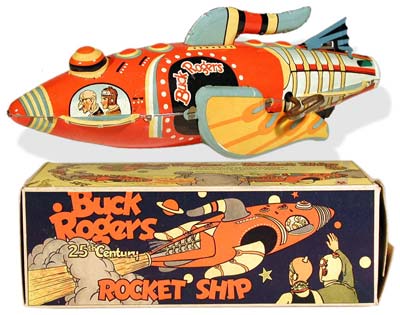
"So Bad It’s Good?"
I’ve read several places on the internet about the concept of retro futurism. This is one of those post-modern, ironic ideologies that looks back at the visions of the future from the past as some sort of quaint, naiive thing. The problem with this outlook is that it ignores the fact that the fantasies it mocks were responsible for putting man in space.
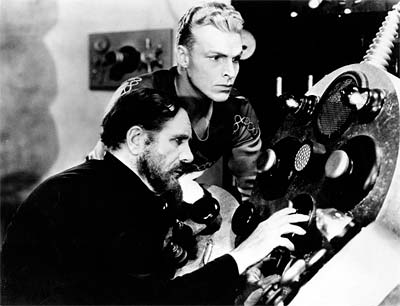
"Obsolete Future?"
If the visions of Von Braun, Disney and Bonestell are now considered "camp", what sort of imagery have we replaced it with?
Our modern conception of futuristic fantasy has been dragged down to banal reality by people with nowhere near the imagination of the futurists of the past. If movies represent our collective dreams, then let’s look at what we are dreaming about…
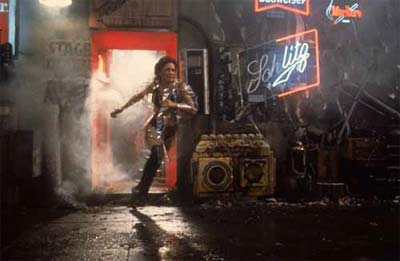
"Today’s Future?"
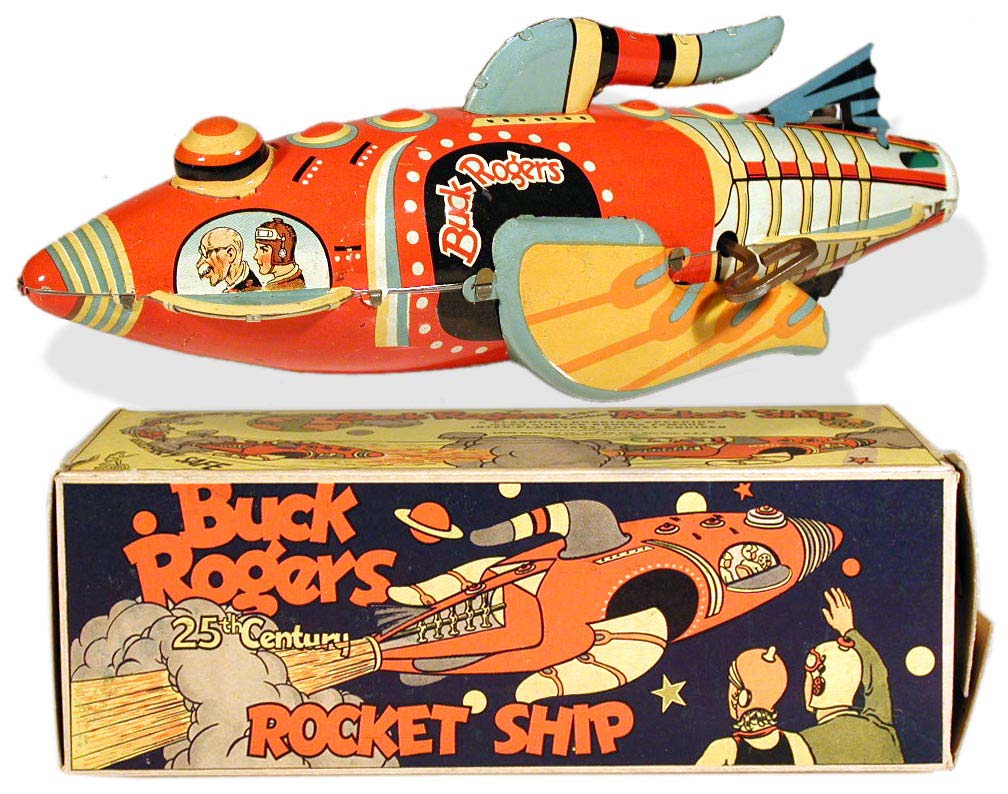
Instead of idealistic heroes like Buck Rogers and Flash Gordon, space is populated by jaded, long-haul truckers like Han Solo and the squabbling crew of the Nostromo in Alien. Stanley Kubrik succeeded in turning a space station into a boring 21st century DMV waiting room in 2001. The world of the future isn’t a beautiful city of glass and steel where people live in climate controlled safety- in Blade Runner it’s a crowded downtown ethnic marketplace with weather that would make Seattle seem like a tropical paradise.
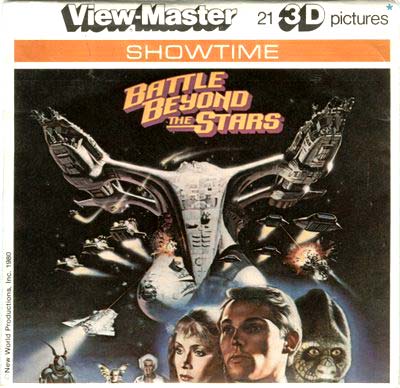
"Has our imagination gone soft?"

 Space ships are no longer sleek, chrome plated rockets with exotic tail fins- they’re flying shoeboxes with a bunch of dirty breakfast cereal glued all over them. Robots aren’t complex humanoid machines whose prime directive is assisting their owners in any way they can- they’re trash cans on wheels that make annoying beeps and blorps, or time-traveling thugs in leather jackets riding motorcycles.
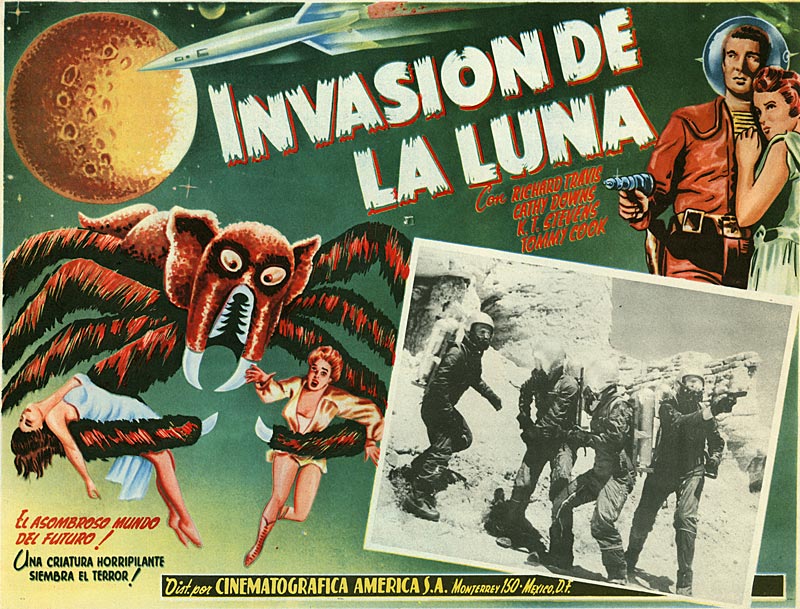
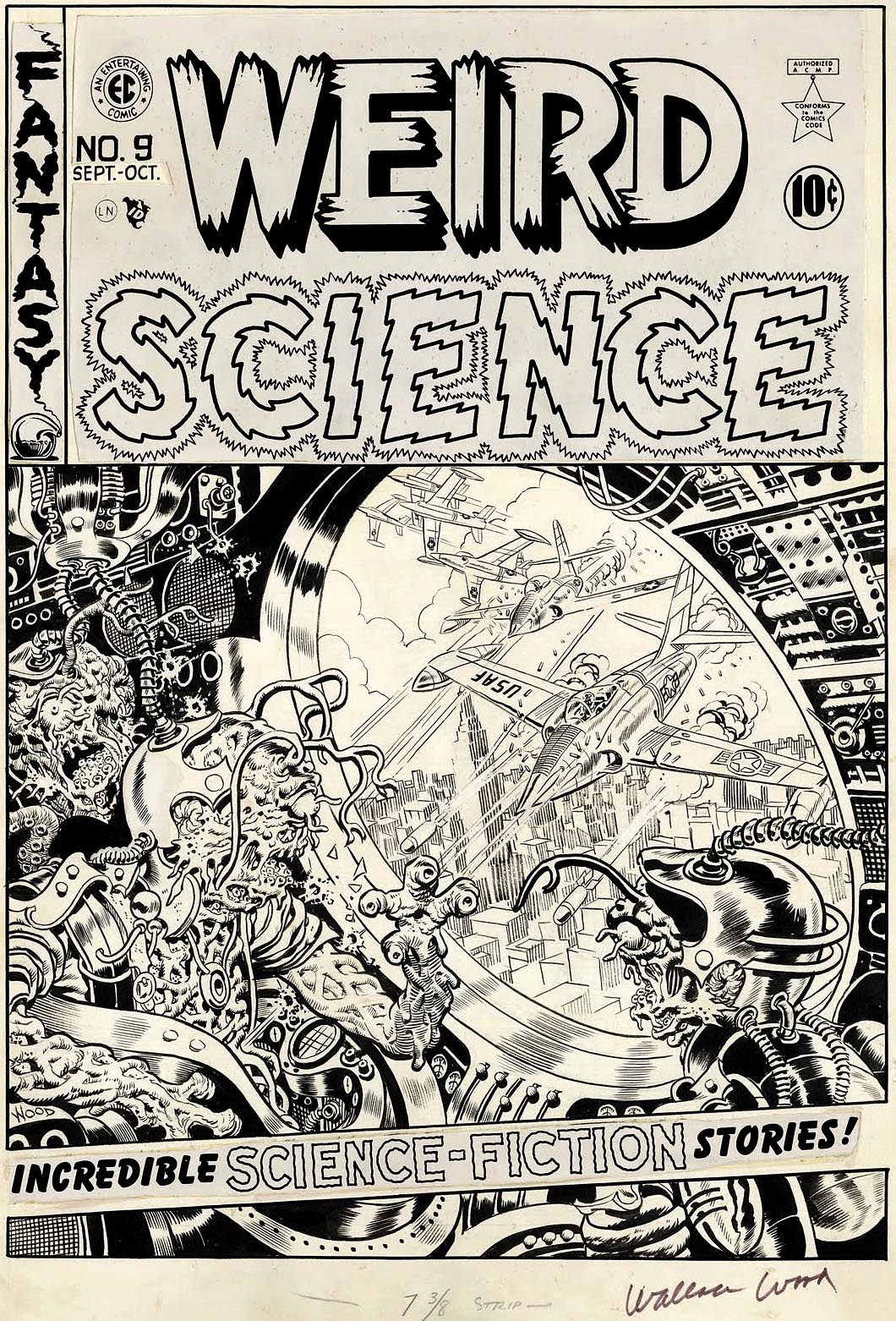
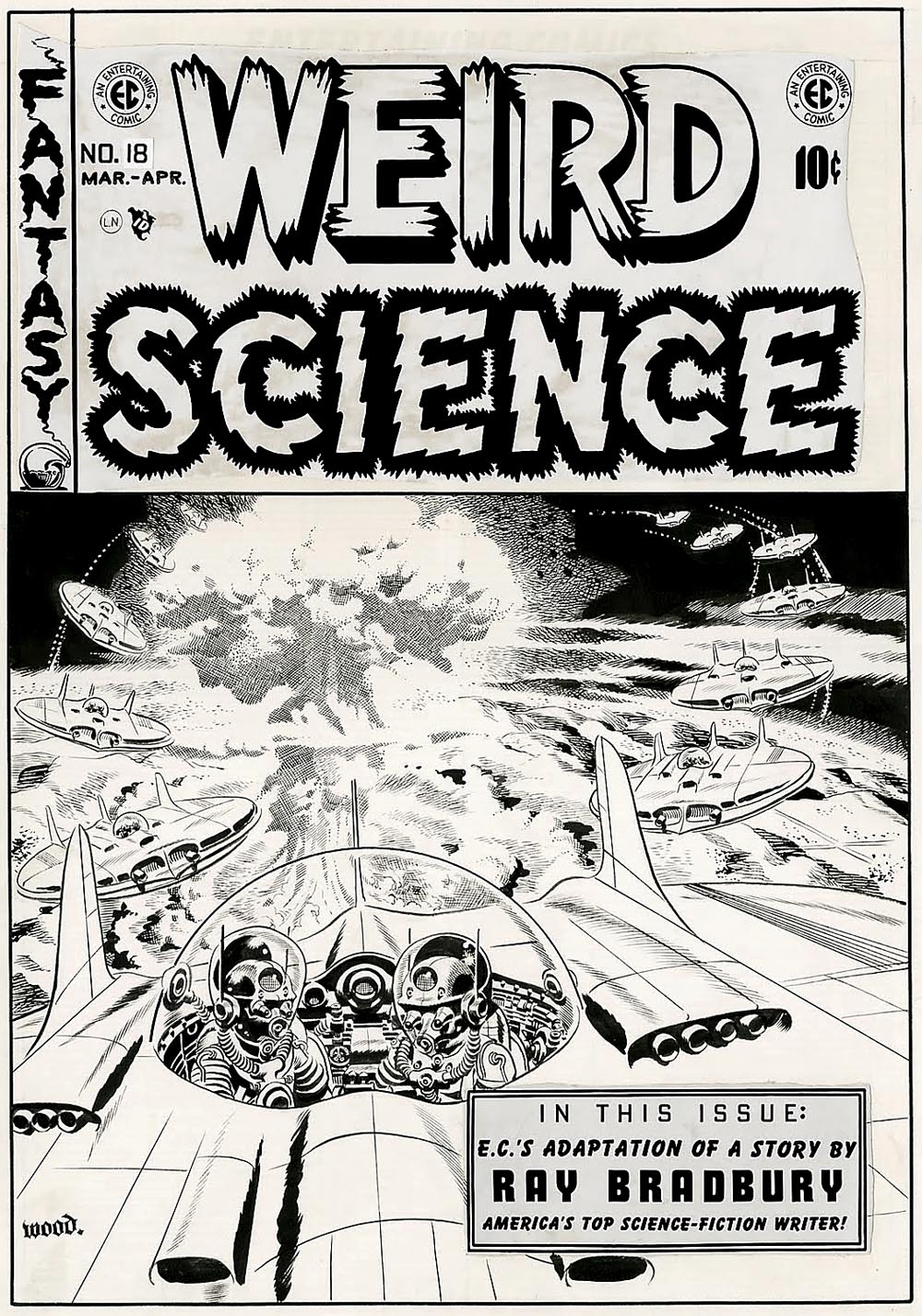
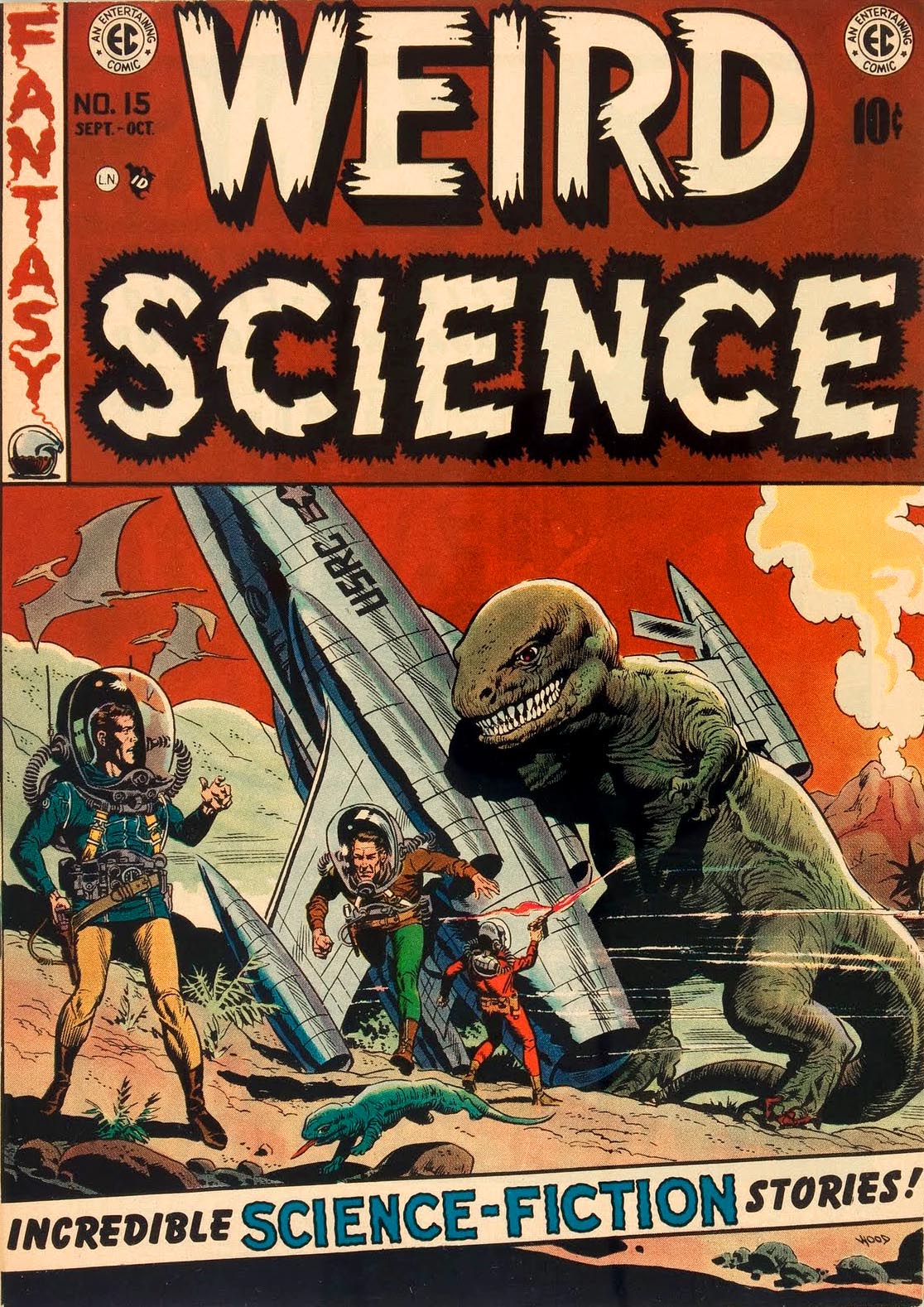
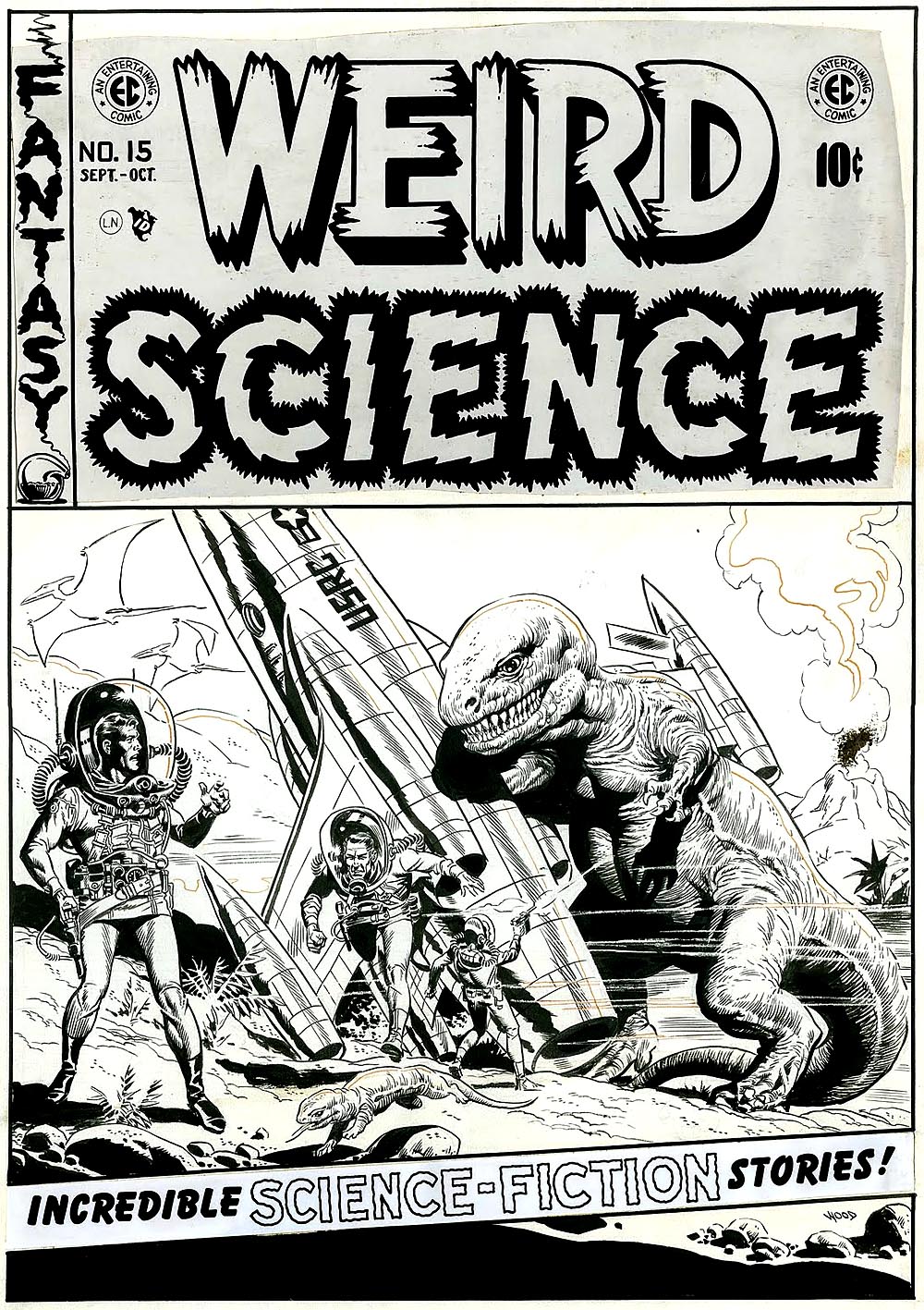
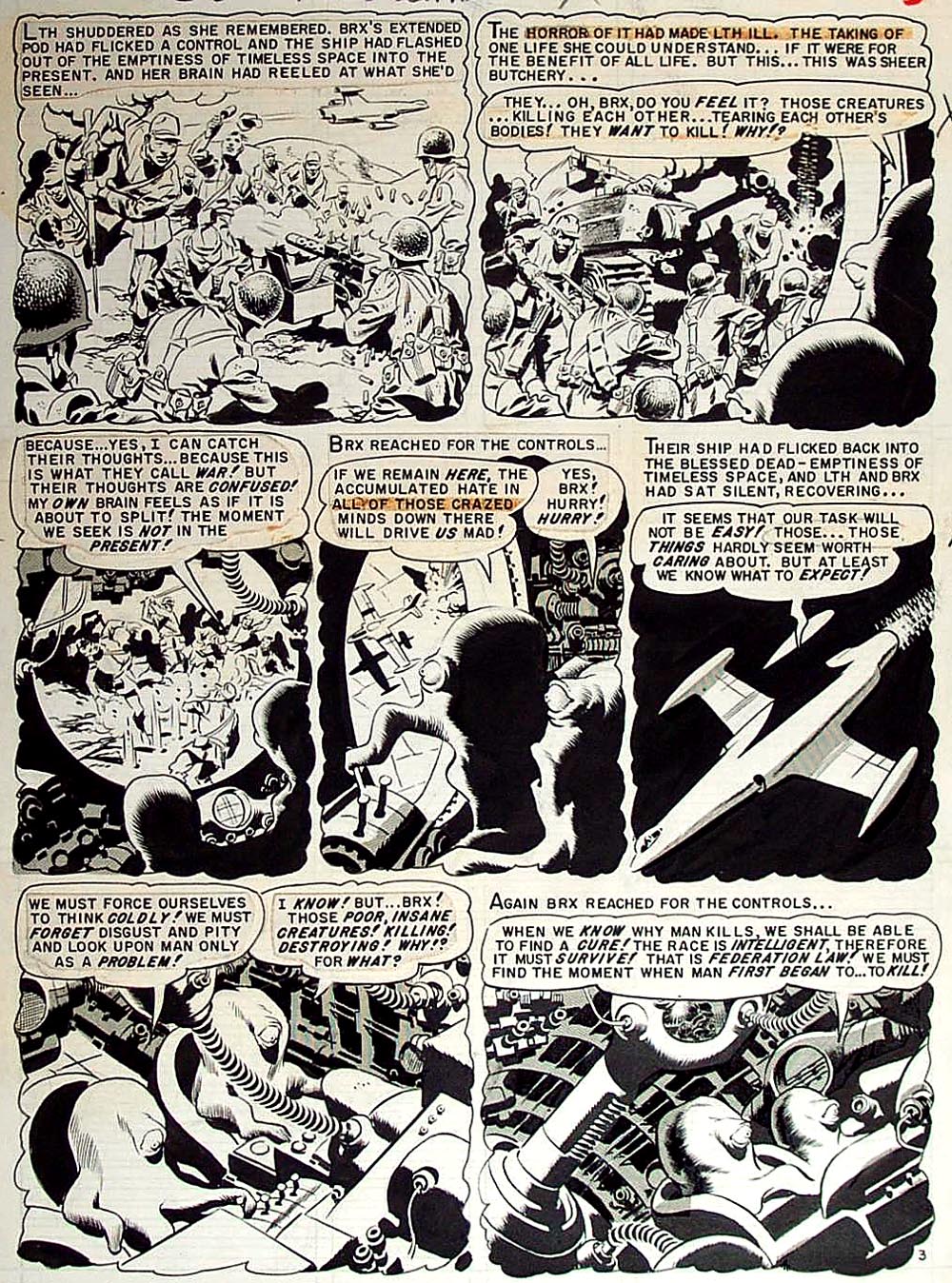
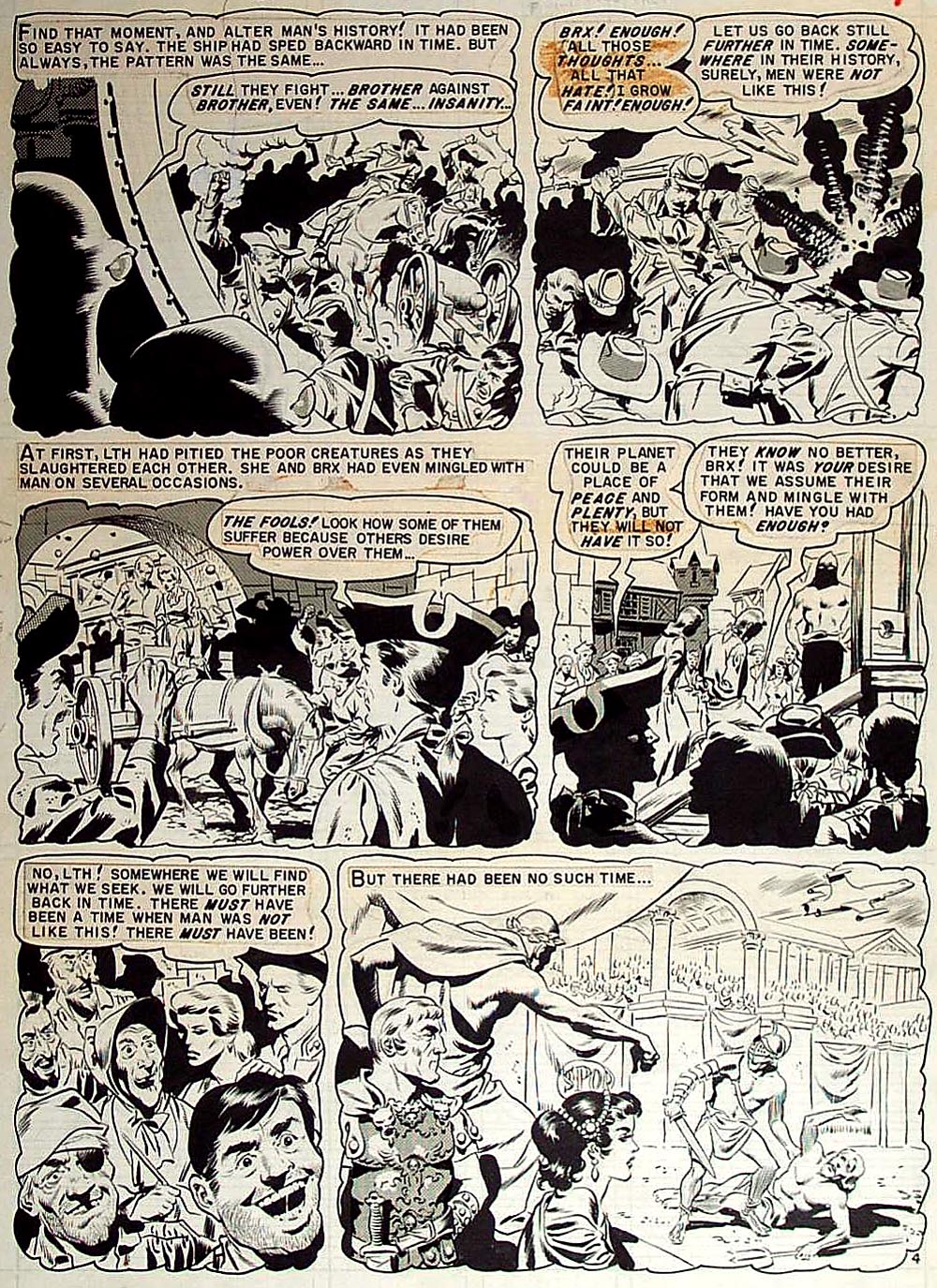
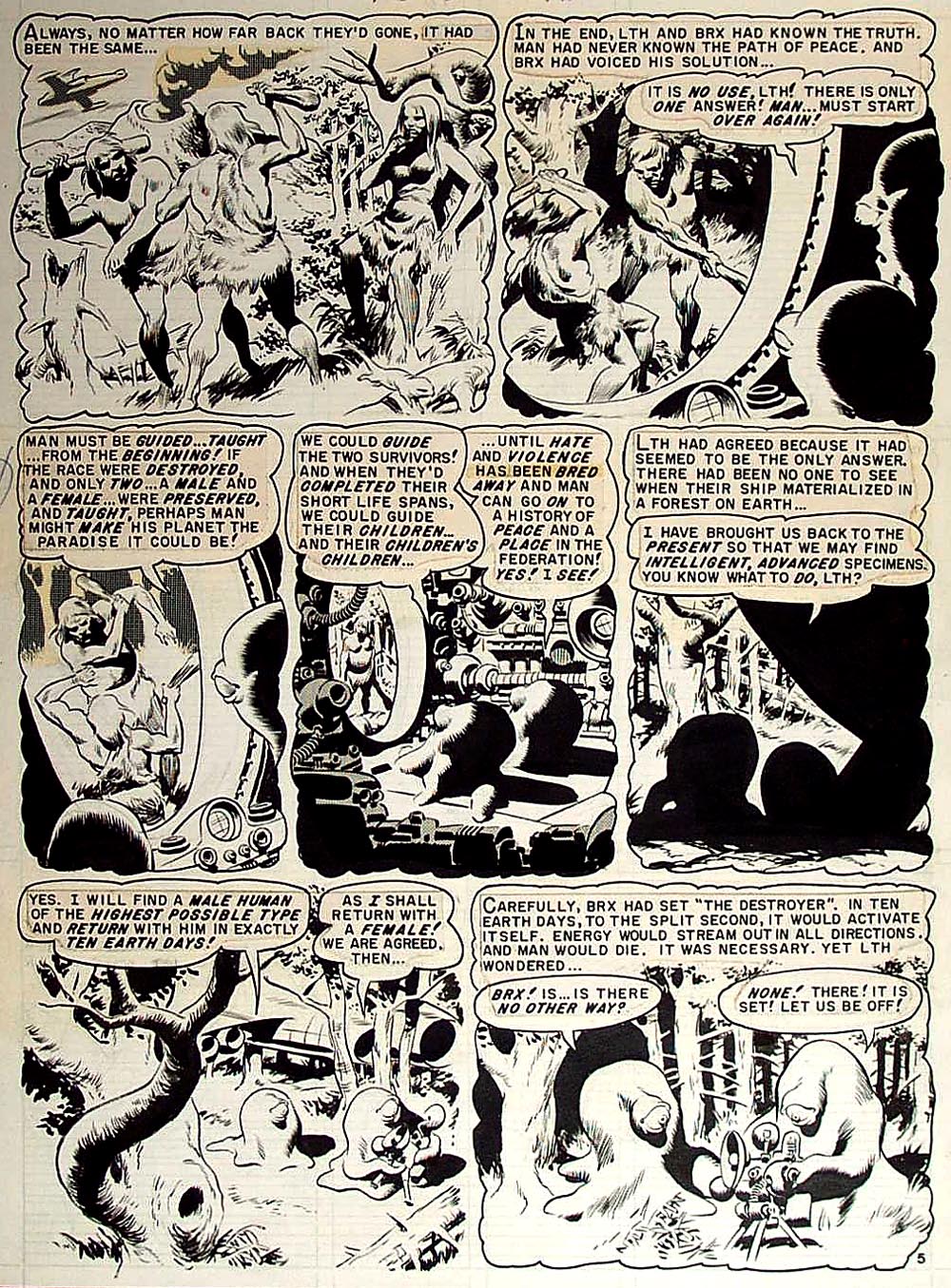
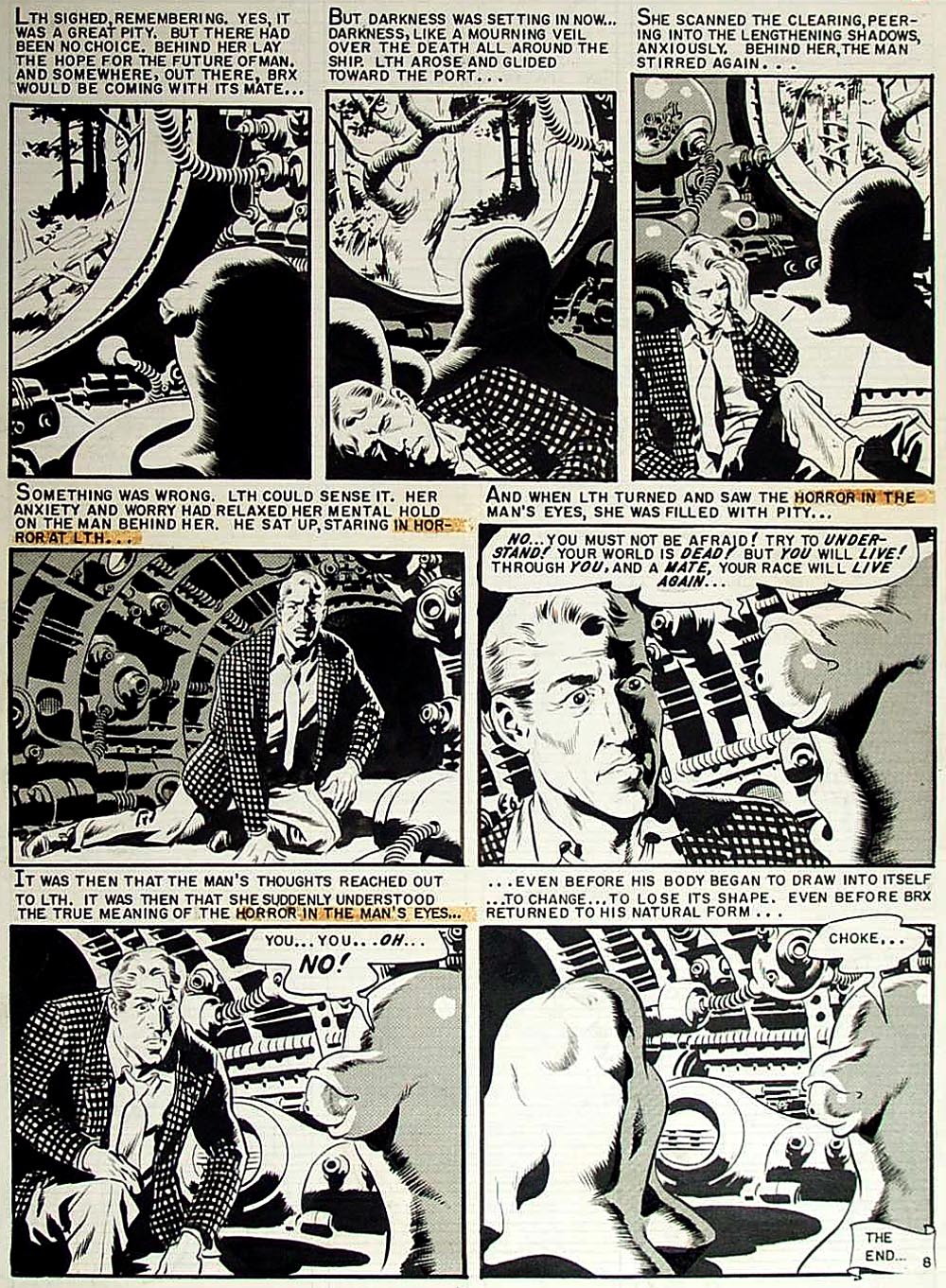
Aliens aren’t fantastic creatures made of crystal that chew the landscape into wild filagrees like in "Mars and Beyond", or even super-intelligent beings who will help us solve all the world’s problems with their advanced technology. They’re medieval monsters with scales like a dragon that lurk in the shadows, or parasitic worms that crawl inside us to devour us from the inside out, or rubbery magical midgets covered with wrinkles and warts. Science has been replaced by pseudo-religious concepts like "the force". Aliens in Close Encounters don’t just have the technology to make Richard Dreyfuss mold mountains out of his mashed potatoes, they can even make toys come to life!
Cynicism and magic are the order of the day- no room for scientific inquiry and ambition…
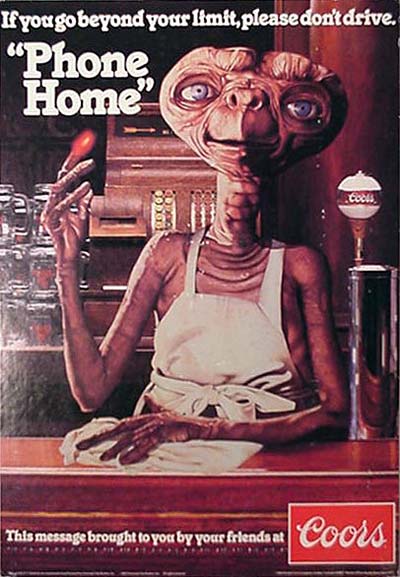
"Is this what life on other planets looks like?"
If these are our collective visions of the future, I sincerely hope that our dreams never come true. Perhaps we should consider dreaming a higher quality of dream. Let’s bring back the futurism we were cheated out of and start building a future that’s worth inhabiting.
Stephen Worth
Director
Animation Resources

This posting is part of a series of articles comprising an online exhibit entitled Theory.


 by
by 











 Animation Resources depends on your contributions to support its projects. Even if you can’t afford to join our group right now, please click the button below to donate whatever you can afford using PayPal.