
Archive for the ‘Uncategorized’ Category

Monday, May 11th, 2026

RefPack071: Durer, WWII, Commercials, Russian and Polish Animation!

Reference Pack

Every month, Animation Resources shares an amazing Reference Pack with its members. These carefully curated collections consist of e-books packed with high resolution scans video downloads of rare animated films set up for still frame study, as well as podcasts and documentaries— all designed to help you become a better artist. Members will have 30 days to download the current batch of treasures from the Animation Archive A new RefPack will be posted at the beginning of the next month. Bookmark the Members Only Page and remember to check back every month, because when the new month starts, the old downloads go POOF!


MEMBERS LOGIN To Download

JOIN TODAY To Access Members Only Content


REFPACK071: May 2026

PDF E-BOOK:
Albrecht Durer

Albrecht Durer Volume One
Download Page
Early Woodblock Prints (1488-1498)
Download this article

I know what you’re thinking… What does a 15th century fine artist have to do with cartooning? Well, read on, because I think you’re going to be surprised!

A BRIEF BIOGRAPHY

Albrecht Dürer was born in Nuremberg, Germany in 1471. He initially intended to be a goldsmith, but his Godfather was a printer and in 1486 he secured Dürer an apprenticeship in the Wolgemut workshop producing woodblock prints. The fundamentals of art in Germany were more primitive than they were in other parts of Europe. Perspective and anatomy were rudimentary, and compositions tended to be flat. But it was the hub of printing technology at the time, and Dürer quickly picked up the trade.

After completing his apprenticeship around 1490, Dürer had a desire to better himself creatively; so he decided to visit and learn from other artists and goldsmiths, traveling throughout Northern Europe. During this period, new ideas in Dutch art were germinating as it transitioned from late Gothic to the early Renaissance. Dürer eagerly picked up inspiration and knowledge as he travelled. In 1494, he returned to Nuremberg and married, which was a requirement for opening one’s own workshop. But his marriage was ill-fated from the start, and within a few months he decided to leave Germany and travel to Venice, which was one of the artistic Meccas at that time. In Venice, he studied the work of Bellini, Raphael and da Vinci. He returned to Nuremberg the following year loaded with new ideas and opened his own workshop to produce inexpensive art prints known as “broadsheets”.

Albrecht Durer
An example from Durer’s apprenticeship

DÜRER’S GROWTH AS AN ARTIST

This capsule biography of Dürer’s early years only tells a small part of the story. Something happened during Dürer’s trips abroad that altered his artistic output radically. Compare the images in the first section of this e-book to the ones in the second section. Dürer pushes the technology of woodblock printing far beyond what had been done before. The lines are more precisely carved, and he learns to spot the blacks and balance thickness of the lines to create more depth and maintain focus.

One print in particular marks a transition from simpler images to more complex ones: illustration number 87. In this print, Dürer decided to experiment with textured wood grain and drapery. The lines are finer than before and clustered together. But this came at a cost. The vintage book we digitized for this e-book was made from the best available copies of these prints in existence in the early decades of the 20th century; but this print was in significantly worse condition than the rest. Lines had become mashed up together. Sections of hatching were missing and the edges of the lines had become tattered and frayed. Restoration of this one print took nearly 300 hours of careful clean-up.

Albrecht Durer
This print was an experiment in increasing the complexity of woodblock printing technique.

Part of the damage can be attributed to the larger print runs required to fill the growing demand for Dürer’s work; but it can also be explained by his inexperience with carving the block in a way that would protect more delicate lines. With the next print in the series, Dürer worked larger and avoided large areas of fine detail. He spread the contact surface of the block evenly across the whole image and made the lines less rigidly geometric. He also incorporated more organic textures to hide minor damage when it would occur.

The difference between the woodcuts Dürer produced in the next section is even more striking. Compare the images 88 to 93 with the ones from 98 to 102. Dürer’s artistic expertise increased to match his mastery of the technical aspects of woodblock printing. The images were more detailed with more precise carving of the lines. But that wasn’t all. Dürer applied the principles of perspective, anatomy and proportion he had learned from the Venetian painters to German craftsmanship, raising the prevalent Gothic style up to the standards of the High Renaissance.

Just when you might think that Dürer had reached his full potential, his artistry increased exponentially again with the Apocalypse prints (images 105 to 120). These prints represent the absolute pinnacle of woodblock printing. They excel in every metric: composition, flow, anatomy, perspective, style, and the visual expression of symbolic content. They were revolutionary at the time and they were the equal of anything created in Venice. They stand as one of the greatest achievements of the printer’s art.

Albrecht Durer
Durer learned a great deal from his tour of Northern Europe.

DÜRER’S IMPORTANCE

The space of time covered by the contents of this e-book spans a little over a decade, from Dürer in his twenties to Dürer in his thirties. It’s hard to believe a person could progress that far in such a relatively short period. How did he do this? How can we follow his lead?

Dürer had a passion for self-study. He could have stayed in Nuremberg and built a successful business as a printer there, but that wasn’t enough for him. He travelled the length and breadth of Europe seeking out the greatest artists of his day to study under them. He wasn’t just an artist… he wrote books on mathematics, geometry, human proportion, the use of various kinds of weapons, as well as the architectural aspects of the fortification of castles. He was a true Renaissance man, but because he didn’t come from the artistic capitals in Italy and the Scandinavian countries, he has tended to be devalued by art historians.

When you read the history of cartooning, Dürer is even less mentioned, but he is probably the artist most responsible for establishing the principles that all cartoonists follow. It’s important to know that
the word “cartoon” originally meant “a study on paper of a design that would ultimately be rendered in paint.” Drawings were plans, not artistic objects that stood on their own. Before Dürer, the average person, if they saw art at all, only saw paintings and sculpture. It wasn’t until the introduction of woodblock printing around 1400 that the technology was used to render images in line, and it wasn’t until Dürer’s revolutionary prints that drawings were seen by the general public. Dürer established the basic techniques of expressing a volumetric form in flat lines, use of thicks and thins, hierarchy of line weight, spotting blacks, hatching, stippling, organic shapes… Today, we take these aspects of drawing for granted and assume that they always existed, but a great deal of what makes drawings great was established first by Dürer.

Albrecht Durer
After his studies in Italy, Durer’s artistry grew tremendously.

The average person in the mid to late 15th century couldn’t read. Religious ceremonies and books were spoken and printed in Latin, which only the most educated monks and scholars could under- stand. But Dürer was able to interpret the Bible visually… which transcended language and education, bringing the stories vividly to life. The prints were inexpensive to produce in quantity and were sold to religious pilgrims as souvenirs of their trip to a holy place. They brought the piece of paper home with them and hung it on their wall to remind them of their faith. It became their primary daily contact point with their God.

But it was even more than that. Dürer understood his audience. In addition to the crucifixion prints designed to make the message of the Bible real to people, he selected stories that would appeal to the imagination of the common man… deaths of martyrs, Shadrach, Meshack and Abednego in the fiery furnace, Sampson killing the lion, Icarus flying too close to the sun, the Four Horsemen of the Apocalypse, and the Beast of Babylon. These fantastic images showed people things that they had never seen before- heroic deeds and otherworldly monsters.

The fame of Dürer’s prints spread far and wide. In fact, they were so popular that imitators made copies of them for sale, impacting Dürer’s own income. To fight back, he created a “trade mark”, the “AD” at the bottom of the prints to identify them as be- ing his work. However, the imitators just copied his trademark along with the rest of the print. These bootlegs incensed Dürer to the point that in 1506, he petitioned the court in Venice to prosecute Marcantonio Raimondi, an artist who was producing forgeries of Dürer’s most popular prints. This case established the concept of copyright, which is the legal mechanism used to protect artists’ works to this day.

Albrecht Durer
Only eight years of study separated this image from the next one.

In our e-book dealing with Hans Holbein’s Dances of Death we traced the connections between early woodblock prints and modern cartooning. We identified the main connections as:

Line Drawing: The essence of a cartoon is the stylistic refinement of an image into a simplified rendering in line.

Caricature: Cartoons employ exaggeration, which illuminates truth and crystalizes a specific point of view.

Subject Matter: Usually, the subject matter of cartoons involves humor, political or social satire, adventure or fantasy.

Economics: Cartoons are usually mass-produced using an inexpensive, ephemeral medium aimed at an audience of common people.

While Dürer’s work doesn’t employ political satire and exaggeration the way Holbein’s prints do, it is ground zero for the other aspects. I recommend that you download our Best of 1 to 25 e-book during our next Members Appreciation Month to read the article there on Holbein’s Dances of Death. It elaborates further on the deepest roots of cartooning.

There are many things that can be learned from Albrecht Dürer, but perhaps the most important thing is the importance of self-study. In ten short years, he raised woodblock printing from a primitive craft to an art form. He also raised himself up as an artist. He did this by embracing new technology, exposing himself to the whole creative world at the time, and remaining inquisitive… In fact, he continued to learn and experiment and grow as an artist far beyond the period covered in this e-book. That’s something to emulate in our own careers. This e- book just barely scratches the surface of the amazing career of Albrecht Dürer. You should definitely do some Googling and learn more.

Albrecht Durer
The images on our website are much lower resolution than in the e-book. Click on this image to get an idea of the level of detail in Animation Resources’ restoration of these important works.

ABOUT THIS E-BOOK

Albrecht Durer Animation Resources was fortunate enough to obtain an original copy of Wili Kurth’s The Complete Woodcuts Of Albrecht Dürer (1927). Produced as a limited edition of around 1,000 copies, this legendary book assembled a complete run of high quality steel engravings made from the best available copies of the prints at the time. Reproduced in full size, the book is huge and heavy. Digitizing it has been a big job. Even more difficult is the time consuming task of digitally restoring the images. Most copies of these prints are reproduced from reprints of this book, like the Dover edition. The images were copied photographically and then printed inexpensively at a much smaller size by means of offset lithography. Because of this, lines became fuzzy around the edges, and fine areas of hatching blurred together into blobs of gray. Low resolution scans online further smear the line-work, resulting in poor approximations of the images that really don’t represent Dürer’s genius.

Animation Resources took a different approach. We scanned each page of the book at 1200 dots per inch, eliminated the yellowing and texture of the paper, and carefully replaced lines missing due to deterioration of the broadsheets or blocks using a digital tablet and stylus. It has taken us close to two and a half years to produce this e-book. We’re pleased with the result and hope you find it useful in your work.

This book was digitized by Toni Vang and digitally restored by Stephen Worth.


MEMBERS LOGIN To Download

JOIN TODAY To Access Members Only Content


DVD QUALITY VIDEO:
Download Page
Assorted Commercials Commercial Reel

Assorted Commercial Reel
Download Page
Paul Fennell Studios (ca. 1950s)

We continue our series of commercial reels from the Paul Fennell Studios with some spots that look forward to what Hanna-Barbera would be doing a few years later. The principle designer at Fennell was Ed Benedict, who went on to design Yogi Bear, Huckleberry Hound and many other classic characters for Hanna-Barbera.

Here Paul Fennell’s crew is joined by Hanna-Barbera’s first on-staff animator, Carlo Vinci. Unhappy with the direction the Terry-Toons studio had taken, Vinci had recently relocated his entire family from New York to the West coast to join his old friend Joe Barbera at MGM. But soon after he arrived, the MGM cartoon studio closed its doors, and Vinci was out of work. He was quickly hired by Disney to animate for the wrap around segments in the Disneyland TV series, but Vinci wasn’t happy with the “old boy” attitudes and the slow pace of the work at Disney. He took freelance work for Fennell on commercials and was introduced to Ed Benedict whose design sense lent itself perfectly to Vinci’s animation style. When Hanna-Barbera was formed in 1957, Vinci and Benedict were among the handful of artists who were the first to be hired, and they helped to establish the studio’s house style.

Ed Benedict likely designed and laid out all of these commercials, and Vinci’s animation can be seen sprinkled throughout this reel. The Ipana Toothpaste and the Swiss Creme Sandwich cookie spots appear to be entirely animated by Vinci. This reel of animated commercials produced by the Paul Fennell Studios includes spots that haven’t been seen in over half a century. We thank the family of Paul Fennell for sharing them with us.


MEMBERS LOGIN To Download

JOIN TODAY To Access Members Only Content


DVD QUALITY VIDEO:
Download Page
Broken Treaties This Changing World

Broken Treaties / This Changing World
Download Page
Paul Fennel Studios (1941)

When Ub Iwerks decided to end his contract with Columbia Pictures and leave his own studio behind, Paul Fennell stepped up to take over the reins of Cartoon Films Ltd. One of the first projects that was announced early in 1941 was a current events series outlining the recent military actions taken by the Nazis in Europe. This was before Pearl Harbor and many Americans took an isolationist attitude.

Animator Tom Minton, who worked with Fennell at Filmation in the late 70s remembers him screening these cartoons for the crew. Fennell told them that when “Broken Treaties” opened in Westwood in August of 1941, the audience broke into a chorus of boos, reacting to the blatant propagandizing and the caricatures of European leaders that they would have preferred to ignore. When the second film, “This Changing World” debuted in late December of 1941, the reaction was the exact opposite. The attack on Pearl Harbor was in the headlines, and it was clear that the United States was going to war. Audiences responded favorably, and “This Changing World” was nominated for an Academy Award.

Broken Treaties This Changing World

It’s clear that Disney was influenced by these films in making “Victory Through Air Power”. They share a similar format, with a commentator at a desk narrating, animated maps and dramatic scenes of battle rendered in limited animation with lots of camera effects. Paul Fennell pioneered the use of animation for propaganda purposes that would be used later at all the major studios, as well as the First Motion Picture Unit.

Because of the ephemeral nature of these films, these two 16mm prints may be the last surviving copies of these films in existence. Animation Resources thanks the family of Paul Fennell for sharing these with us.


MEMBERS LOGIN To Download

JOIN TODAY To Access Members Only Content


International Animation

The world of animation is much bigger than it might appear to us at first glance. We are all familiar with the films we grew up with, but Hollywood wasn’t the only place that produced great cartoons… Poland, Japan, Russia, China and Europe all have their own traditions and a rich history of animated film making. Animation Resources’ archive contains many foreign films that are rarely seen in the United States. We feature a sampling of interesting animation from around the world in each Reference Pack.

DVD QUALITY VIDEO:
Russian Animation

Dead Tsarevna & The Seven Bogatyrs
Download Page
Ivan Ivanov-Vano / 1951
Download this article

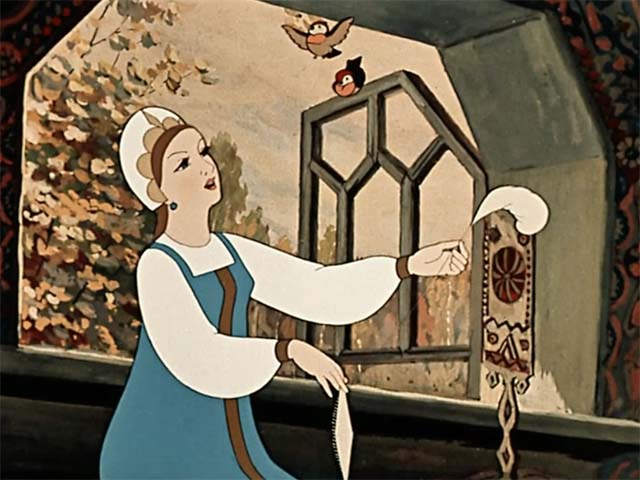
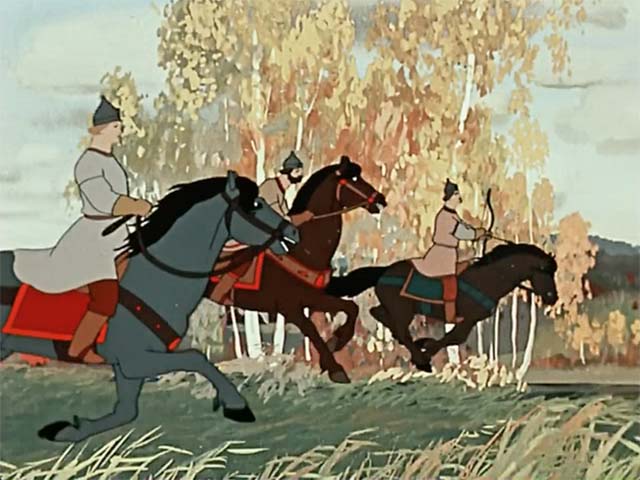
Although this film closely resembles the story of “Snow White and the Seven Dwarfs”, this adaptation is based on a Russian fairy tale about the Princess Tsarevna. The film closely follows the poem written in 1833 by Aleksandr Pushkin. If you are interested, there is a synopsis of the story at Wikipedia.

The director of this film, Ivan Ivanov-Vano began his career in animation in 1927 and made three dozen films over his half century career, most of which were based on Russian folk tales. Early on, he was heavily influenced by Disney, but his personal style developed and grew over his career. In 1947 he directed the first Russian animated feature film, The Humpbacked Horse; and he helped establish ASIFA (The International Animated Film Society) in 1961.
Russian Animation

This film incorporates design motifs unique to Russian art and it reflects its culture perfectly. In the modern world, animated films are made in Asia, India, Europe and the United States that all look pretty much the same. It would be good if a diversity of regional styles developed again. After all, art should be a personal expression of one’s life and culture, not a product manufactured to someone else’s design.


MEMBERS LOGIN To Download

JOIN TODAY To Access Members Only Content


DVD QUALITY VIDEO:
Beach

Plaza (Beach)
Edward Sturlis / Poland / 1964

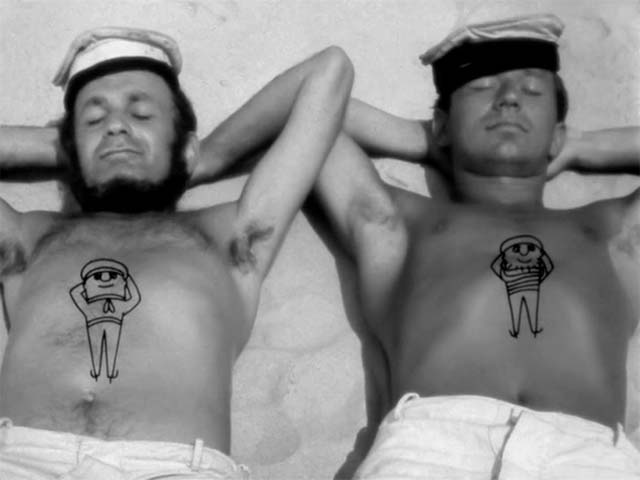
Poland is known for the wide diversity of its animation, from children’s puppet animation to surrealistic nightmares to important social and political commentary to pioneering computer animation. In general, Polish films are less focused on narrative than they are in putting across feelings and states of mind. We will be sharing more of the great work of Polish animators in the near future, but today we have a more straightforward little treat for you… Edward Sturlis’s “Beach”. I’m not going to say too much about it and let you discover its charm for yourself. It’s proof that sometimes the simplest ideas and the simplest execution is the best.


MEMBERS LOGIN To Download

JOIN TODAY To Access Members Only Content


SD VIDEO:
Koziolik Matolik

Koziolik Matolik in “Dragon’s Cave”
Download Page
Sophia Oraczewska / Studio Miniatur Filmowych, Poland / 1969

Studio Miniatur Filmowych in Krakow, Poland was established in 1958, and since then it has produced nearly 1,500 animated films. This series, titled The Strange Adventures of Koziolek Matolek was produced between 1969 and 1971 and 26 episodes were made. The current episode is titled "Dragon’s Cave". We will be sharing more of these in upcoming Reference Packs.

Koziolik Matolik

Koziolek Matolek was created in 1933 as a character in Polish comic books. The idea behind the character is a bit surreal, and might seem odd to us in America… Koziolek Matolek is a goat who undertakes a quest to find Pacanow, a town where he has heard that they make shoes for goats. His travels take him to the ends of the Earth and throughout time from the jungles of Africa to medieval Europe to the Wild West. Although the character’s adventures have been well known for generations in Poland and are a staple of children’s literature there, I don’t believe any of the stories, comics or cartoons have ever been translated and distributed outside of that country.

Koziolik Matolik

The cartoons were directed by a variety of animators, and the character looks a bit different in each of the individual director’s episodes. The focus is on funny movement and expressions, all while maintaining an admirable level of clarity and economy. This series is a model of what internet cartoons could be.


MEMBERS LOGIN To Download

JOIN TODAY To Access Members Only Content


Whew! That is an amazing collection of treasures! The most important information isn’t what you already know… It’s the information you should know about, but don’t know yet. We bring that to you every other month.

THIS IS JUST THE TIP OF THE ICEBERG!

Animation Resources has been sharing treasures from the Animation Archive with its members for over a decade. Every month, our members get access to a downloadable Reference Pack, full of information, inspiration and animation. The RefPacks consist of e-books jam packed with high resolution scans of great art, still framable animated films from around the world, documentaries, podcasts, seminars and MORE! The best part is that all of this material has been selected and curated by our Board of professionals to aid you in your self study. Our goal is to help you be a greater artist. Why wouldn’t you want to be a member of a group like that?

Membership comes in two levels. General Members get access to a bi-monthly Reference Pack as well as a Bonus RefPack from past offerings in the in-between months. We offer a discounted Student Membership for full time students and educators.


JOIN TODAY!
https://animationresources.org/membership/levels/

FREE SAMPLES!

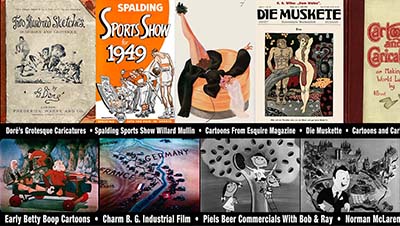
Not Convinced Yet? Check out this SAMPLE REFERENCE PACK! It will give you a taste of what Animation Resources members get to download every other month! That’s 560 pages of great high resolution images and nearly an hour of rare animation available to everyone to download for FREE! https://animationresources.org/join-us-sample-reference-pack/

Sample RefPack

PayPalAnimationAnimation Resources depends on your contributions to support its projects. Even if you can’t afford to join our group right now, please click the button below to donate whatever you can afford using PayPal.


FacebooktwitterredditpinterestlinkedinmailFacebooktwitterredditpinterestlinkedinmailby feather

Monday, April 6th, 2026

RefPack070: German Caricature, Early Anime, H-B And More Treasures!

Reference Pack


Download RefPack070 Review
Every month, Animation Resources shares an amazing Reference Pack with its members. These carefully curated collections consist of e-books packed with high resolution scans video downloads of rare animated films set up for still frame study, as well as podcasts and documentaries— all designed to help you become a better artist. Members will have 30 days to download the current batch of treasures from the Animation Archive A new RefPack will be posted at the beginning of the next month. Bookmark the Members Only Page and remember to check back every month, because when the new month starts, the old downloads go POOF!


MEMBERS LOGIN To Download

JOIN TODAY To Access Members Only Content


REFPACK070: April 2026

The latest Animation Resources Reference Pack has been uploaded to the server. Here’s a quick overview of what you’ll find when you log in to the Members Only Page

PDF E-BOOK:
Die Muskete

Die Muskete Volume Two
Download Page
Vol. X Nos. 253-160 (August-September 1910)
Download this article

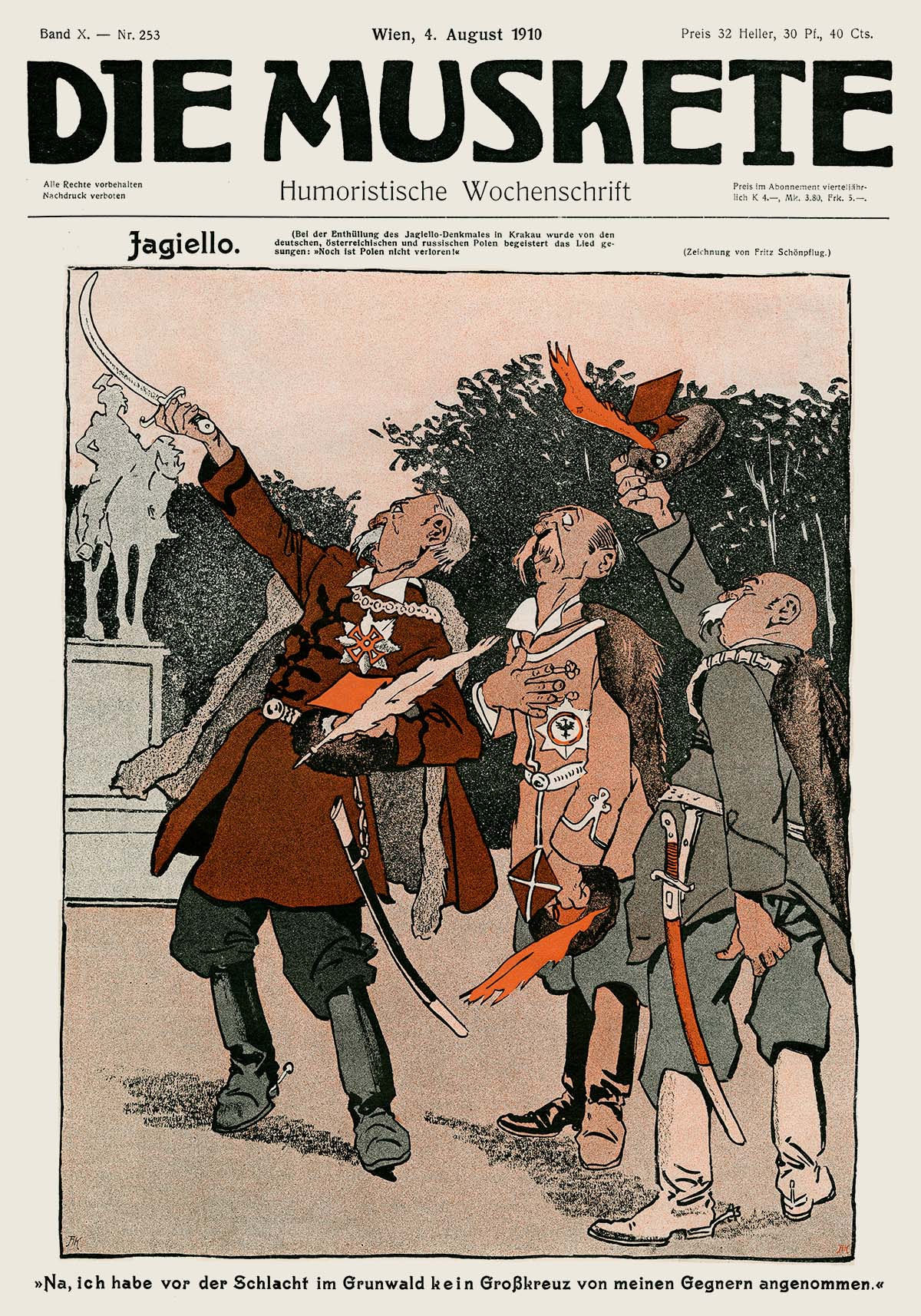
During the 19th century, society had a totally different relationship with cartoons than we do today. Beginning with artists like James Gillray and George Cruickshank in early decades of the century, cartoons were seen as serious business. They crystalized the image of the rich and powerful in the minds of the masses, and even Kings and religious leaders were forced to take notice of their impact. The pen truly had become “mightier than the sword”.

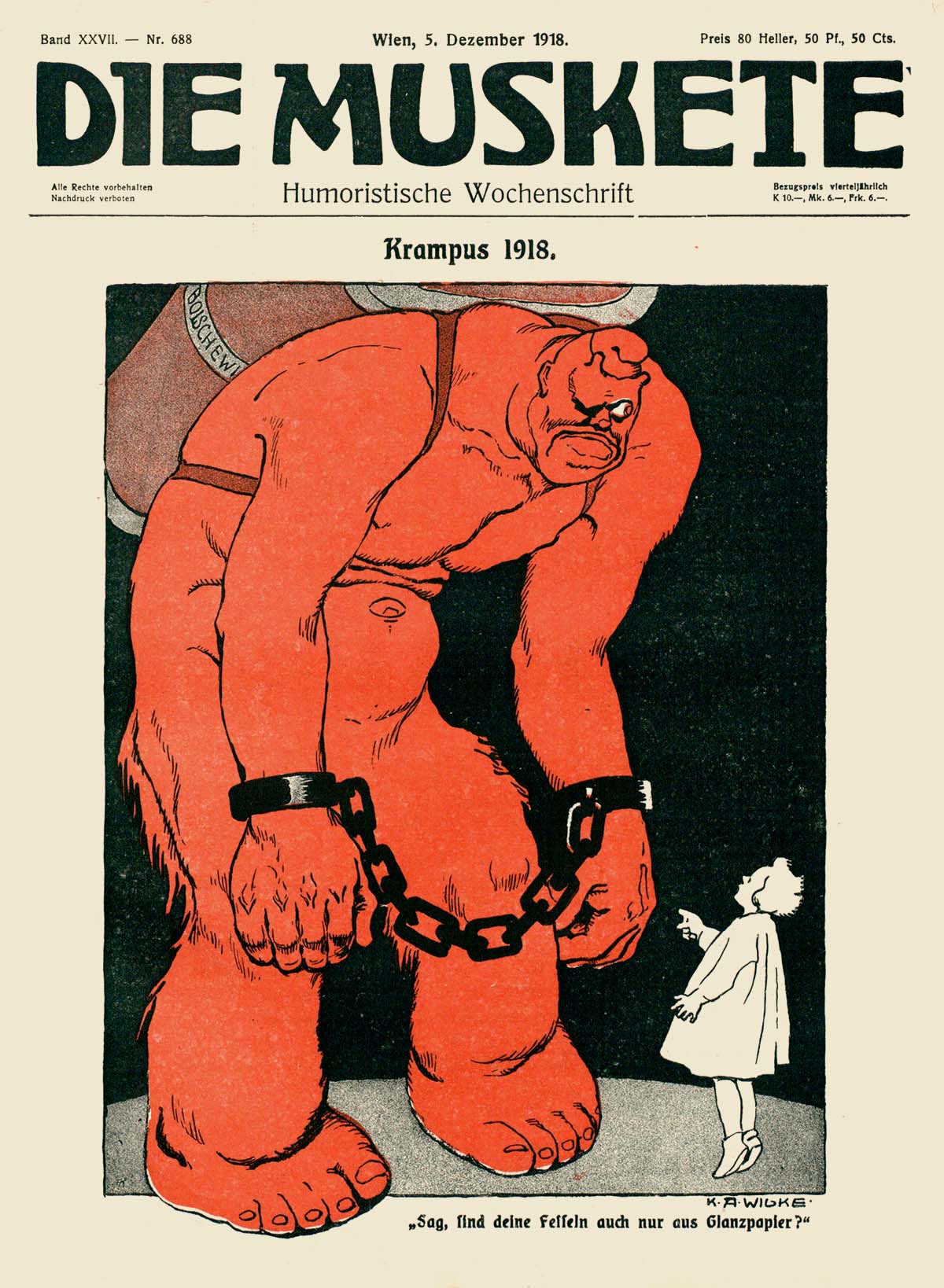
Die Muskete With the dawn of the 20th century, the lives of people were changing. The modern world was emerging, and with it came pressures brought on by technology, new forms of government, colonialism and war. The gloves were off. Cartoonists no longer limited their satire to Kings and religious leaders. They wielded their power to satirize by skewering everyone and everything around them– religion, ethnicity, the rich as well as the poor, and the power that the government held over the public. Cartooning became a powerful tool for changing hearts and minds, as well as disseminating nationalistic propaganda. The conflicts that these new challenges created began building to a head, and it would eventually result in “The Great War”, World War I.

Die Muskete

But even though it was a difficult time politically, the world was experiencing a renaissance in the arts. There were two principle styles during this period: Historicism and Art Nouveau. Historicism was an ecclectic style which embraced neo-classical forms and themes. The subject matter consisted of idealized imagery of ancient Greece, mythological and historical tableaux, or exotic locales in faraway lands. The other popular style was Art Nouveau. In Germany, it was known as “Jugendstyl” (Jugend Style), named after Jugend, one of the most famous arts magazines of the day. Art Nouveau was based on craftsmanship and hand work. It rebelled against the machine-made look that was taking hold in graphics and consumer products in the early industrial age. It did this by putting the hand of the artist at the forefront and incorporating lush organic patterns derived from nature. These two styles were represented in all forms of art, from architecture to interior design, to ceramics, fabrics, fashion, sculpture, illustration… and even cartooning.

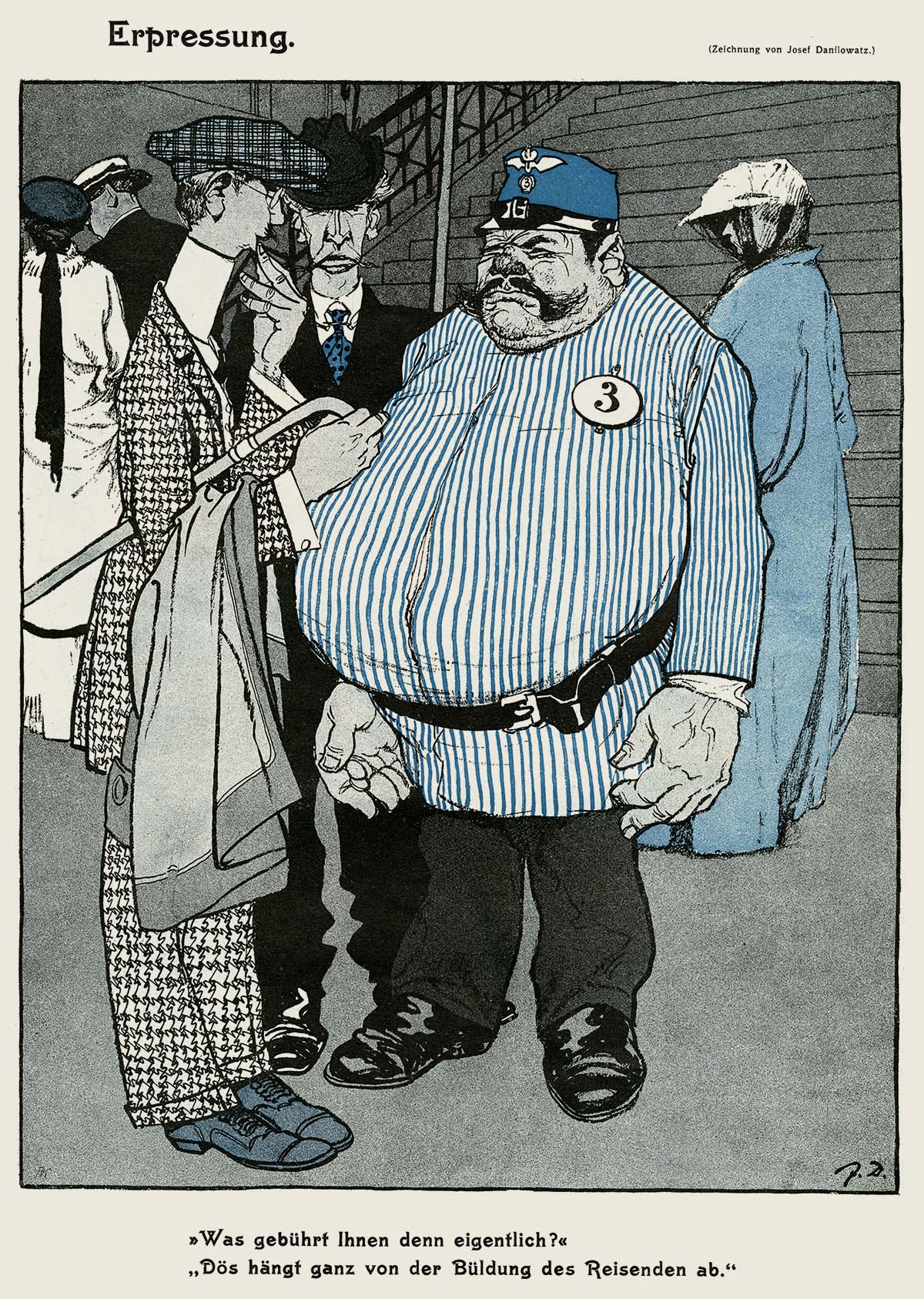
Die Muskete The center of the arts at this time was Vienna, Austria, so it is natural that a great humorous arts magazine would come from that city— Die Muskete (The Rifle). The principles behind Die Muskete were initially quite different than either Jugend or Simplicissimus, its principle competitors from Berlin. Die Muskete was a humorous “men’s magazine” aimed at military officers and veterans. It still made fun of bureaucratic excesses, military inefficiency, social mores, the battle of the sexes, and religion, as well as political corruption, while remaining steadfastly loyal to the Emperor of Austria.

The staff consisted entirely of local artists like Fritz Schönpflug, Karl Wilke and Franz Wacik. Each one brought something different to the table. Schönpflug specialized in military caricature, gently poking fun at the men who made up a large part of Die Muskete’s subscriber base, Wilke excelled at drawing pretty girls with a nouveau flair. And Wacik specialized in a wide range of fantastic subjects- strange creatures and fairy tale settings. Working along side them were the political cartoonist Josef Danilowatz, fashion artist Heinrich Krenes, and the brilliant caricaturist Carl Josef. These artists were well matched as a team to provide a variety of images and stylistic approaches. During World War I the focus of Die Muskete shifted from being a humor magazine to being a magazine for soldiers in the trenches. The tone became more political and the focus shifted to demonizing the enemy. But the level of artistry remained at a high level until many of the original team of artists began to leave the magazine in the mid 1920s.

Die Muskete

It’s important to remember that in the heyday of caricature journals like Die Muskete, the artists didn’t identify strictly as cartoonists. For instance Franz Wacik was a designer for the theater, he painted frescos and murals, and he illustrated children’s books. Most of the cartoonists at Die Muskete were fine artists as well as being cartoonists, and this was typical of their contemporaries at other caricature journals as well. I hope you find this e-book useful. This file is set up for printing on 8 1/2 by 11 three hole punch paper, and is optimized for high quality display on tablets and high resolution computer monitors. Thanks to JoJo Baptista for sharing his collection of these rare magazines with us.


MEMBERS LOGIN To Download

JOIN TODAY To Access Members Only Content


DVD QUALITY VIDEO:
Download Page
Quickdraw McGraw

Quickdraw McGraw
Download Page
Hanna-Barbara (1959)

The third animated television series for Hanna-Barbera (after Ruff n Ready and Huckleberry Hound) was Quick Draw McGraw, sponsored by Kelloggs. The show featured a bumbling Wild West sheriff attempting to capture criminals with his sidekick, Baba Looey. Sometimes Quick Draw would go after the bad guys as El Kabong, a parody of Zorro. With a budget of $3,000 per segment, animation on Quick Draw was extremely limited, so the focus was placed on design, layout, color and backgrounds.

Quickdraw McGraw

"Cattle Battle Rattled" has layout by Ed Benedict and the animation was handled by Disney alum, Dick Lundy. Benedict’s style provides a charm and warmth to the characters and Lundy’s animation is terrifically appealing with snappy pose to pose acting, expertly utilizing concise breakdowns between sharp keyframes. Other artists who stand out in these episodes are George Nicholas, who handled the character animation on "El Kabong Meets El Kazing" and "Bad Guy’s Disguise" with Carlo Vinci. Vinci’s characters have life-like expressiveness in their movement and posing, while Nicholas employs solid drawing and clear gestures in his scenes.

Dick Bickenbach handled the layout on the majority of these shorts. A phenomenal draftsman, he would be responsible for many of the model sheets at Hanna-Barbera, along with Ed Benedict. Benedict and Bickenbach’s clean and appealing designs are the driving force behind these classic TV cartoons. The background environments suit the character shapes perfectly and feel lived in, not at all arch or academic like other modern style animation backgrounds.

Quickdraw McGraw

It’s commonly said that story is the most important part of an animated film, but Hanna-Barbera’s early series prove that isn’t the case. The stories in these films are beyond basic, leaning on formulas and stereotypes rather than expressing anything remotely real. Instead, the characters carry the show with expert voice acting and appealing design. Friz Freleng once said that he never made a cartoon that had a story. His films had characters and gags. That is more than enough to make a great cartoon.


MEMBERS LOGIN To Download

JOIN TODAY To Access Members Only Content


DVD QUALITY VIDEO:
Gulliver Beyond The Moon

Gulliver’s Travels Beyond The Moon
Sanae Yamamoto and Yoshio Kuroda / Toei Animation / 1965
Download this article

From 1958 onward, Toei Animation had the ambitious goal of creating one fully animated feature per year. During this period They produced Tale of the White Serpent (1958), Magic Boy (1959), and Alakazam The Great (1960). The feature we are sharing today is one of Toei’s first departures from Asian mythological stories— Gulliver’s Travels Beyond The Moon (1965). This was an attempt on Toei’s part to break into the international market with a Western-style science fiction film based on Jonathan Swift’s character, Lemuel Gulliver. Unfortunately, it did not make waves and bombed at the American box office. Toei did not export another film to the U.S. until 1971.

Gulliver Beyond The Moon

The newly restored copy of the film we are sharing in this Reference Pack is the original Japanese version with no English subtitles, but the story can be followed easily. The basic plot concerns a homeless boy named Ted who is ejected from a movie about Lemuel Gulliver after it is discovered that he snuck into the theater. Depressed, he wanders the streets until he is nearly hit by a truck and is thrown against a wall. Upon awakening, he encounters a talking dog and toy soldier. The three of them team up and decide to visit a closed amusement park where a comical chase ensues with three security guards before Ted and company escape into the countryside. There, they meet Professor Lemuel Gulliver, now a space traveler. In his rocket, they travel to the Planet of Blue Hope. This planet has been taken over by a group of robots serving the Queen of the Purple Planet. Ted, Gulliver and the others step in to fight the invaders and save the Planet of Blue Hope from the invading horde of robots.

Gulliver Beyond The Moon

Toei Animation employed assembly line production techniques overseen by the directing team of Sanae Yamamoto and Yoshio Kuroda. Shinichi Sekizawa (Mothra, Godzilla vs. Mechagodzilla, King Kong vs. Godzilla) was hired to write, and interestingly a young Hayao Miyazaki worked on the movie as an inbetweener.

Gulliver Beyond The Moon

The visuals in Gulliver’s Travels Beyond The Moon reflect the science fiction aesthetic of Japanese TV animation of the era, and the character animation flows with a little more rhythmic bounce than is usual for Japanese animation. Not surprisingly, the effects animation is exceptional and is worthy of frame by frame study.


MEMBERS LOGIN To Download

JOIN TODAY To Access Members Only Content


DVD QUALITY VIDEO:
Locomotive

Locomotive
Zbiegniew Rybczynski / Poland / 1976

Director of the Academy Award winning short film, "Tango" (1980), Zbiegniew Rybczynski is a pioneer of experimental animation in Poland. He emigrated to the U.S. in 1982 during the martial law period of the Polish People’s Republic and created Z-BIG Vision, a film studio based in New York. He worked with dozens of musicians such as Mick Jagger and Rush on stylistically avant-garde music videos during the 1980s and 90s and created state-of-the-art experimental films like "Orchestra" (1990) which we featured in a past Reference Pack.

Locomotive

Set to Julian Tuwim’s 1938 poem of the same name, "Lokomotya", or "Locomotive"(1976), was created in the mid-1970s right before his departure from Poland for America. It blends live action photography and hand drawn animation bathed in saturated colors akin to pop art. Like many of Rybczynski’s other films, this makes deft usage of optical printing focusing on rhythms to create funny and compelling movement.

Locomotive

This short redefines how we traditionally think of animation by boiling it down to its essence— interesting and expressive timing. It’s an impressive feat. Rybczynski reinterprets the movement frame-by-frame to its simplest form using cycles, without ever losing the element of delightful surprise.


MEMBERS LOGIN To Download

JOIN TODAY To Access Members Only Content


SD VIDEO:
Well Just You Wait

Well, Just You Wait Ep.10
Download Page
Vyacheslav Kotyonochkin / Soyuzmultfilm, Russia / 1976

We continue the Russian Wolf and Rabbit cartoons with episode 10, “Construction Site”.

The premise of Nu, Pogodi! (which translates into English as Well, Just You Wait!) was pitched by a writing team of satirical humorists to many directors at Soyuzmultfilm, but was rejected every time. Finally in 1969, Gennady Sokolsky agreed to direct a 2 1/2 minute pilot for the series in an omnibus film called “Happy Merry Go Round”. The general consensus at the studio was that the cartoon was “low class” and beneath the dignity of Soyuzmultfilm, but director Vyacheslav Kotyonochkin strongly believed in the concept, so the studio decided to take a chance and allow him to direct a few episodes… and then a few more… and then more.

Well Just You Wait

Kotyonochkin was proven correct. The cartoons were a huge success. Between 1969 and 2006, Soyuzmultfilm ended up making 22 episodes, and in a 2014 poll of audiences all over Russia, Well, Just You Wait! was voted the most popular cartoon series of all time by a landslide. Although the series resembles both Tom & Jerry and the Roadrunner and Coyote series, the director, Kotyonochkin claimed not to have ever seen any of these Hollywood cartoons until 1987 when his son got a video tape recorder and Western tapes began to be imported.

Well Just You Wait

In these Russian cartoons, there’s almost no dialogue, and the action almost always occurs on screen. Static tableaux are rare, as are detailed backgrounds and “on model” drawings. These cartoons focus on expressive poses and movement, and save time and expense by avoiding the careful cleanup required for character model details and overlapping action. The theory here is, if it moves funny, it’s funny… and they are right about that.

Shamus Culhane once lamented that television animation consisted of mostly lip-sync animation. He would have preferred to do away with lip-sync entirely and just have simple drawings that really move. Well, Just You Wait proves that he was correct.


MEMBERS LOGIN To Download

JOIN TODAY To Access Members Only Content


ANALYSIS:
Breakdowns

Vaclav Mergl
Download Page
Curated By David Eisman
Download this article

Vaclav Mergl was a Czechoslavakian animator during the latter period of the Soviet Union, who was famous for his experimental filmmaking that combined elements of stop-motion, paper-cut, claymation, xylographic, and traditional hand-drawn animation. He was also a master of cinematic editing: Mergl knew exactly which shots to use and in which order to place them so as to craft the desired narrative and thematic effects.

The following breakdowns are each from different films in Mergl’s career – Laokoon (1970), Crabs (1976), Homonculus (1984), Hello, Albert (1990). From these, we will dissect Mergl’s cinematic editing practices and seek to understand how he went about constructing scenes.


MEMBERS LOGIN To Download

JOIN TODAY To Access Members Only Content


Whew! That is an amazing collection of treasures! The most important information isn’t what you already know… It’s the information you should know about, but don’t know yet. We bring that to you every other month.

THIS IS JUST THE TIP OF THE ICEBERG!

Animation Resources has been sharing treasures from the Animation Archive with its members for over a decade. Every month, our members get access to a downloadable Reference Pack, full of information, inspiration and animation. The RefPacks consist of e-books jam packed with high resolution scans of great art, still framable animated films from around the world, documentaries, podcasts, seminars and MORE! The best part is that all of this material has been selected and curated by our Board of professionals to aid you in your self study. Our goal is to help you be a greater artist. Why wouldn’t you want to be a member of a group like that?

Membership comes in two levels. General Members get access to a bi-monthly Reference Pack as well as a Bonus RefPack from past offerings in the in-between months. We offer a discounted Student Membership for full time students and educators.


JOIN TODAY!
https://animationresources.org/membership/levels/

FREE SAMPLES!

Not Convinced Yet? Check out this SAMPLE REFERENCE PACK! It will give you a taste of what Animation Resources members get to download every other month! That’s 560 pages of great high resolution images and nearly an hour of rare animation available to everyone to download for FREE! https://animationresources.org/join-us-sample-reference-pack/

Sample RefPack

PayPalAnimationAnimation Resources depends on your contributions to support its projects. Even if you can’t afford to join our group right now, please click the button below to donate whatever you can afford using PayPal.


FacebooktwitterredditpinterestlinkedinmailFacebooktwitterredditpinterestlinkedinmailby feather

Friday, March 13th, 2026

RefPack069: Design, Industrial Films and Early Anime

Reference Pack


Download RefPack069 Review
Every month, Animation Resources shares an amazing Reference Pack with its members. These carefully curated collections consist of e-books packed with high resolution scans video downloads of rare animated films set up for still frame study, as well as podcasts and documentaries— all designed to help you become a better artist. Members will have 30 days to download the current batch of treasures from the Animation Archive A new RefPack will be posted at the beginning of the next month. Bookmark the Members Only Page and remember to check back every month, because when the new month starts, the old downloads go POOF!


MEMBERS LOGIN To Download

JOIN TODAY To Access Members Only Content


REFPACK069: March 2025

The latest Animation Resources Reference Pack has been uploaded to the server. Here’s a quick overview of what you’ll find when you log in to the Members Only Page

PDF E-BOOK:
Shin-Bijutsukai

Shin-Bijutsukai
Download Page
Volume Two
Download this article

Those who are well-versed in the history of 19th century European art are aware of the impact that Japanese art had on Western painters. Commodore Matthew Perry inaugurated trade between Europe and Japan in 1854, launching a craze in Europe and America for all things Japanese. The world was delighted to discover a culture with deep roots of tradition that had been previously unknown to Westerners. Artists like Gauguin. Van Gogh, Monet and Renoir adapted the Japanese style to establish the precepts of Impressionism. Many impressionist paintings incorporate the downward tipped perspective of Asian art, as well as the choice of oblique angles and one point perspective. Drapery and floral details were depicted in a flat, graphic style. Portraits were close cropped like Japanese Kabuki images, and the subject matter focused on domestic interiors like Geisha prints, or everyday urban street scenes like the Japanese prints depicting famous sites in Edo. And it wasn’t just painters… Japanese design influenced the jewelry designs of Tiffany and the myriad of applications of design by the British Arts & Crafts movement and French Art Nouveau, from architecture to pottery to sculpture to the graphic arts.

Shin-Bijutsukai

However, the intersection of traditional Japanese design and Western art wasn’t all in one direction. Japanese artists were influenced by art from Europe as well. Before Perry’s expedition to Japan, there were two basic approaches to ukiyo-e (Japanese woodblock printmaking). One was focused on popular culture of the day… actors from Kabuki theater, famous beauties from the restaurants and brothels of Edo, and exaggerated illustrations of folk tales about legendary Samurai warriors. On the other side was art for art’s sake… beautiful imagery of nature based on traditions from Chinese painting. The pop culture prints were viewed as ephemeral, like newspapers; while the art based on nature was intended to be saved and appreciated.

Shin-Bijutsukai

When Westerners came to Japan, they viewed the popular images of beautiful women and warriors as being just as worthy of consideration as fine art, since it mirrored the search for beauty in the female form and the depiction of Biblical and mythological themes in Western art. This caused the Japanese to reappraise what had previously been seen as disposable. At the same time, a flood of images from the West arrived thanks to modern printing techniques. Western perspective began to creep into the prints by Hokusai and others, and aspects of the European Arts & Crafts movement and Art Nouveau began to influence the Japanese prints that had originally influenced those styles.

Shin-Bijutsukai

Art that had up to then been based on traditional Chinese principles began to incorporate the natural organic forms of Nouveau, creating a new form of Japanese art known as Mingei (“people’s crafts”). Initially, Japanese artists working in traditional forms resisted the influence of Europe on their art, but it was a losing battle. The rapid industrialization of Japan, and the effect of Western culture and fashion swept through Japanese society on all levels. In order to preserve their traditions, artists strove to adapt European designs for traditional Japanese purposes.

Japan had a long history of printing design references called hinagata-bon (“pattern books”) which documented and popularized current fashion trends. The first of these appeared in the mid 17th century, but by the end of the 19th century, pattern books experienced a blossoming of popularity due to the inevitable blending of Eastern and Western design. The demand for Japanese prints in the West brought the craftsmanship of woodblock printing to a high level, allowing for complex, full-color imagery. Two big publishing houses, Unsodo and Unkindo began printing magazines known as zuan-cho, which included designs for fabrics, lacquerware, fans, screens, ceramics and other crafts, presented not just for use by artisans, but as art for art’s sake. The British magazine The Studio served a similar purpose. It was responsible for popularizing Art Nouveau in England and America by illustrating a variety of crafts incorporating the style.

Shin-Bijutsukai

At the turn of the 20th century, Unsodo launched the greatest of these zuan-cho magazines, Shin-Bijutsukai, whose title translated means “A New Ocean of Art”. The publication was edited by Furuya Korin and supervised by Kamisaka Sekka. Both taught at the Kyoto City University of the Arts and they were at the forefront of merging Japanese design with Art Nouveau. Other contributors included Kono Bairei, Utagawa Kuniyoshi, and Helen Hyde.

The pages of Shin-Bijustsikai overflow with ideas. At first glance, you might think they are just pretty abstract designs, but looking closely, you can see the way natural animals and plant life are stylized. Abstract forms are used to render volumetric depth, layers overlap with transparencies, and compositions and patterns are brilliantly balanced. The color palettes incorporate light and shade, and textures and gradients are executed expertly by means of complex print making techniques. Along with the earlier publication, Bjutsukai, Unsodo produced dozens of issues consisting of almost 1000 individual woodblock prints. It is amazing to think that all of these images were created by hand using traditional Japanese woodblock carving and printing methods… and even more amazing that the issues were published in large enough print runs to satisfy both the Japanese and European markets.

Shin-Bijutsukai

In the late 1950s, Unsodo undertook the project of organizing and cataloguing all of the original woodblocks in its storehouse. They discovered block sets dating back well over a century, including all of the blocks used to produce Bijutsukai and Shin-Bijutsukai. These blocks were carefully repaired and restored, and along with antique reference copies of the magazines, they were used to produce a limited run of complete sets of both magazines using the finest papers. Animation Resources was fortunate enough to gain access to one of these sets. We have referred to these amazing books and carefully corrected printing errors to produce the ultimate digital set of Bijustsukai, which we will be sharing with our members over the next few years.

Shin-Bijutsukai

Browse these pages for pleasure… or use them as a jumping off place to inspire your own designs. Shin-Bijustsukai is definitely aptly titled as a “new ocean of art”.


MEMBERS LOGIN To Download

JOIN TODAY To Access Members Only Content


DVD QUALITY VIDEO:
Download Page
Schmidt's Beer Commercial Reel

Schmidt’s Beer Commercial Reel
Download Page
Paul Fennell Studios (ca. 1956)

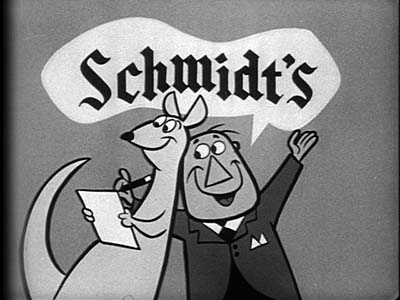
It isn’t often that you have the opportunity to follow the development of a television advertising campaign from beginning to end, but this is one of those rare occasions. Ed Benedict designed a series of spots for Schmidt’s Beer with director Paul Fennell in the mid-1950s. This reel is a complete collection of spots that chart a fascinating evolution. The pitch becomes focused, and Benedict’s style evolves from round cute animals, to simple stick figures, all the way to hyper stylized characters similar to his designs for Tex Avery’s “Field and Scream”. Benedict’s layouts in these spots are brilliant, and even though Fennell’s animation is by necessity simple due to the limitations of television budgets, it is still rhythmic, snappy and very fun.

This reel of animated commercials produced by the Paul Fennell Studios includes spots that haven’t been seen in over 75 years. We thank the family of Paul Fennell for sharing them with us.


MEMBERS LOGIN To Download

JOIN TODAY To Access Members Only Content


DVD QUALITY VIDEO:
Download Page
Penn Mutual

Penn Mutual:
Download Page
100 Years of Security

Download Page
Paul Fennel Studios (ca. 1948)

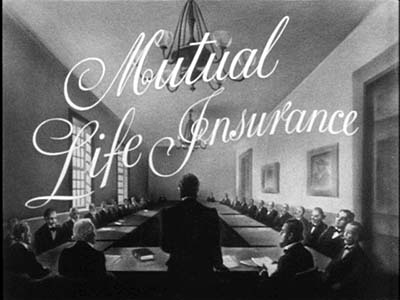
Continuing our series of rare industrial films by the Paul Fennell Studios, here is an animated film about the history of insurance in America. Fennell was insured by Penn Mutual, and he pitched his agent with the idea of doing an animated film for their annual report to stockholders. The company liked the idea, so Fennell quickly set up a studio and hired Ed Benedict away from Disney to do design and layout. They continued to work together on commercials and industrial films until the late 1950s.

This film does a good job of turning technical subjects that could easily become tedious into interesting and entertaining film action. It displays Fennell’s experience producing instructional films for the government during WWII, and combined with Benedict’s clear, focused layouts, it is a perfect model of animation as an instructional medium.


MEMBERS LOGIN To Download

JOIN TODAY To Access Members Only Content


DVD QUALITY VIDEO:
Russian Animation

Dead Tsarevna & The Seven Bogatyrs
Download Page
Ivan Ivanov-Vano / 1951

Although this film closely resembles the story of “Snow White and the Seven Dwarfs”, this adaptation is based on a Russian fairy tale about the Princess Tsarevna. The film closely follows the poem written in 1833 by Aleksandr Pushkin. If you are interested, there is a synopsis of the story at Wikipedia.

The director of this film, Ivan Ivanov-Vano began his career in animation in 1927 and made three dozen films over his half century career, most of which were based on Russian folk tales. Early on, he was heavily influenced by Disney, but his personal style developed and grew over his career. In 1947 he directed the first Russian animated feature film, The Humpbacked Horse; and he helped establish ASIFA (The International Animated Film Society) in 1961.

This film incorporates design motifs unique to Russian art and it reflects its culture perfectly. In the modern world, animated films are made in Asia, India, Europe and the United States that all look pretty much the same. It would be good if a diversity of regional styles developed again. After all, art should be a personal expression of one’s life and culture, not a product manufactured to someone else’s design.


MEMBERS LOGIN To Download

JOIN TODAY To Access Members Only Content


DVD QUALITY VIDEO:
White Serpent

The Tale of the White Serpent
Toei / Taiji Yabushita & Kazuhiko Okabe / 1958

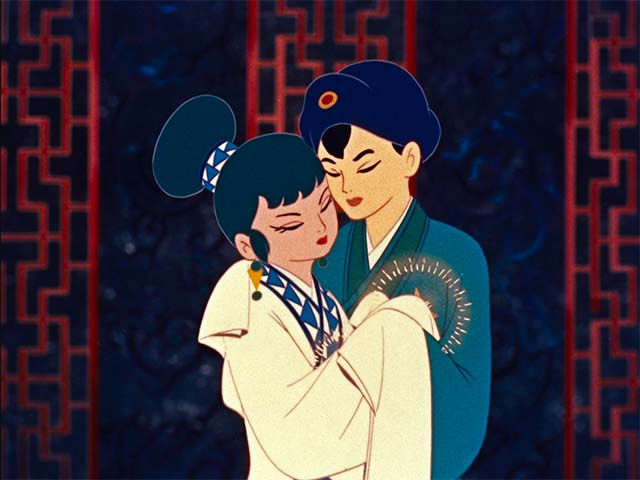
When Toei Animation undertook to create the first full color animated feature, they pushed their resources to their absolute limit. With a staff of nearly 1,400 people working on the film, and an extremely tight schedule of just eight months to complete it, they succeeded in making a wonderful film that is now considered the first Anime feature.

In an act of reconciliation with the Chinese for Japan’s mistreatment of them during WWII, the president of Toei selected a Chinese folktale, "The Tale of the White Serpent" as the subject of the feature. He may have been inspired by a live action adaptation released just two years earlier in Japan. In 1961, "The Tale of the White Serpent" was released in the United States under the title "Panda and the Magic Serpent".

White Serpent

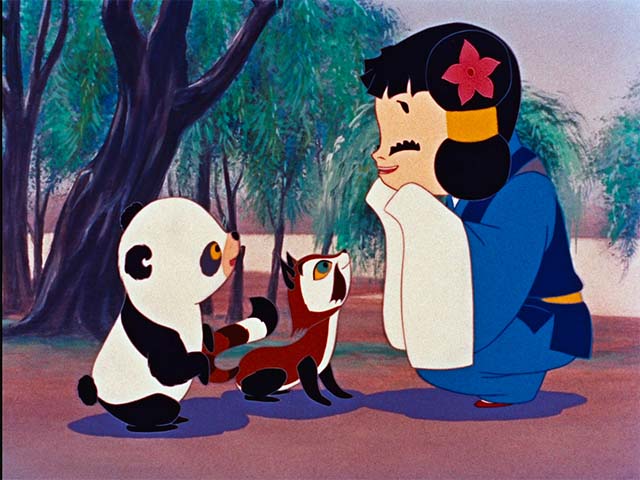
The copy of the film that we are are sharing with our members here is in Japanese with no subtitles, but dialogue is sparse and the story is easy to follow without words. The basic story is about a young prince named Xu-Xian who has a pet snake, but his parents force him to give it up. Years pass and the prince grows up. One night, during a storm, the snake transforms into a beautiful princess named Bai-Niang and a fish transforms into her assistant Xiaoqing. Using magic, she arranges with her servant Xiaoqing to meet with the prince and his pets at the broken bridge. They fall instantly in love, but they are separated by the monk Fa-Hai who believes that Bad-Niang is an evil spirit. Xu-Xian also becomes separated from his pets Panda and Mimi, and they form a gang of animals along with a pig and weasel to try to find the prince. The monk Fa-Hai does battle with princess Bai-Niang and forces her to return to her serpentine form. Bewitched and confused, Xu Xian follows her ghostly human form off a cliff and is killed. Bai-Niang gives up her magical powers to prove her love in exchange for a magic orchid with the power to bring the prince back to life. The princess and Xiaoqing embark on a perilous journey to bring the orchid to him. After a dramatic action sequence at sea, the monk realizes his mistake in keeping the lovers apart. The animal gang help get the orchid to the prince, and he is revived. Bai-Niang rescues Xu-Xian and the prince and princess live happily ever after.

In particular, pay attention to the excellent color and effects animation, as well as the use of humorous caricature in the crowd shots. There is a great deal to be learned from this film. We hope you find it useful in your studies.


MEMBERS LOGIN To Download

JOIN TODAY To Access Members Only Content


Whew! That is an amazing collection of treasures! The most important information isn’t what you already know… It’s the information you should know about, but don’t know yet. We bring that to you every other month.

THIS IS JUST THE TIP OF THE ICEBERG!

Animation Resources has been sharing treasures from the Animation Archive with its members for over a decade. Every month, our members get access to a downloadable Reference Pack, full of information, inspiration and animation. The RefPacks consist of e-books jam packed with high resolution scans of great art, still framable animated films from around the world, documentaries, podcasts, seminars and MORE! The best part is that all of this material has been selected and curated by our Board of professionals to aid you in your self study. Our goal is to help you be a greater artist. Why wouldn’t you want to be a member of a group like that?

Membership comes in two levels. General Members get access to a bi-monthly Reference Pack as well as a Bonus RefPack from past offerings in the in-between months. We offer a discounted Student Membership for full time students and educators.


JOIN TODAY!
https://animationresources.org/membership/levels/

FREE SAMPLES!

Not Convinced Yet? Check out this SAMPLE REFERENCE PACK! It will give you a taste of what Animation Resources members get to download every other month! That’s 560 pages of great high resolution images and nearly an hour of rare animation available to everyone to download for FREE! https://animationresources.org/join-us-sample-reference-pack/

Sample RefPack

PayPalAnimationAnimation Resources depends on your contributions to support its projects. Even if you can’t afford to join our group right now, please click the button below to donate whatever you can afford using PayPal.


FacebooktwitterredditpinterestlinkedinmailFacebooktwitterredditpinterestlinkedinmailby feather