


Every month, Animation Resources shares an amazing Reference Pack with its members. These carefully curated collections consist of e-books packed with high resolution scans video downloads of rare animated films set up for still frame study, as well as podcasts and documentaries— all designed to help you become a better artist. Members will have 30 days to download the current batch of treasures from the Animation Archive A new RefPack will be posted at the beginning of the next month. Bookmark the Members Only Page and remember to check back every month, because when the new month starts, the old downloads go POOF!
JOIN TODAY To Access Members Only Content
PDF E-BOOK:
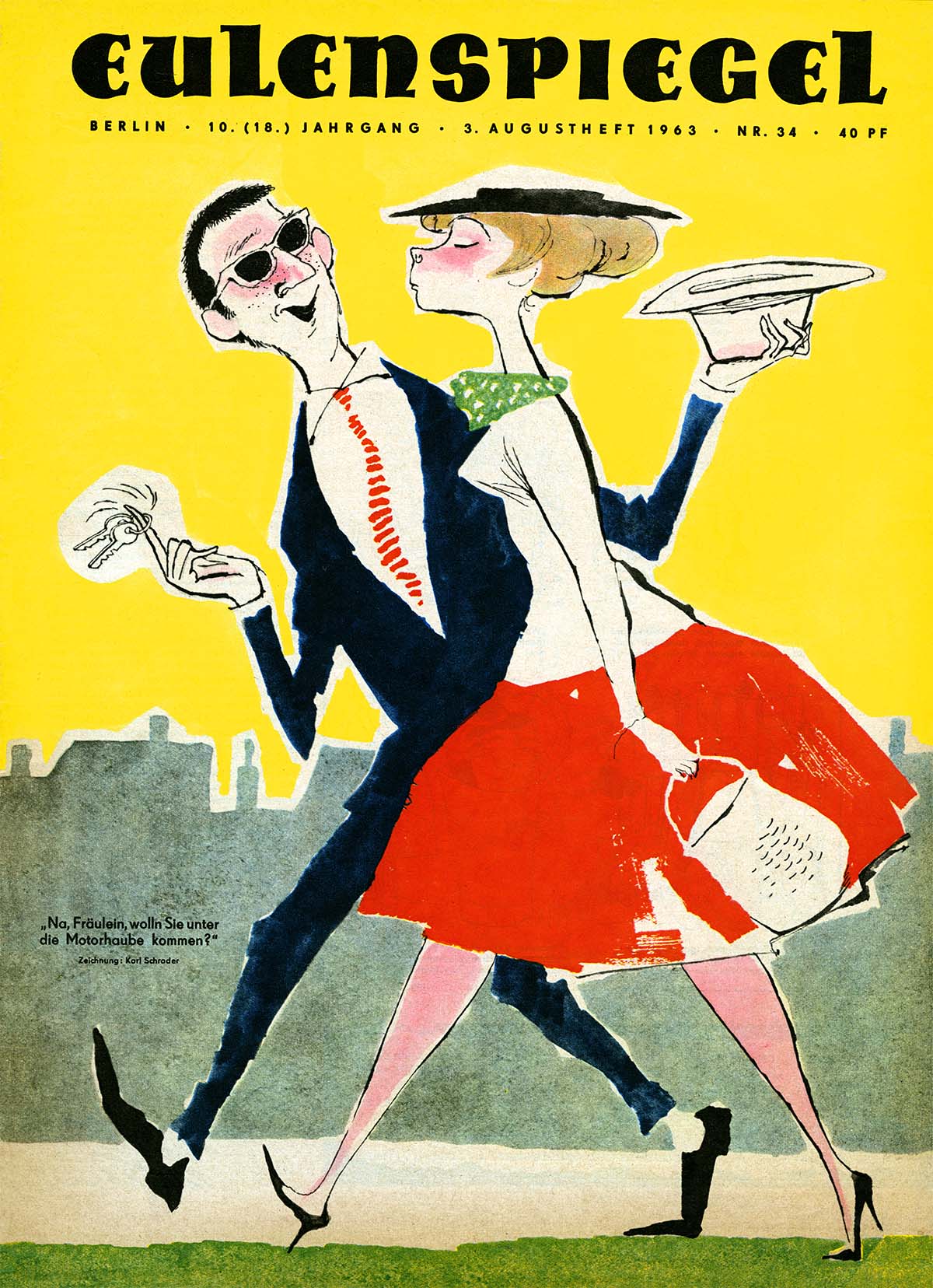
Eulenspiegel Volume One
July 1st to November 2nd, 1963
Download this article
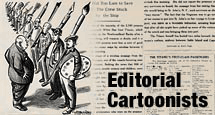
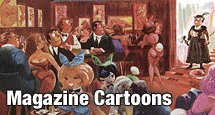
After the Second World War, satirical caricature magazines experienced a rapid decline. The general public in the post-war years wasn’t as receptive to radical politics and muckraking as they were before the war. One by one, satirical magazines around the world were replaced by illustrated current events magazines like Life, Look, The Illustrated London News and L’Illustration (see our previous e-book on the L’Illustration Christmas annuals for information on the rise of photo magazines.) Political cartooning migrated to the editorial page in the newspaper, and humor cartooning in magazines focused on social subjects in single panel gag cartoons. Harvey Kurtzman created Mad as a comic book, but soon the comic shifted to the satirical magazine format. Instead of lampooning political figures and Kings like the satirical magazines of the past, Mad Magazine made fun of TV stars and suburban lifestyles.
However, behind the Iron Curtain, satirical magazines didn’t disappear after World War II, in fact, they flourished for a time. Chief among these magazines was Krokodil. It was launched a few years after the Russian Revolution. Political satire in the Soviet Union was a dangerous thing, but Krokodil was given a wide berth to lampoon the inefficiency and lack of initiative of mid level bureaucrats and the sloppiness of labor workers.
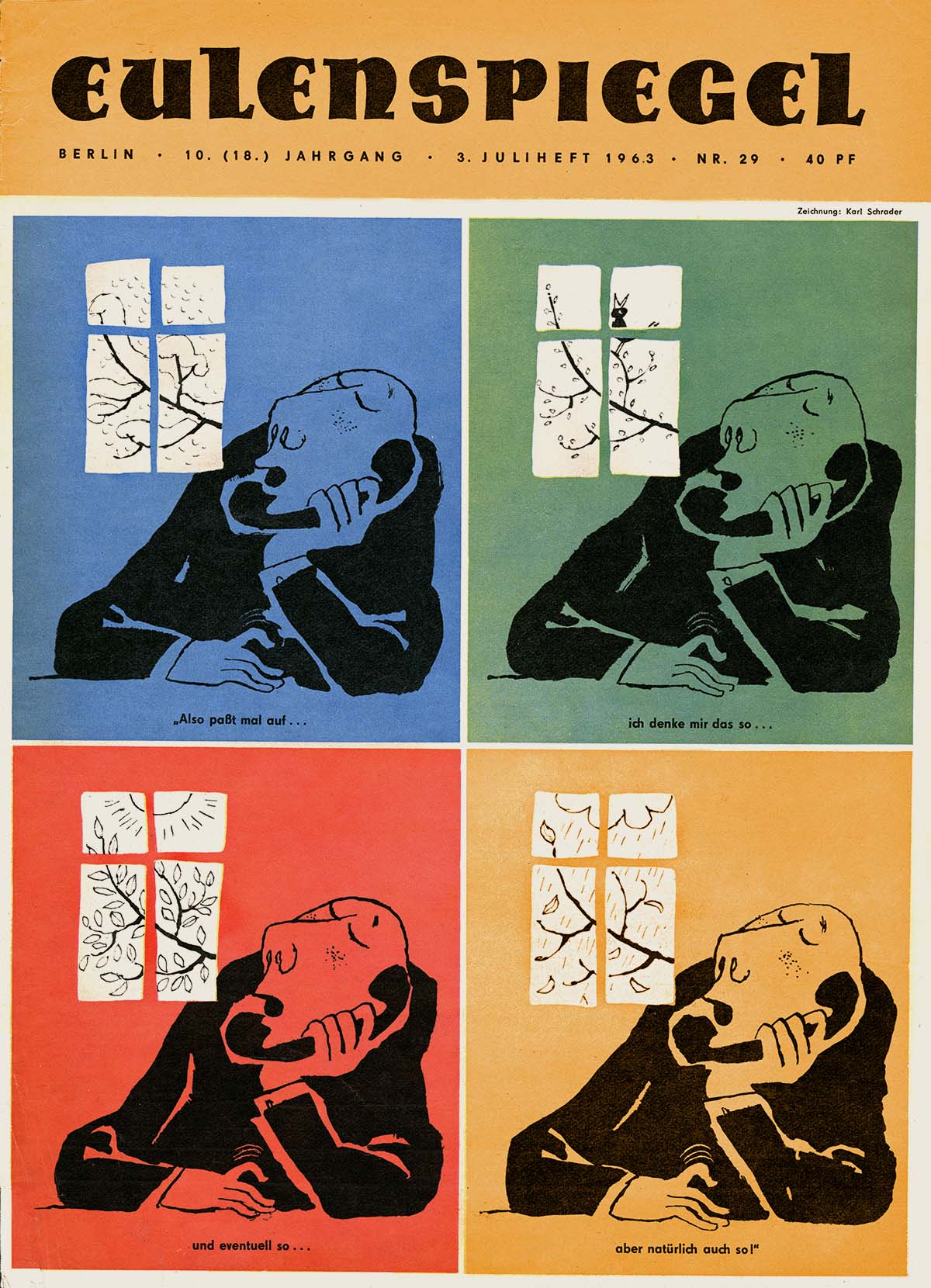 Frischer Wind (Fresh Breeze) was one of the last satirical caricature magazines to be established, beginning in 1946. It was the only humor magazine in East Germany, and it was retitled after the legendary prankster Eulenspiegel in 1954. Only three East German magazines survived after the Berlin Wall fell, and Eulenspiegel was one of them. It continues to be published to this day. Punch ceased publication in 1991 after more than a century and a half in print, Krokodil closed its doors in 2008, Mad Magazine recently announced that they were ending their print magazine. It may well be that Eulenspiegel is the last of the classic satirical humor magazines still in circulation.
We know very little about the artists who drew for Eulenspiegel. If you have any information on them, please let us know so we can add it to our database. Animation Resources was fortunate to Find a batch of these rarely seen magazines in a bookshop in Hungary and had them shipped to us in the United States for digitization. We hope you find them useful.
JOIN TODAY To Access Members Only Content

Inspiration for animated films doesn’t just come from other animated films. A lot can be gained from exposing yourself to music, dance, live action cinema and fine art. Even architecture can be a useful area to study. Occasionally, we will share interdisciplinary inspiration here in the Side Trips section.
SD VIDEO:

Ray & Charles Eames

The Architect And The Painter (2011) / An Eames Celebration (2011) / Parade (1952) / Solar Powered Do Nothing Machine (1958) / Bread (1958) /Powers Of Ten (1977) / Toccata For Toy Trains (1989)
Download this article
The foundation of modern design as we know it can be attributed in large part to the work of Ray and Charles Eames. Together, the husband and wife duo pioneered techniques in architecture and design, influenced educational and industrial filmmaking, and set a new standard for corporate and civic presentation in the burgeoning information age. Their philosophy was one of function defining form and the power of an image to simply convey complex information. The meticulous craftsmanship behind the designs remained transparent— they convey their concepts effortlessly. This manipulation of ideas through pure visuals led to contracts with the US military, the State Department, and some of the biggest corporations of the mid 20th century.

In 1939, Charles Eames became the new head of the Industrial Design Department at the Cranbrook Academy of Art, based on a fellowship offered by the Finnish designer Eliel Saarinen who was president of the school at the time. Charles collaborated with Eliel’s son, Eero Saarinen, on a number of projects before entering the Organic Design in Home Furnishings competition hosted by the Museum of Modern Art in New York City. Ray Kaiser, an abstract painter who had studied under Hans Hofmann and was a key figure in the New York abstract art scene, contributed design drawings to Charles and Eero’s project while studying at Cranbrook. Their relationship blossomed, and in 1941, they settled in Los Angeles as Ray and Charles Eames, partners in both design and life.

The most notable of the films in this catalog is "Powers of Ten" (1977). Commissioned by IBM for public release after a 1968 version was installed in the Smithsonian’s National Air and Space Museum, the film begins with an overhead shot of picnickers on the Chicago lakefront, with measurements being represented by simple squares. The camera slowly zooms out from a one-meter square to show a distance of 10 meters, and then a distance of 100 meters, increasing in distance by powers of 10 until we see the universe on a cosmic scale. We then return to the picnic at a rate of two seconds per power of ten. The speed at which the Eames relay this content was revolutionary, as our modern understanding of how quickly an audience can process imagery and ideas was not yet fully known or tested in film.

At their core, each of the films produced by Ray and Charles Eames showcases the basic essence of what film is all about. Whether through stop-motion or film photography, every shot is carefully crafted and designed with captivating visuals centered around a single idea. The strength of these films lies in their simplicity, conveying a message that is easily understood by all who watch. What makes these shorts unique compared to the others in our Eames catalog is that, aside from "Powers of Ten", each of these films was a personal project by Ray and Charles, bringing to life what brought them joy, such as toys or the circus. You will see Ray’s keen color sensibility, combined with Charles’s expertise in manipulating ideas, which heavily influenced the shot design.

Today, we are sharing the definitive documentary on Ray and Charles Eames, "The Architect And The Panter" (2011), the short film, "An Eames Celebration" and a handful of their live-action films. In future Reference Packs, we will feature more of the Eames’ most important films.
JOIN TODAY To Access Members Only Content

One of the most popular features of Animation Resources’ social media accounts is our breakdown clips. Animation Resources board member, David Eisman shares a handful of them in each Reference Pack, along with analysis of what you can learn from still framing through the animation.
ANALYSIS:

Josef Gemes: Heroic Times
Curated By David Eisman
Download this article
When I first set out to write this article, it was meant to be an examination of the filmography of Hungarian animator Jozsef Gemes. However, while immersed in my initial research phase, I found myself continuously coming back to his most well known work "Heroic Times" (1983). Not for lack of trying, I have been completely unable to determine exactly how this film was made. All the "evidence" as to the exact nature of its production is contradictory and unreliable. Some sources claim the entire film was composed of tens of thousands of oil paintings individually photographed and then stitched together in film. Others say it’s a combination of different techniques: cel animation, hand painted backgrounds, and oil on glass, all staged under a multiplane camera. IMDB claims in its Trivia section that the film was made by ten artists over ten years, culminating in 600 backgrounds and 30,000 painted cels. Still, I am unable to find a reliable source to confirm this.
Maybe somewhere out there there is an interview with Jozsef Gemes lost to Soviet History, or warehoused in some hidden corner of the internet, untranslated from its native Hungarian. Whatever the case, I am left at a loss for absolutes. I do not know entirely how each of the following four breakdowns were made. As such, this article will be an attempt to unravel a mystery and provide a lesson on efficiency in animation.
JOIN TODAY To Access Members Only Content
Whew! That is an amazing collection of treasures! The most important information isn’t what you already know… It’s the information you should know about, but don’t know yet. We bring that to you every other month.
THIS IS JUST THE TIP OF THE ICEBERG!
Animation Resources has been sharing treasures from the Animation Archive with its members for over a decade. Every month, our members get access to a downloadable Reference Pack, full of information, inspiration and animation. The RefPacks consist of e-books jam packed with high resolution scans of great art, still framable animated films from around the world, documentaries, podcasts, seminars and MORE! The best part is that all of this material has been selected and curated by our Board of professionals to aid you in your self study. Our goal is to help you be a greater artist. Why wouldn’t you want to be a member of a group like that?
Membership comes in two levels. General Members get access to a bi-monthly Reference Pack as well as a Bonus RefPack from past offerings in the in-between months. We offer a discounted Student Membership for full time students and educators.
JOIN TODAY!
https://animationresources.org/membership/levels/
FREE SAMPLES!
Not Convinced Yet? Check out this SAMPLE REFERENCE PACK! It will give you a taste of what Animation Resources members get to download every other month! That’s 560 pages of great high resolution images and nearly an hour of rare animation available to everyone to download for FREE! https://animationresources.org/join-us-sample-reference-pack/
 Animation Resources depends on your contributions to support its projects. Even if you can’t afford to join our group right now, please click the button below to donate whatever you can afford using PayPal.







 by
by