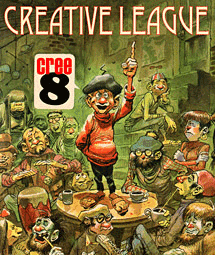



JOIN TODAY To Access Members Only Content
The latest Animation Resources Reference Pack has been uploaded to the server. Here’s a quick overview of what you’ll find when you log in to the Members Only Page…
PDF E-BOOK:

Shin-Bijutsukai
Volume Two
Download this article
Those who are well-versed in the history of 19th century European art are aware of the impact that Japanese art had on Western painters. Commodore Matthew Perry inaugurated trade between Europe and Japan in 1854, launching a craze in Europe and America for all things Japanese. The world was delighted to discover a culture with deep roots of tradition that had been previously unknown to Westerners. Artists like Gauguin. Van Gogh, Monet and Renoir adapted the Japanese style to establish the precepts of Impressionism. Many impressionist paintings incorporate the downward tipped perspective of Asian art, as well as the choice of oblique angles and one point perspective. Drapery and floral details were depicted in a flat, graphic style. Portraits were close cropped like Japanese Kabuki images, and the subject matter focused on domestic interiors like Geisha prints, or everyday urban street scenes like the Japanese prints depicting famous sites in Edo. And it wasn’t just painters… Japanese design influenced the jewelry designs of Tiffany and the myriad of applications of design by the British Arts & Crafts movement and French Art Nouveau, from architecture to pottery to sculpture to the graphic arts.

However, the intersection of traditional Japanese design and Western art wasn’t all in one direction. Japanese artists were influenced by art from Europe as well. Before Perry’s expedition to Japan, there were two basic approaches to ukiyo-e (Japanese woodblock printmaking). One was focused on popular culture of the day… actors from Kabuki theater, famous beauties from the restaurants and brothels of Edo, and exaggerated illustrations of folk tales about legendary Samurai warriors. On the other side was art for art’s sake… beautiful imagery of nature based on traditions from Chinese painting. The pop culture prints were viewed as ephemeral, like newspapers; while the art based on nature was intended to be saved and appreciated.

When Westerners came to Japan, they viewed the popular images of beautiful women and warriors as being just as worthy of consideration as fine art, since it mirrored the search for beauty in the female form and the depiction of Biblical and mythological themes in Western art. This caused the Japanese to reappraise what had previously been seen as disposable. At the same time, a flood of images from the West arrived thanks to modern printing techniques. Western perspective began to creep into the prints by Hokusai and others, and aspects of the European Arts & Crafts movement and Art Nouveau began to influence the Japanese prints that had originally influenced those styles.

Art that had up to then been based on traditional Chinese principles began to incorporate the natural organic forms of Nouveau, creating a new form of Japanese art known as Mingei (“people’s crafts”). Initially, Japanese artists working in traditional forms resisted the influence of Europe on their art, but it was a losing battle. The rapid industrialization of Japan, and the effect of Western culture and fashion swept through Japanese society on all levels. In order to preserve their traditions, artists strove to adapt European designs for traditional Japanese purposes.
Japan had a long history of printing design references called hinagata-bon (“pattern books”) which documented and popularized current fashion trends. The first of these appeared in the mid 17th century, but by the end of the 19th century, pattern books experienced a blossoming of popularity due to the inevitable blending of Eastern and Western design. The demand for Japanese prints in the West brought the craftsmanship of woodblock printing to a high level, allowing for complex, full-color imagery. Two big publishing houses, Unsodo and Unkindo began printing magazines known as zuan-cho, which included designs for fabrics, lacquerware, fans, screens, ceramics and other crafts, presented not just for use by artisans, but as art for art’s sake. The British magazine The Studio served a similar purpose. It was responsible for popularizing Art Nouveau in England and America by illustrating a variety of crafts incorporating the style.

At the turn of the 20th century, Unsodo launched the greatest of these zuan-cho magazines, Shin-Bijutsukai, whose title translated means “A New Ocean of Art”. The publication was edited by Furuya Korin and supervised by Kamisaka Sekka. Both taught at the Kyoto City University of the Arts and they were at the forefront of merging Japanese design with Art Nouveau. Other contributors included Kono Bairei, Utagawa Kuniyoshi, and Helen Hyde.
The pages of Shin-Bijustsikai overflow with ideas. At first glance, you might think they are just pretty abstract designs, but looking closely, you can see the way natural animals and plant life are stylized. Abstract forms are used to render volumetric depth, layers overlap with transparencies, and compositions and patterns are brilliantly balanced. The color palettes incorporate light and shade, and textures and gradients are executed expertly by means of complex print making techniques. Along with the earlier publication, Bjutsukai, Unsodo produced dozens of issues consisting of almost 1000 individual woodblock prints. It is amazing to think that all of these images were created by hand using traditional Japanese woodblock carving and printing methods… and even more amazing that the issues were published in large enough print runs to satisfy both the Japanese and European markets.

In the late 1950s, Unsodo undertook the project of organizing and cataloguing all of the original woodblocks in its storehouse. They discovered block sets dating back well over a century, including all of the blocks used to produce Bijutsukai and Shin-Bijutsukai. These blocks were carefully repaired and restored, and along with antique reference copies of the magazines, they were used to produce a limited run of complete sets of both magazines using the finest papers. Animation Resources was fortunate enough to gain access to one of these sets. We have referred to these amazing books and carefully corrected printing errors to produce the ultimate digital set of Bijustsukai, which we will be sharing with our members over the next few years.

Browse these pages for pleasure… or use them as a jumping off place to inspire your own designs. Shin-Bijustsukai is definitely aptly titled as a “new ocean of art”.
JOIN TODAY To Access Members Only Content
DVD QUALITY VIDEO:
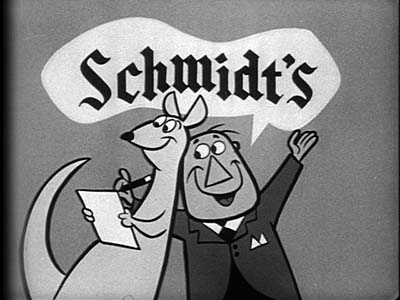
Schmidt’s Beer Commercial Reel
Paul Fennell Studios (ca. 1956)
It isn’t often that you have the opportunity to follow the development of a television advertising campaign from beginning to end, but this is one of those rare occasions. Ed Benedict designed a series of spots for Schmidt’s Beer with director Paul Fennell in the mid-1950s. This reel is a complete collection of spots that chart a fascinating evolution. The pitch becomes focused, and Benedict’s style evolves from round cute animals, to simple stick figures, all the way to hyper stylized characters similar to his designs for Tex Avery’s “Field and Scream”. Benedict’s layouts in these spots are brilliant, and even though Fennell’s animation is by necessity simple due to the limitations of television budgets, it is still rhythmic, snappy and very fun.
This reel of animated commercials produced by the Paul Fennell Studios includes spots that haven’t been seen in over 75 years. We thank the family of Paul Fennell for sharing them with us.
JOIN TODAY To Access Members Only Content
DVD QUALITY VIDEO: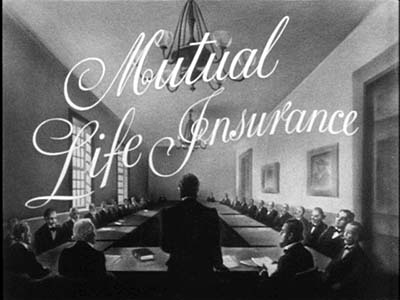
Penn Mutual:
100 Years of Security
Paul Fennel Studios (ca. 1948)
Continuing our series of rare industrial films by the Paul Fennell Studios, here is an animated film about the history of insurance in America. Fennell was insured by Penn Mutual, and he pitched his agent with the idea of doing an animated film for their annual report to stockholders. The company liked the idea, so Fennell quickly set up a studio and hired Ed Benedict away from Disney to do design and layout. They continued to work together on commercials and industrial films until the late 1950s.
This film does a good job of turning technical subjects that could easily become tedious into interesting and entertaining film action. It displays Fennell’s experience producing instructional films for the government during WWII, and combined with Benedict’s clear, focused layouts, it is a perfect model of animation as an instructional medium.
JOIN TODAY To Access Members Only Content
DVD QUALITY VIDEO:
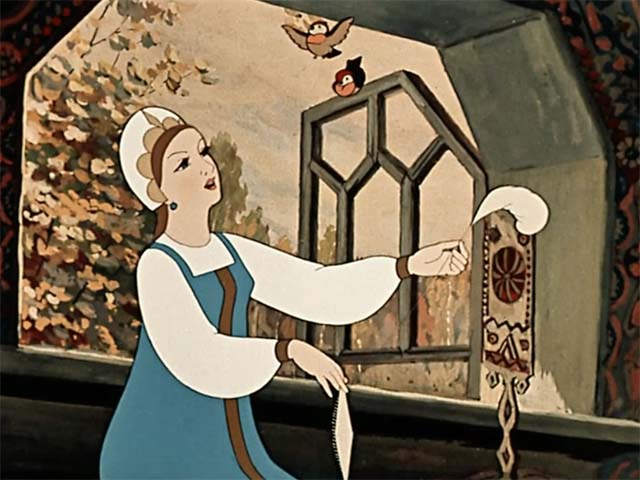
Dead Tsarevna & The Seven Bogatyrs
Ivan Ivanov-Vano / 1951
Although this film closely resembles the story of “Snow White and the Seven Dwarfs”, this adaptation is based on a Russian fairy tale about the Princess Tsarevna. The film closely follows the poem written in 1833 by Aleksandr Pushkin. If you are interested, there is a synopsis of the story at Wikipedia.
The director of this film, Ivan Ivanov-Vano began his career in animation in 1927 and made three dozen films over his half century career, most of which were based on Russian folk tales. Early on, he was heavily influenced by Disney, but his personal style developed and grew over his career. In 1947 he directed the first Russian animated feature film, The Humpbacked Horse; and he helped establish ASIFA (The International Animated Film Society) in 1961.
This film incorporates design motifs unique to Russian art and it reflects its culture perfectly. In the modern world, animated films are made in Asia, India, Europe and the United States that all look pretty much the same. It would be good if a diversity of regional styles developed again. After all, art should be a personal expression of one’s life and culture, not a product manufactured to someone else’s design.
JOIN TODAY To Access Members Only Content
DVD QUALITY VIDEO:
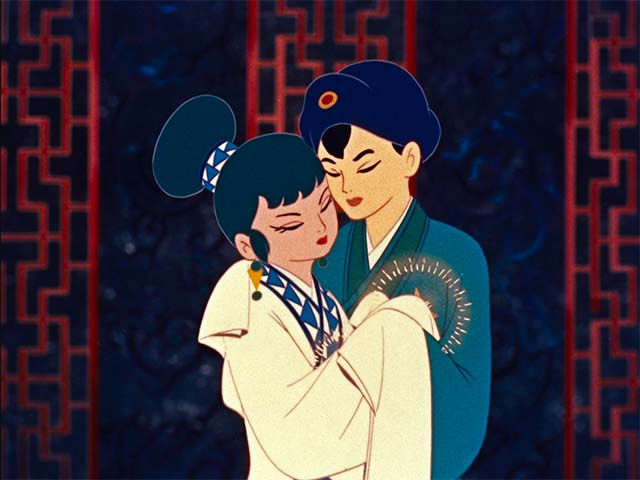
The Tale of the White Serpent
Toei / Taiji Yabushita & Kazuhiko Okabe / 1958
When Toei Animation undertook to create the first full color animated feature, they pushed their resources to their absolute limit. With a staff of nearly 1,400 people working on the film, and an extremely tight schedule of just eight months to complete it, they succeeded in making a wonderful film that is now considered the first Anime feature.
In an act of reconciliation with the Chinese for Japan’s mistreatment of them during WWII, the president of Toei selected a Chinese folktale, "The Tale of the White Serpent" as the subject of the feature. He may have been inspired by a live action adaptation released just two years earlier in Japan. In 1961, "The Tale of the White Serpent" was released in the United States under the title "Panda and the Magic Serpent".
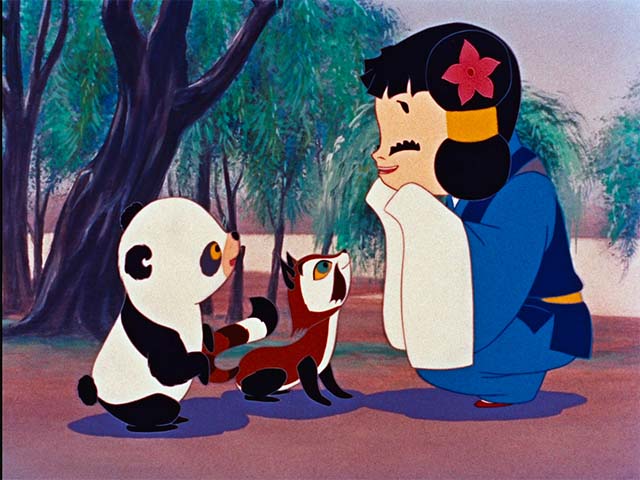
The copy of the film that we are are sharing with our members here is in Japanese with no subtitles, but dialogue is sparse and the story is easy to follow without words. The basic story is about a young prince named Xu-Xian who has a pet snake, but his parents force him to give it up. Years pass and the prince grows up. One night, during a storm, the snake transforms into a beautiful princess named Bai-Niang and a fish transforms into her assistant Xiaoqing. Using magic, she arranges with her servant Xiaoqing to meet with the prince and his pets at the broken bridge. They fall instantly in love, but they are separated by the monk Fa-Hai who believes that Bad-Niang is an evil spirit. Xu-Xian also becomes separated from his pets Panda and Mimi, and they form a gang of animals along with a pig and weasel to try to find the prince. The monk Fa-Hai does battle with princess Bai-Niang and forces her to return to her serpentine form. Bewitched and confused, Xu Xian follows her ghostly human form off a cliff and is killed. Bai-Niang gives up her magical powers to prove her love in exchange for a magic orchid with the power to bring the prince back to life. The princess and Xiaoqing embark on a perilous journey to bring the orchid to him. After a dramatic action sequence at sea, the monk realizes his mistake in keeping the lovers apart. The animal gang help get the orchid to the prince, and he is revived. Bai-Niang rescues Xu-Xian and the prince and princess live happily ever after.
In particular, pay attention to the excellent color and effects animation, as well as the use of humorous caricature in the crowd shots. There is a great deal to be learned from this film. We hope you find it useful in your studies.
JOIN TODAY To Access Members Only Content
Whew! That is an amazing collection of treasures! The most important information isn’t what you already know… It’s the information you should know about, but don’t know yet. We bring that to you every other month.
THIS IS JUST THE TIP OF THE ICEBERG!
Animation Resources has been sharing treasures from the Animation Archive with its members for over a decade. Every month, our members get access to a downloadable Reference Pack, full of information, inspiration and animation. The RefPacks consist of e-books jam packed with high resolution scans of great art, still framable animated films from around the world, documentaries, podcasts, seminars and MORE! The best part is that all of this material has been selected and curated by our Board of professionals to aid you in your self study. Our goal is to help you be a greater artist. Why wouldn’t you want to be a member of a group like that?
Membership comes in two levels. General Members get access to a bi-monthly Reference Pack as well as a Bonus RefPack from past offerings in the in-between months. We offer a discounted Student Membership for full time students and educators.
JOIN TODAY!
https://animationresources.org/membership/levels/
FREE SAMPLES!
Not Convinced Yet? Check out this SAMPLE REFERENCE PACK! It will give you a taste of what Animation Resources members get to download every other month! That’s 560 pages of great high resolution images and nearly an hour of rare animation available to everyone to download for FREE! https://animationresources.org/join-us-sample-reference-pack/
 Animation Resources depends on your contributions to support its projects. Even if you can’t afford to join our group right now, please click the button below to donate whatever you can afford using PayPal.







 by
by