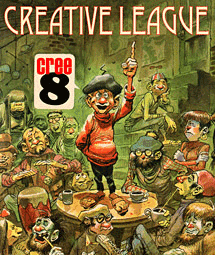


Footage of Milton Caniff, Hal Foster, Bud Fisher, Chic Young, Al Capp and other cartoonists at work in their studios…
"Passing Parade: People On Paper" (MGM/1945)
(Quicktime 7 / 24 megs)
REG’LAR FELLERS, LI’L ABNER, FLASH GORDON, TERRY & THE PIRATES, GAGS & GALS, STEVE CANYON… Meet The Men Behind The Comics

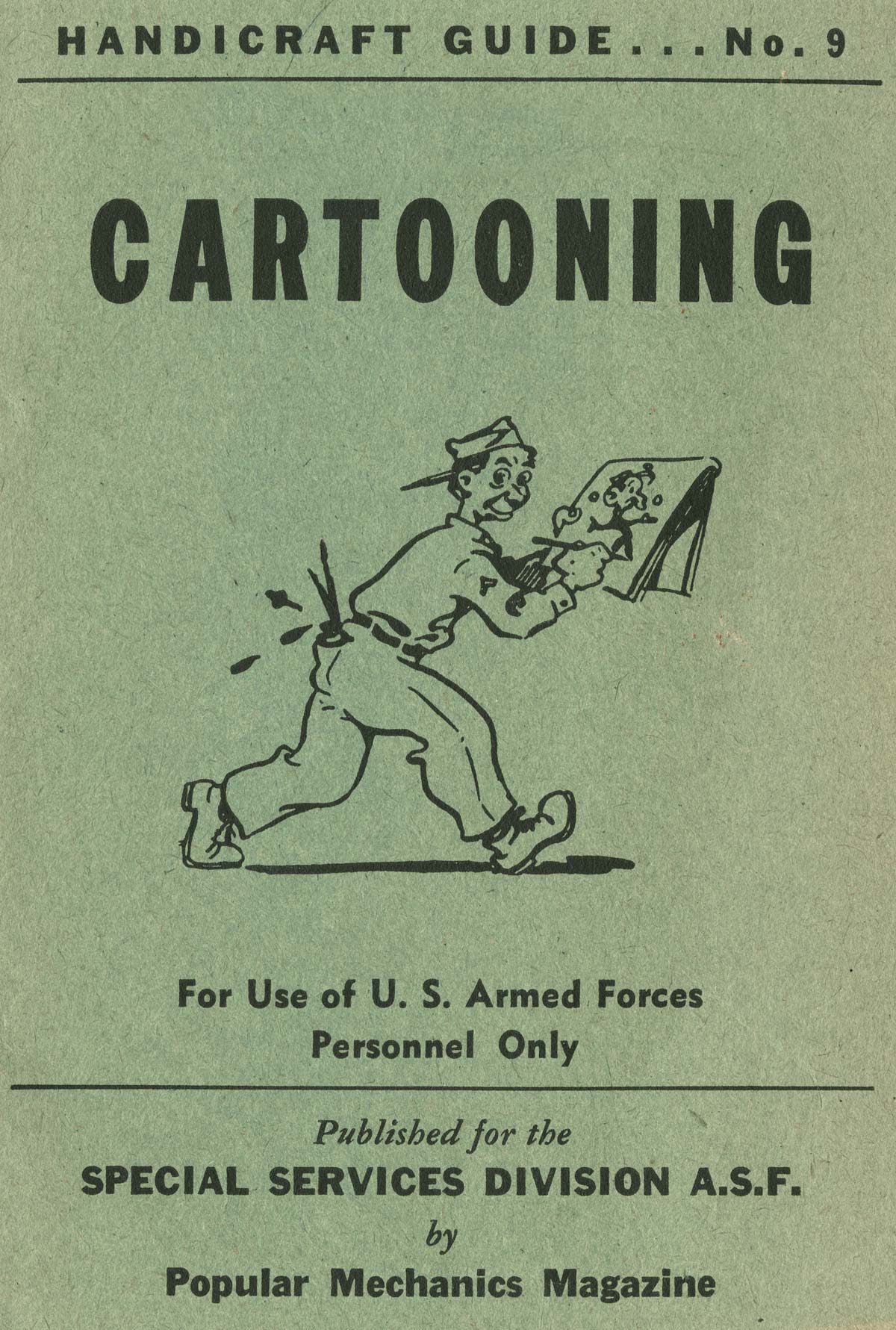
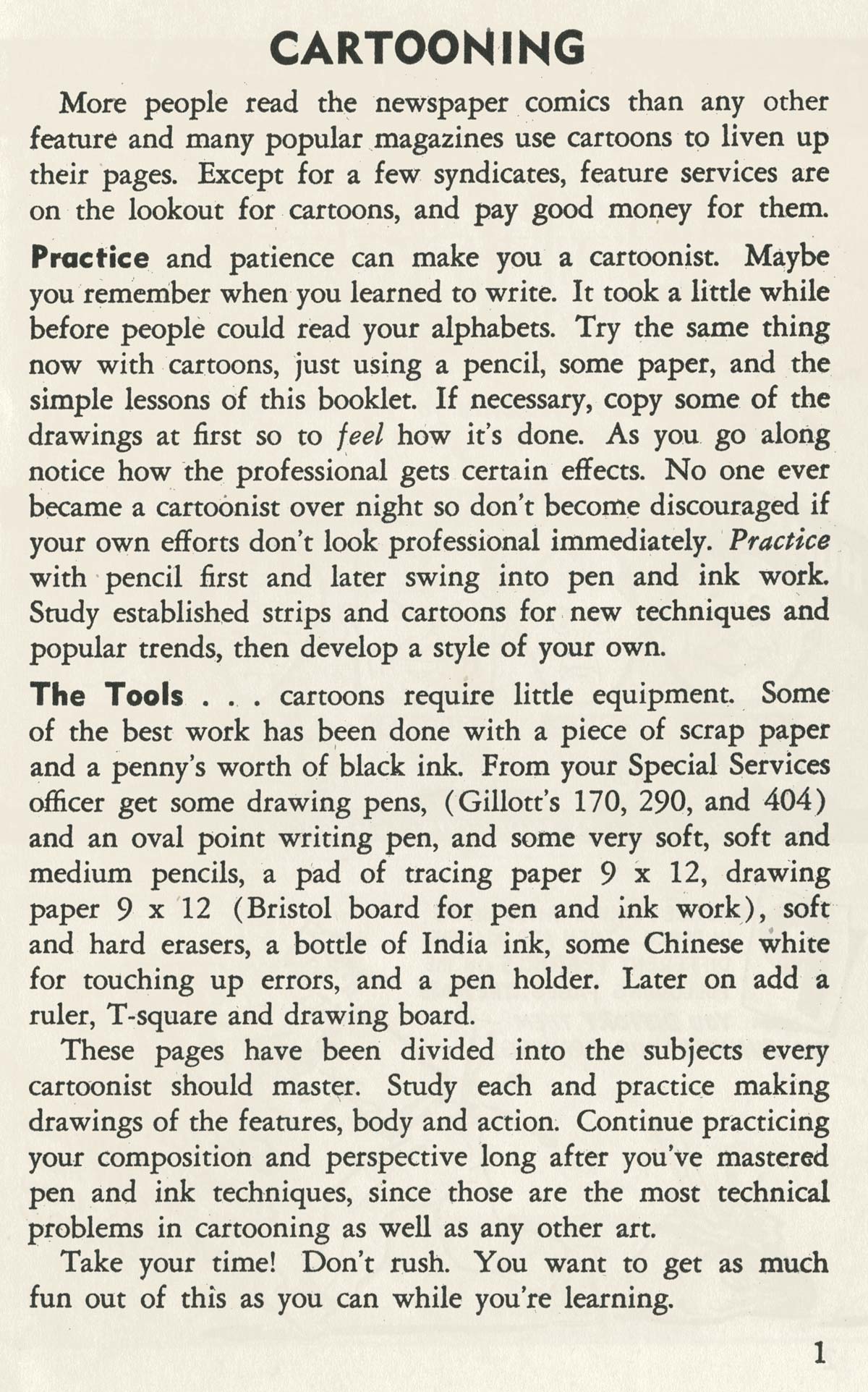
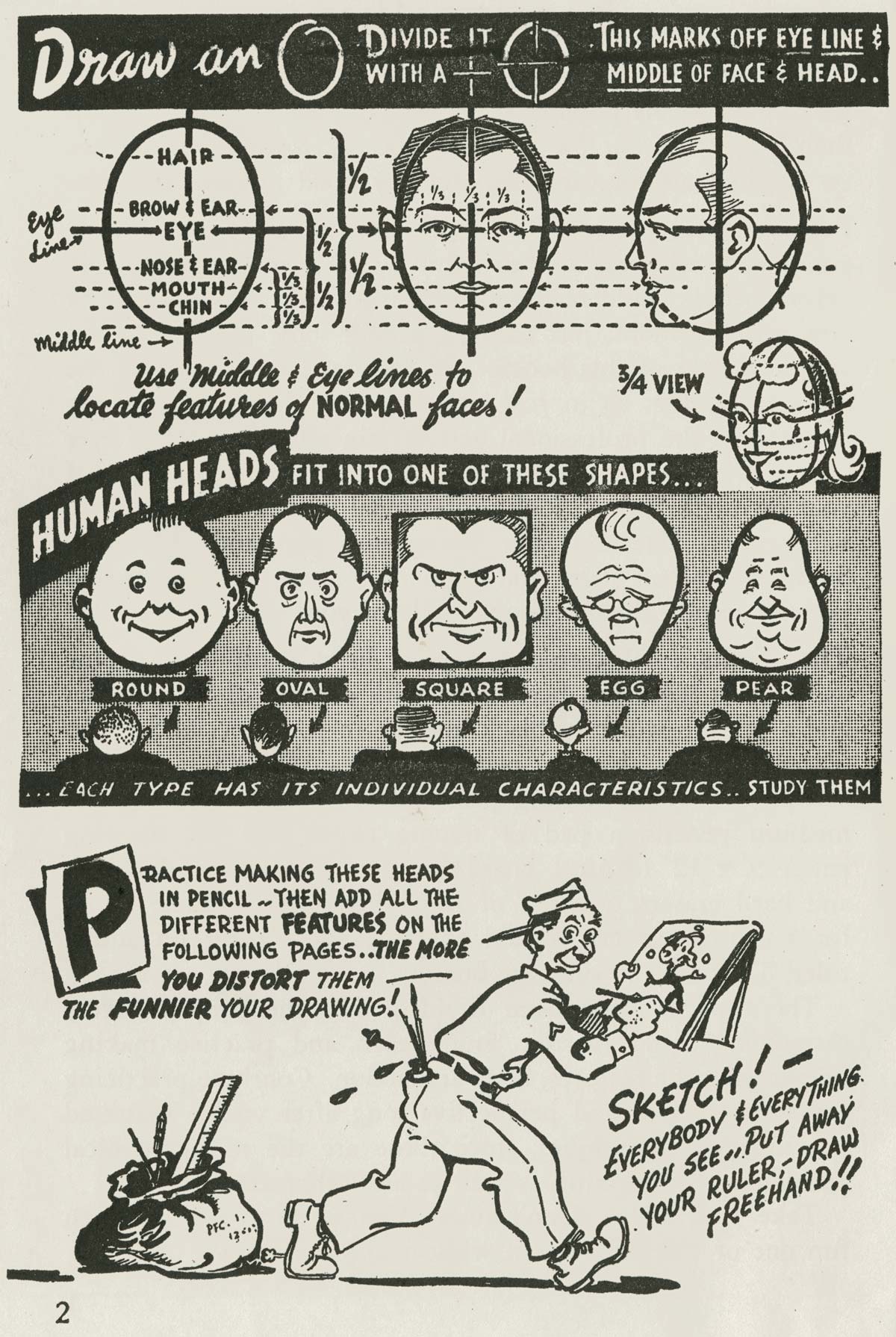
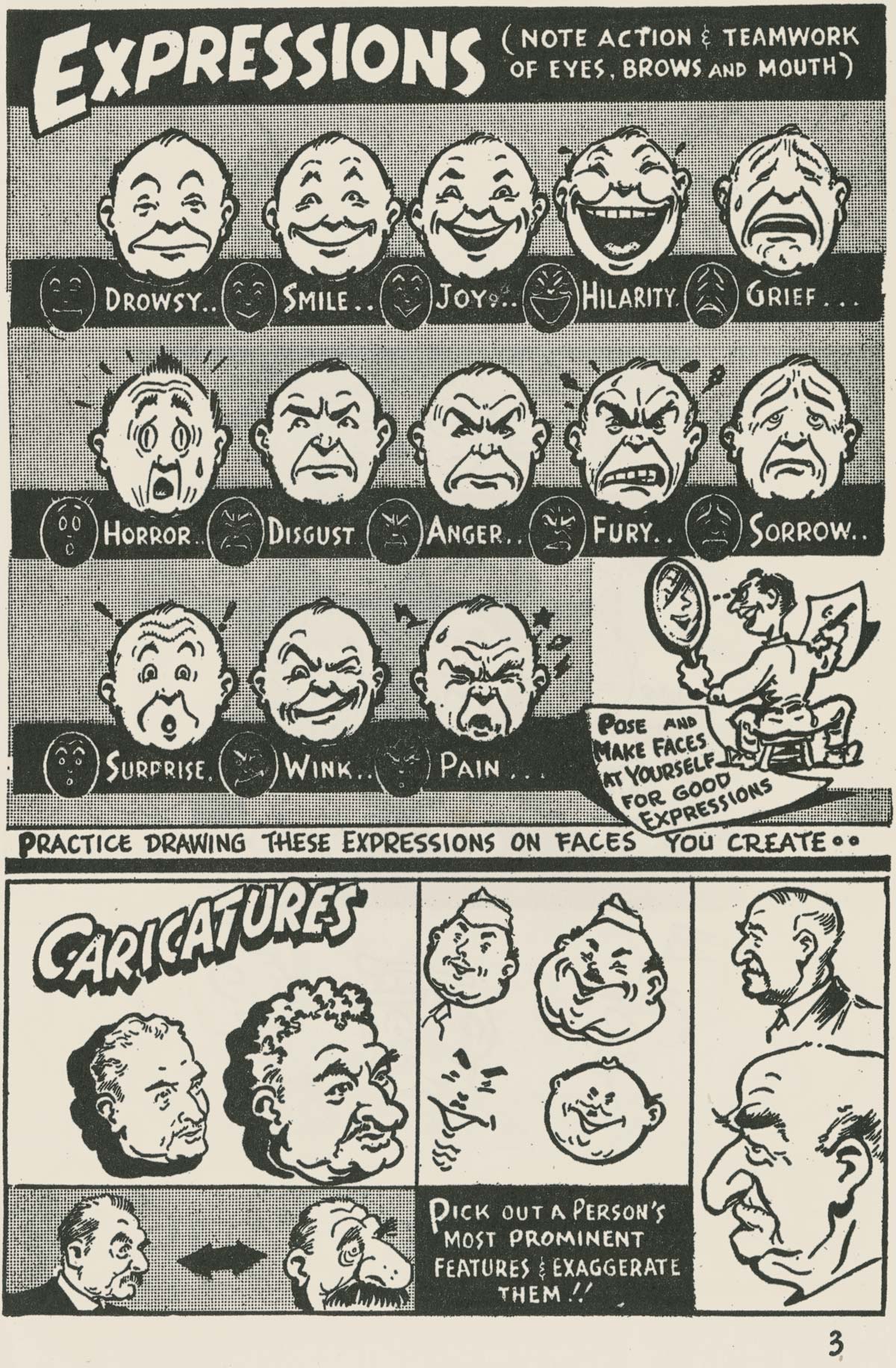
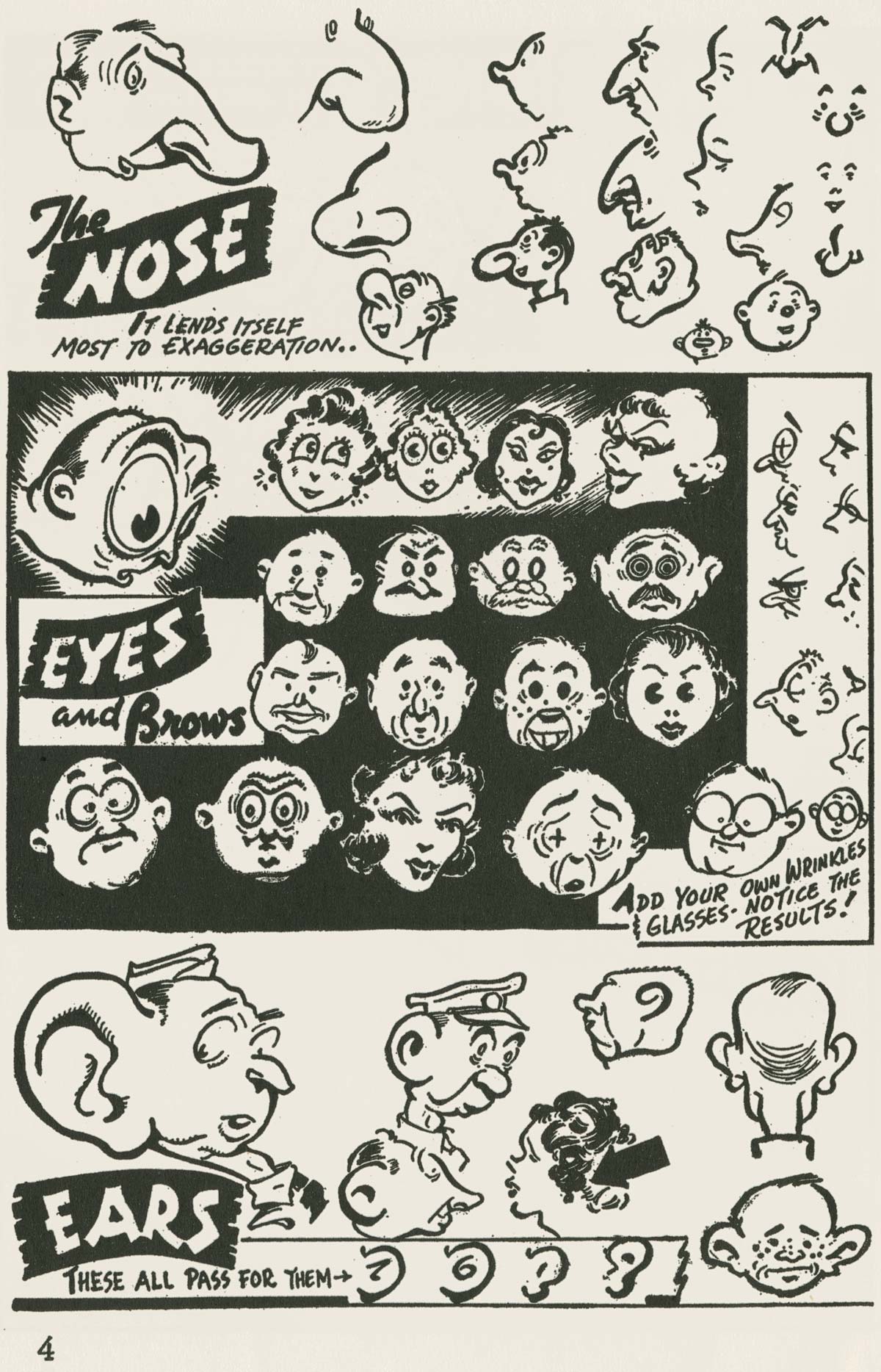
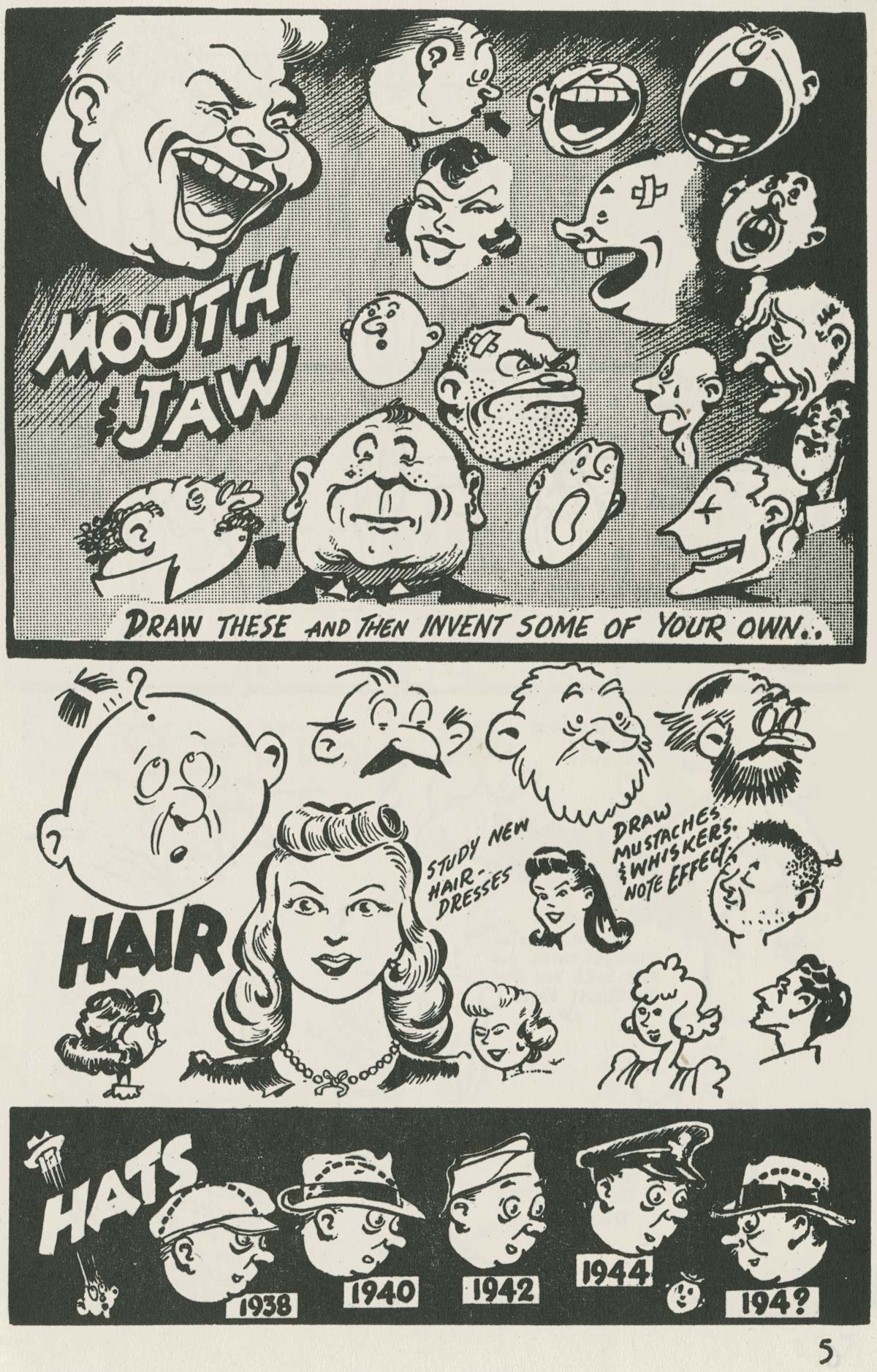
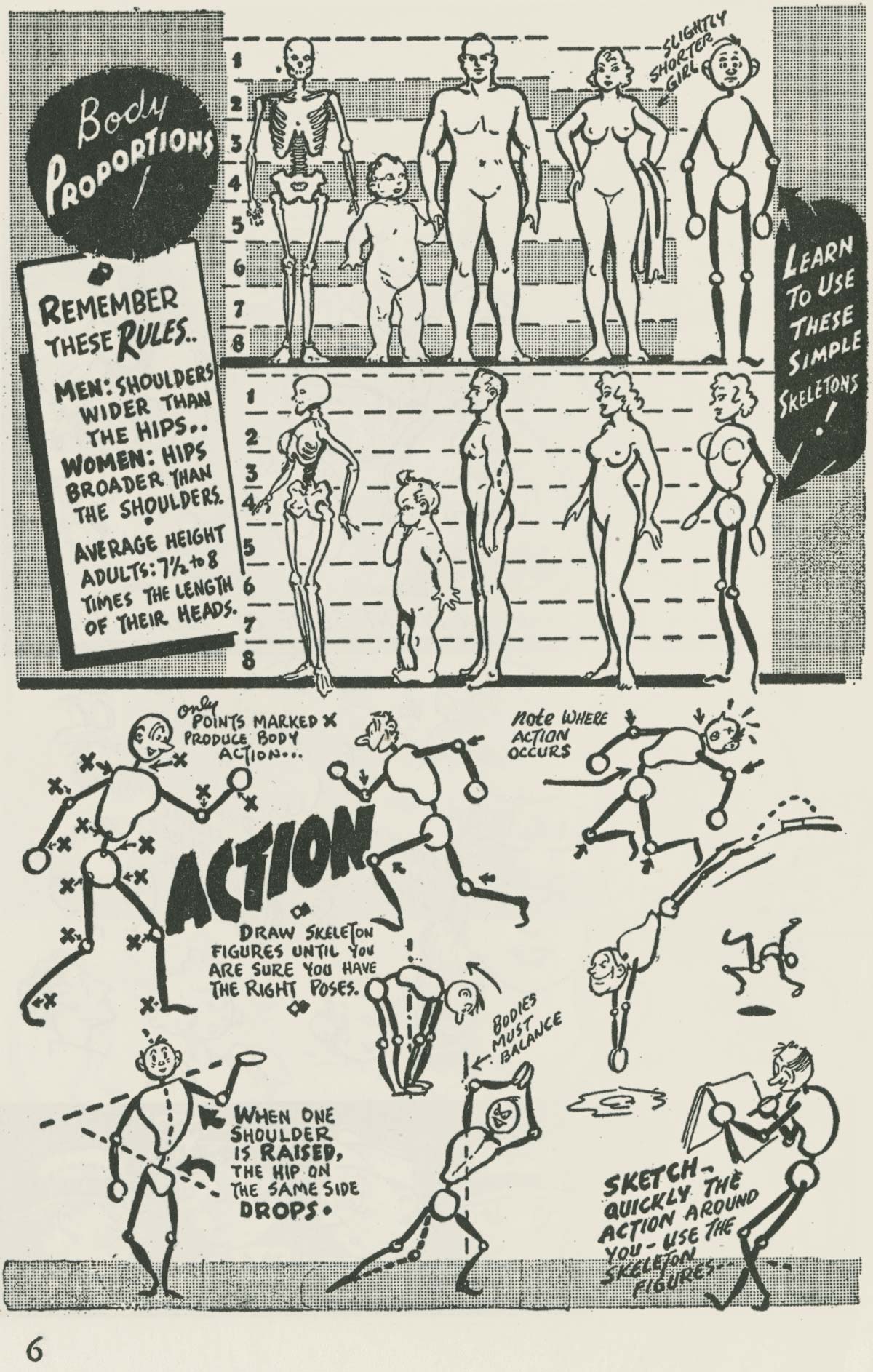
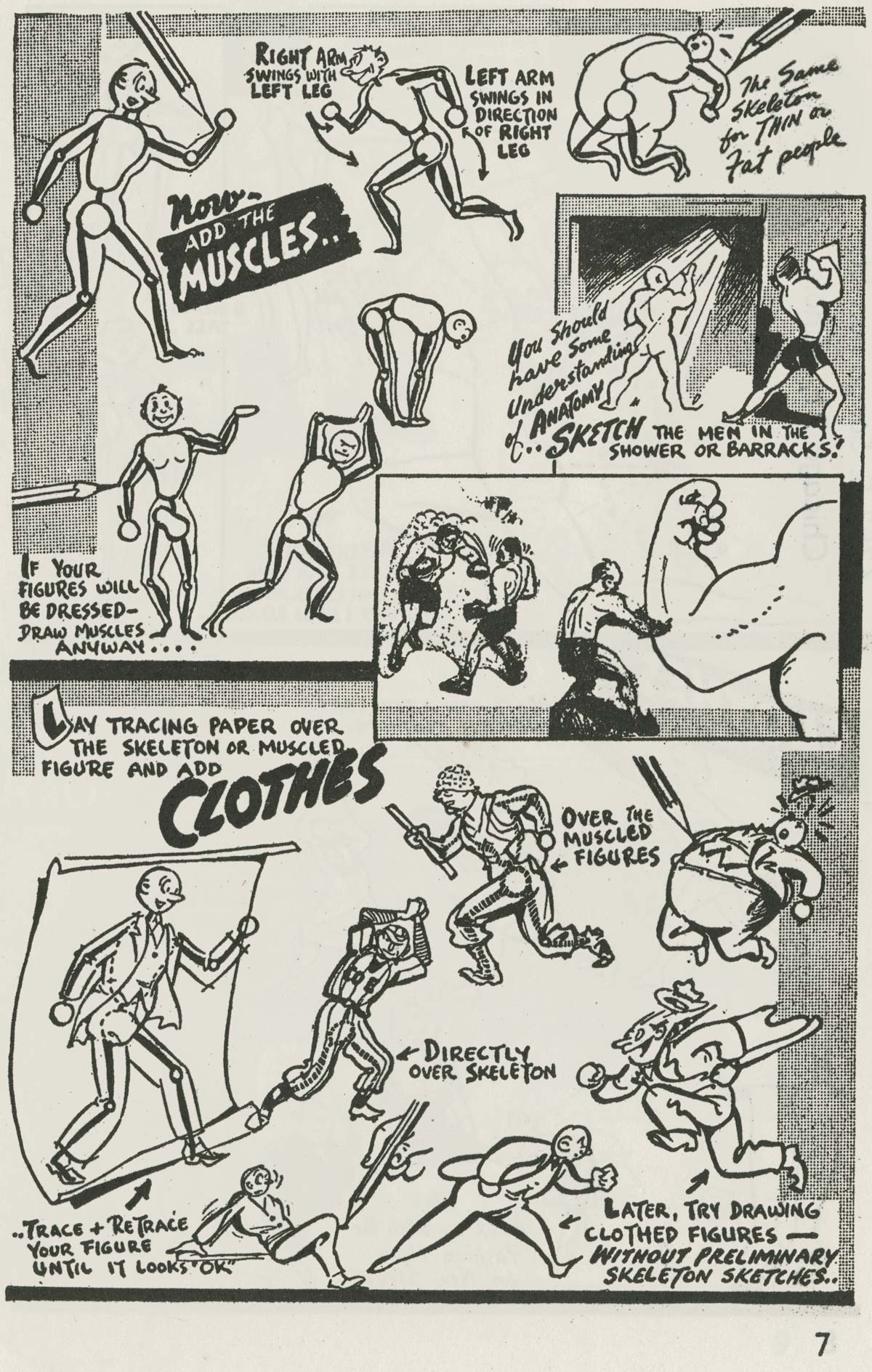
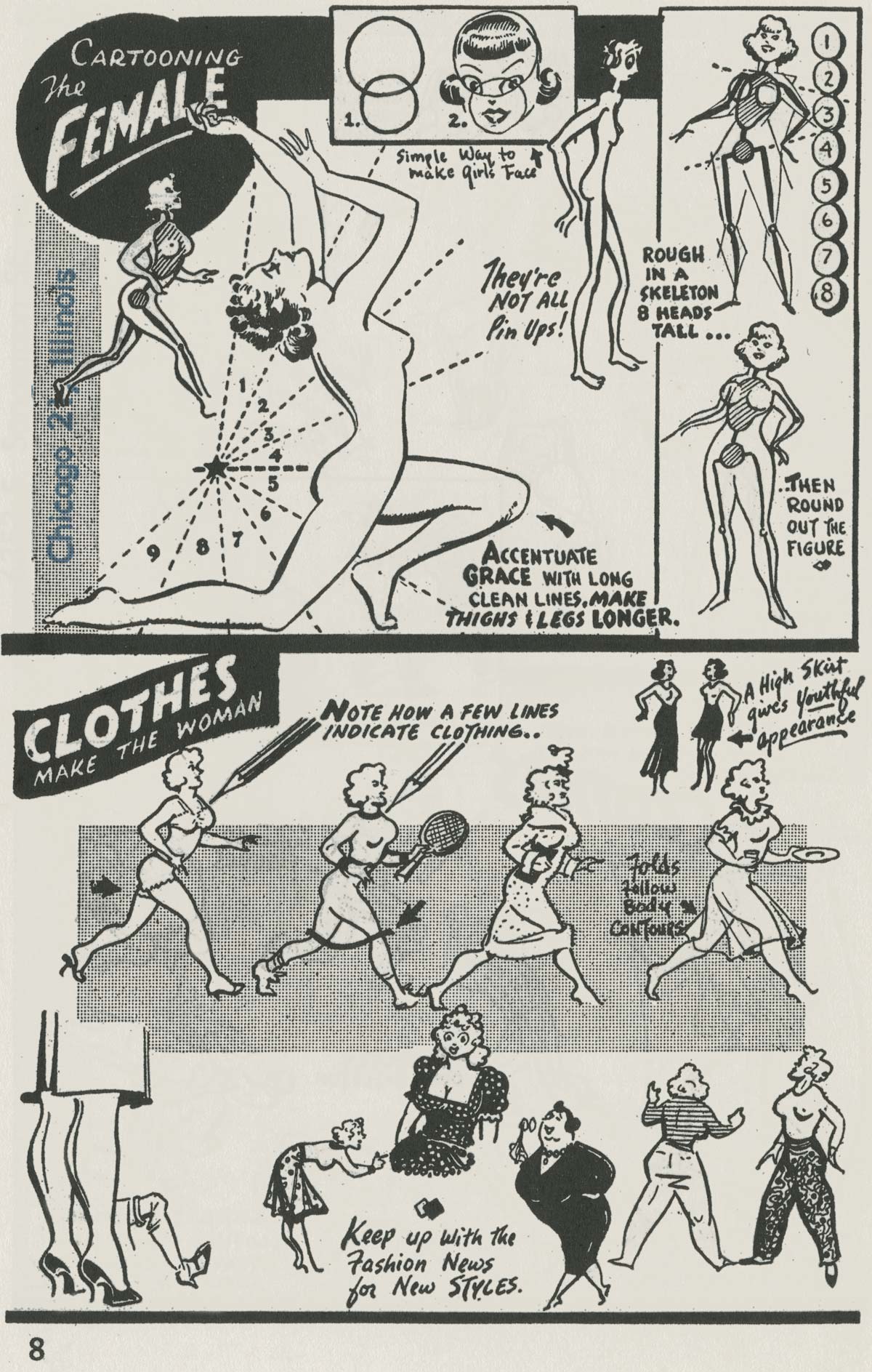
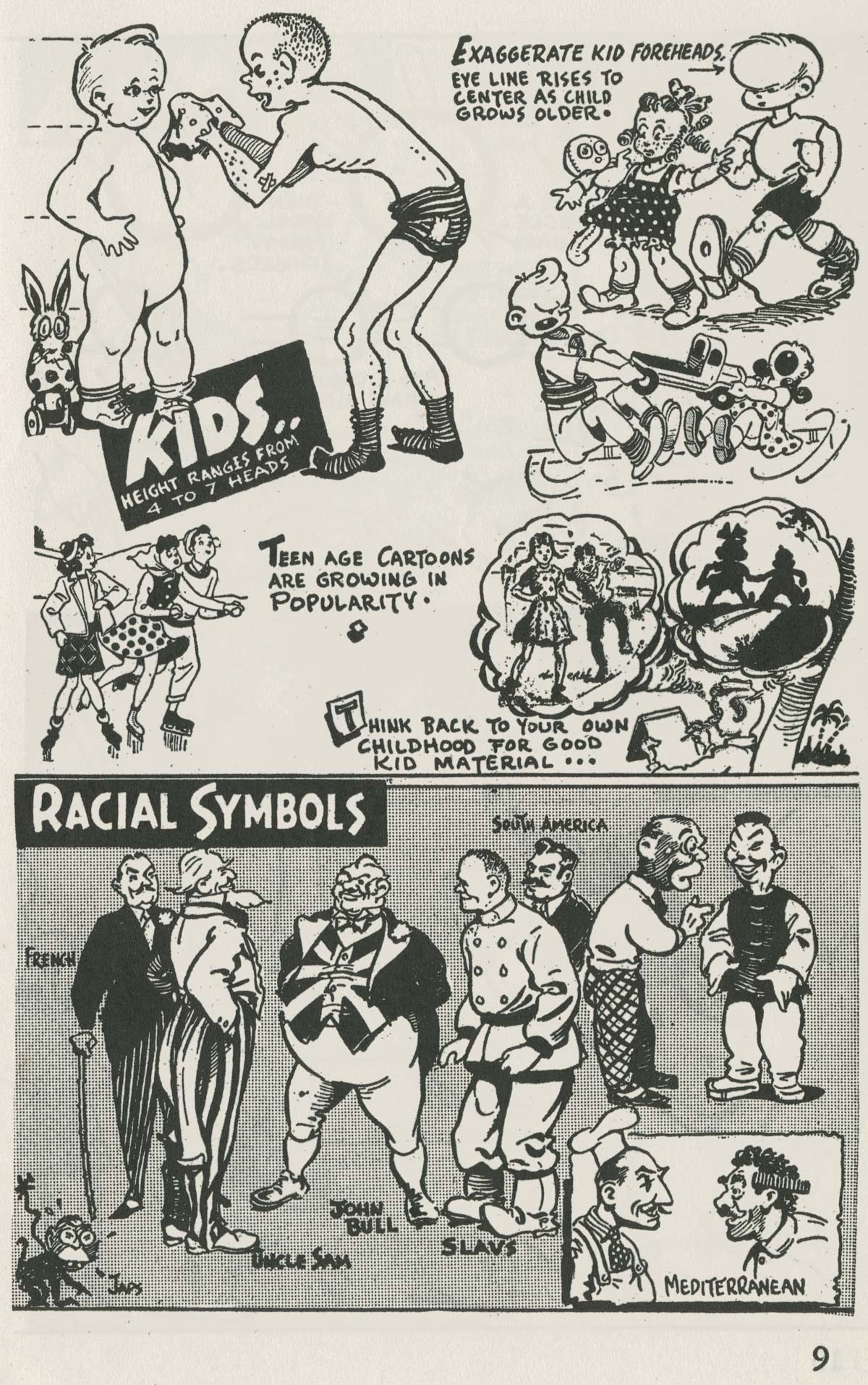
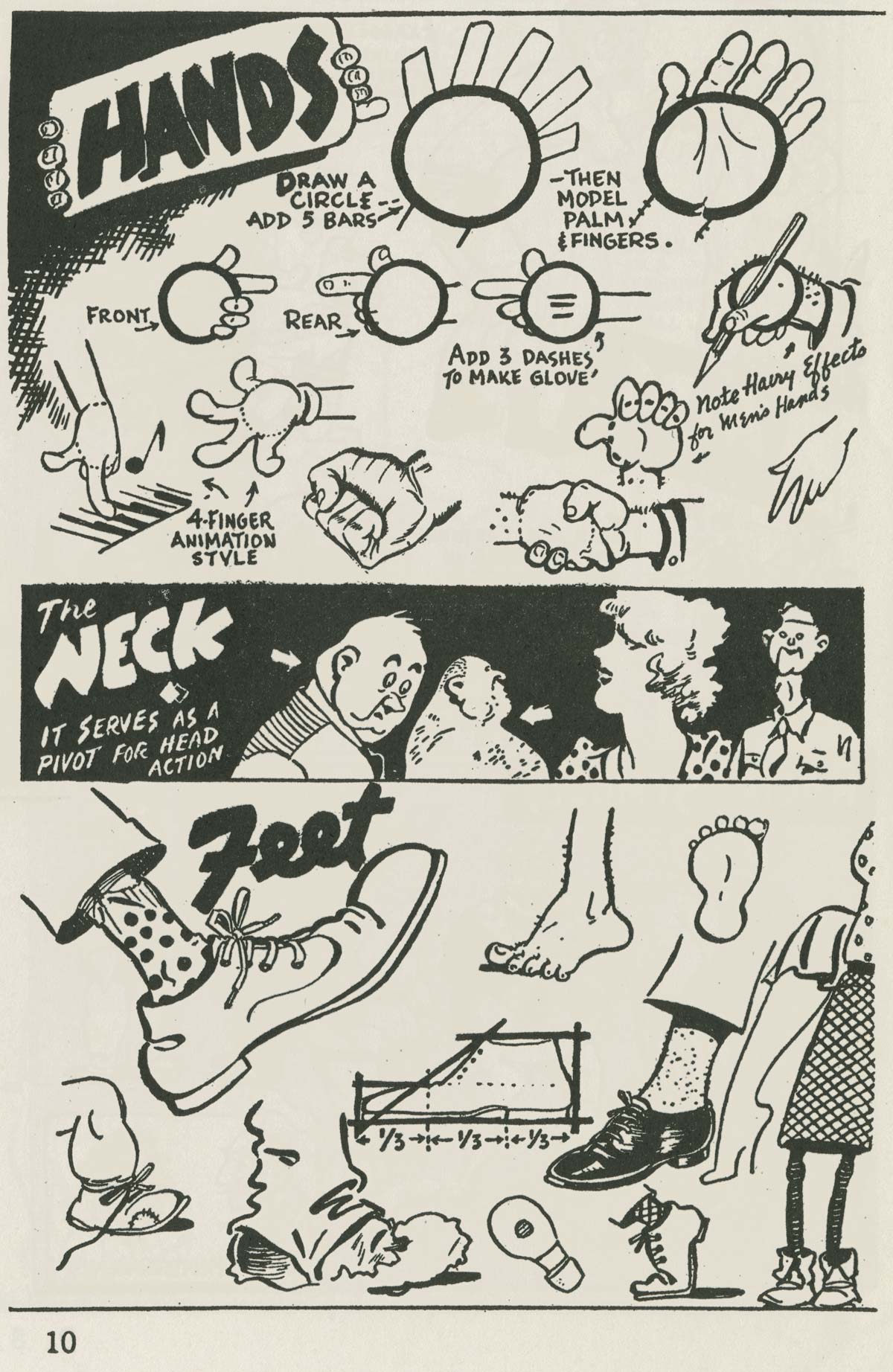
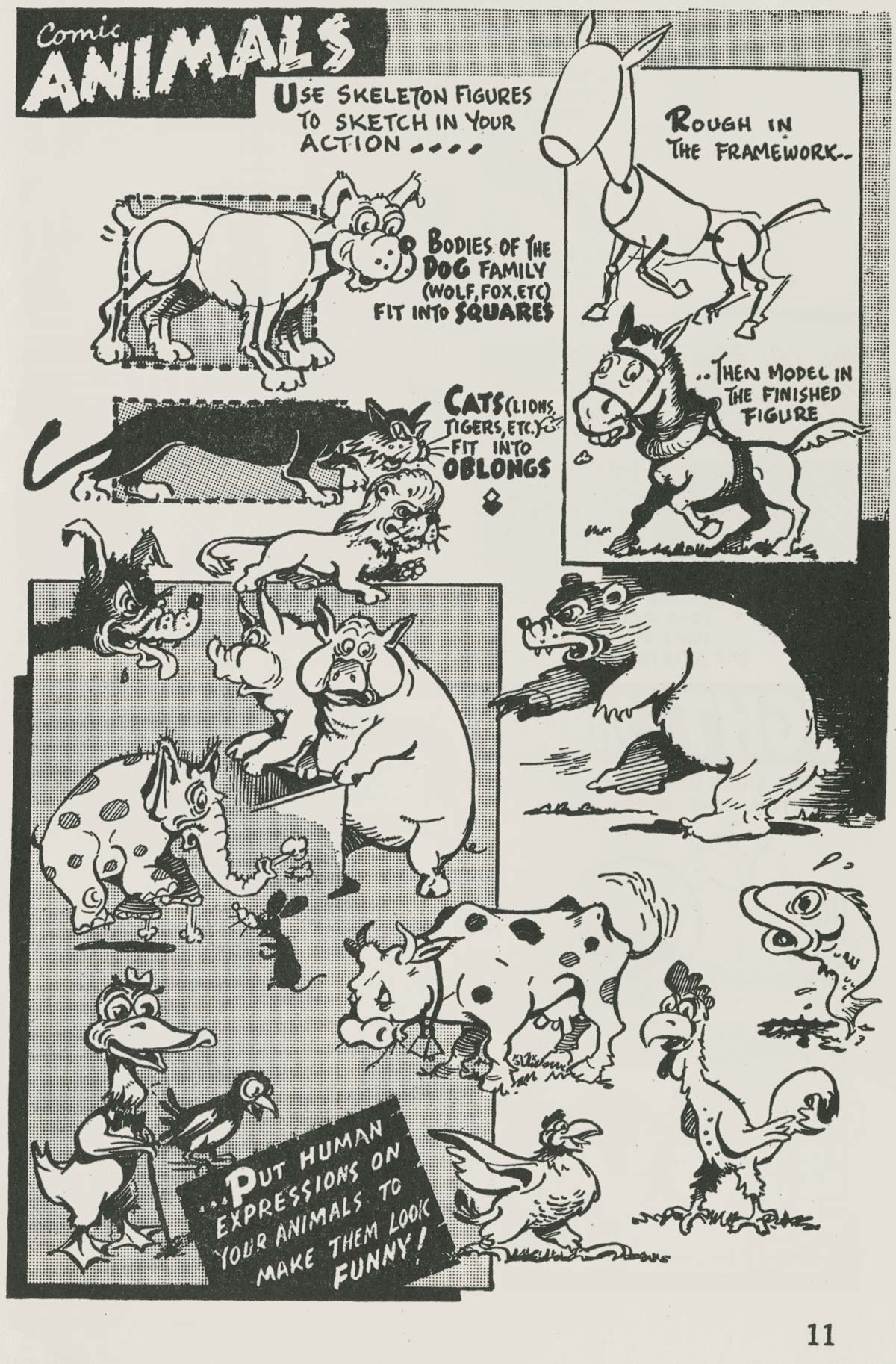
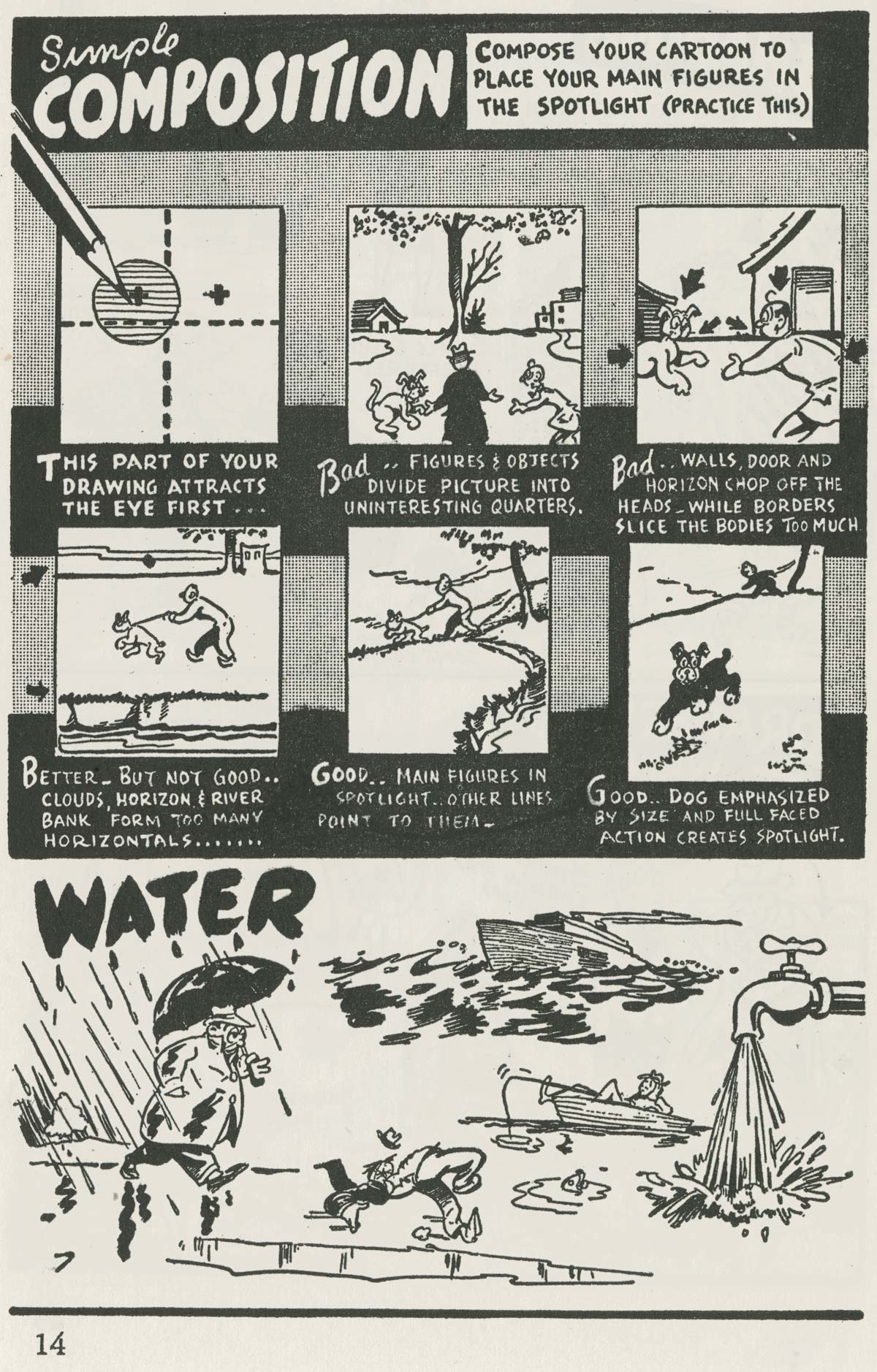
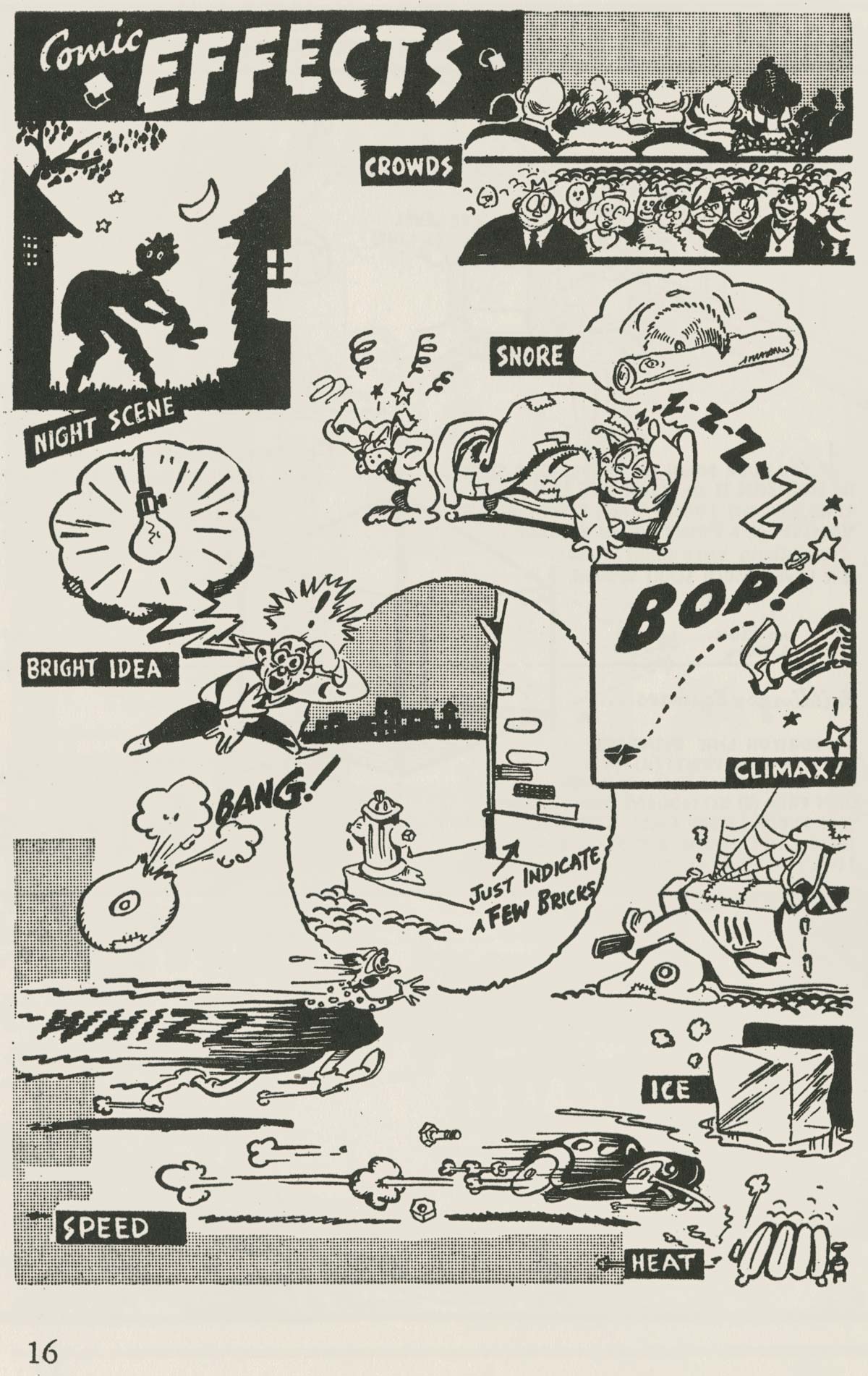
 Today, we began digitizing an important book… Gene Byrnes’ Complete Guide To Cartooning 1950. Marc Crisafulli and David King generously lent us a copy of this amazing collection of capsule features on all of the major cartoonists of the early 50s for digitization. It’s said that Ralph Bakshi learned to cartoon from this book.
In the coming days, I will be posting more from this book, along with a little biographical info on the featured artists. Today, the cartoonists profiled are all newspaper comic strip creators… Gene Byrnes, Jefferson Machamer, Alex Raymond, Louis Eisele, Charles Voight, Al Capp and Milton Caniff.
By Gene Byrnes
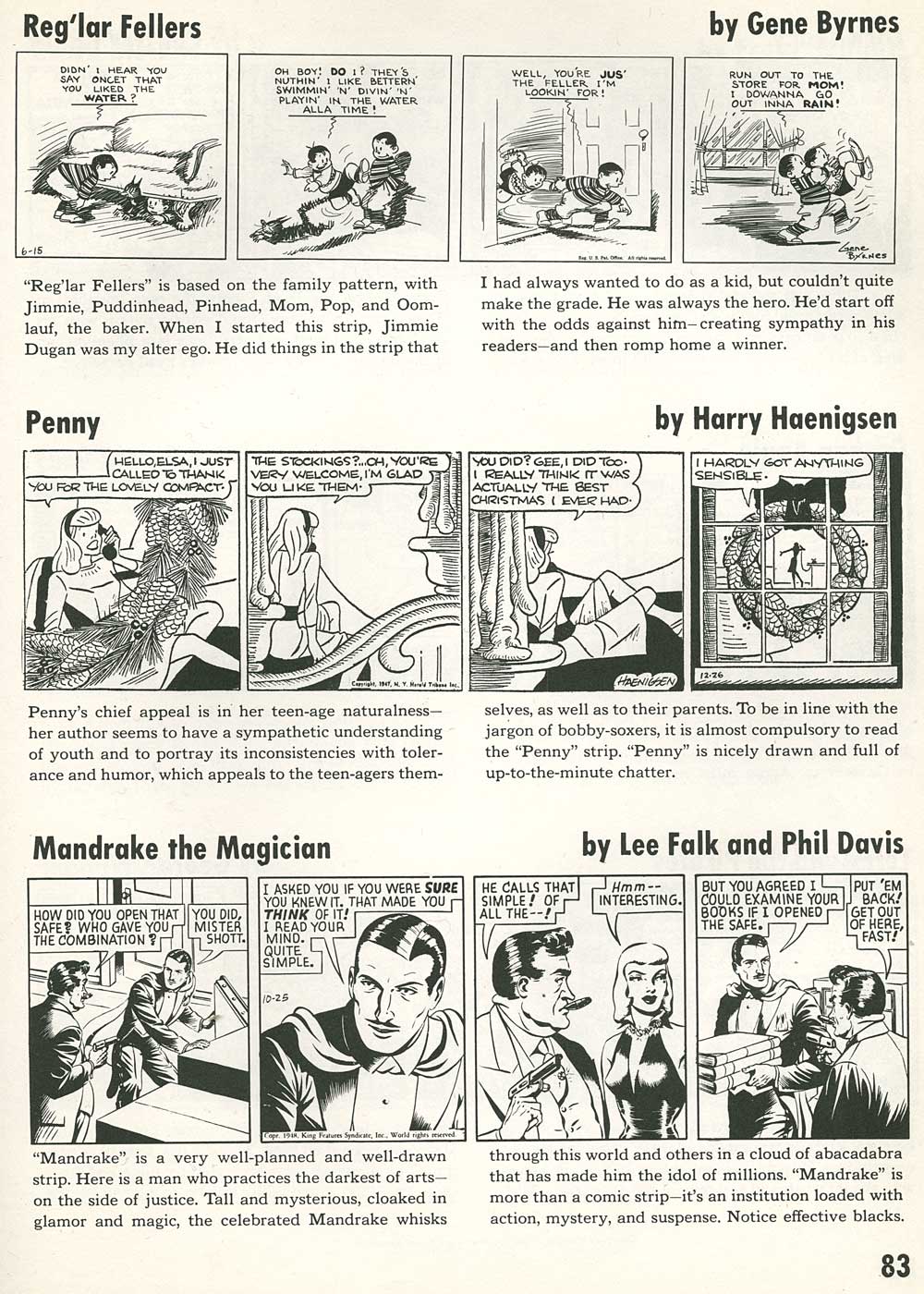
Gene Byrnes intended a career in sports, but after being laid up from a leg injury in 1911, he took to copying cartoons by Tad Dorgan and decided to take a correspondence course in cartooning. He began his career as a professional cartoonist with the help of Winsor McCay, who got him a job with the New York Telegram as a sports cartoonist around 1915. In 1917, he created his most famous strip, Reg’lar Fellers. which ran for over thirty years. He wrote several influential books on cartooning and illustration in the 40s and early 50s. He passed away in 1974.
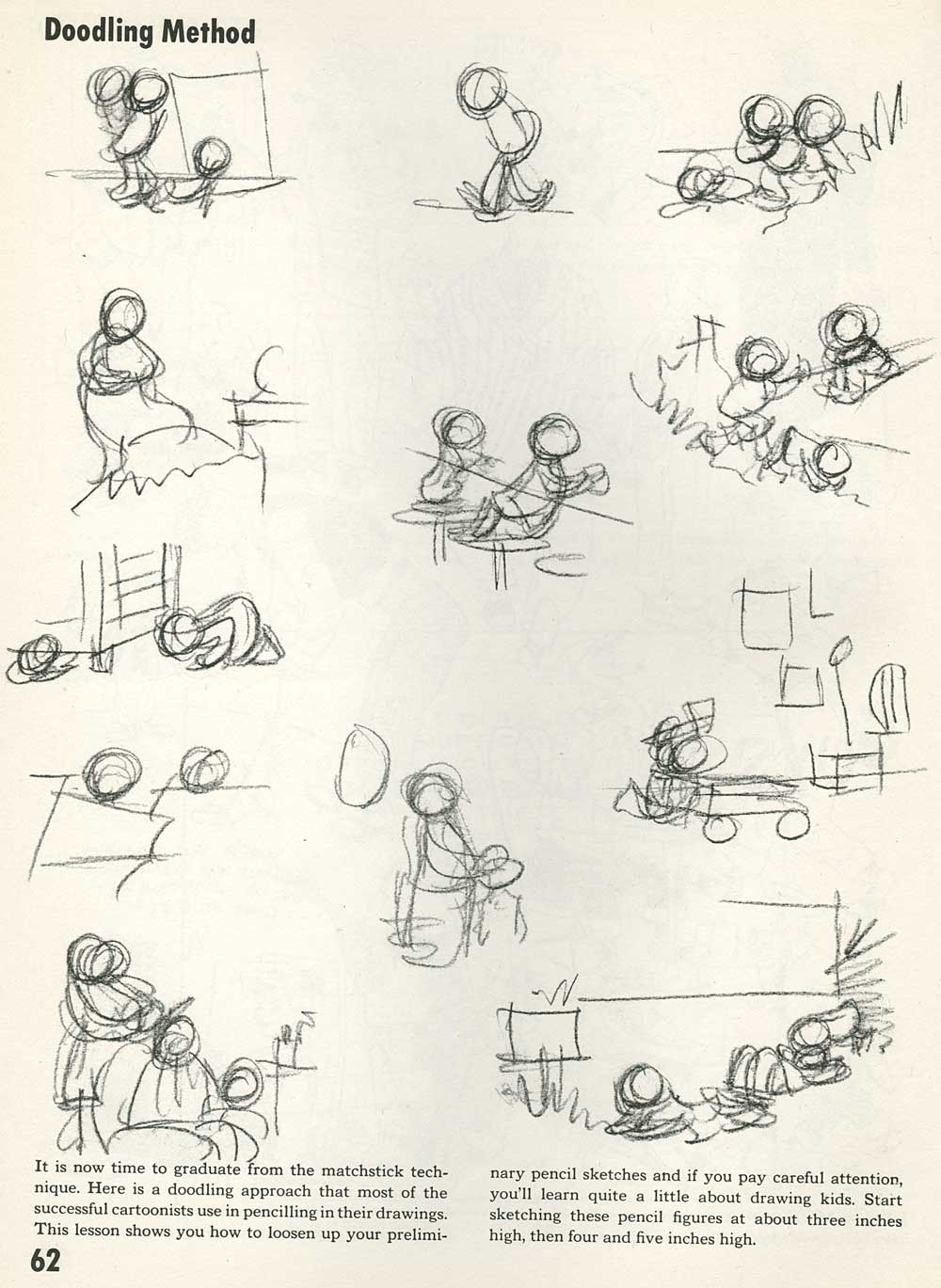

By Alex Raymond
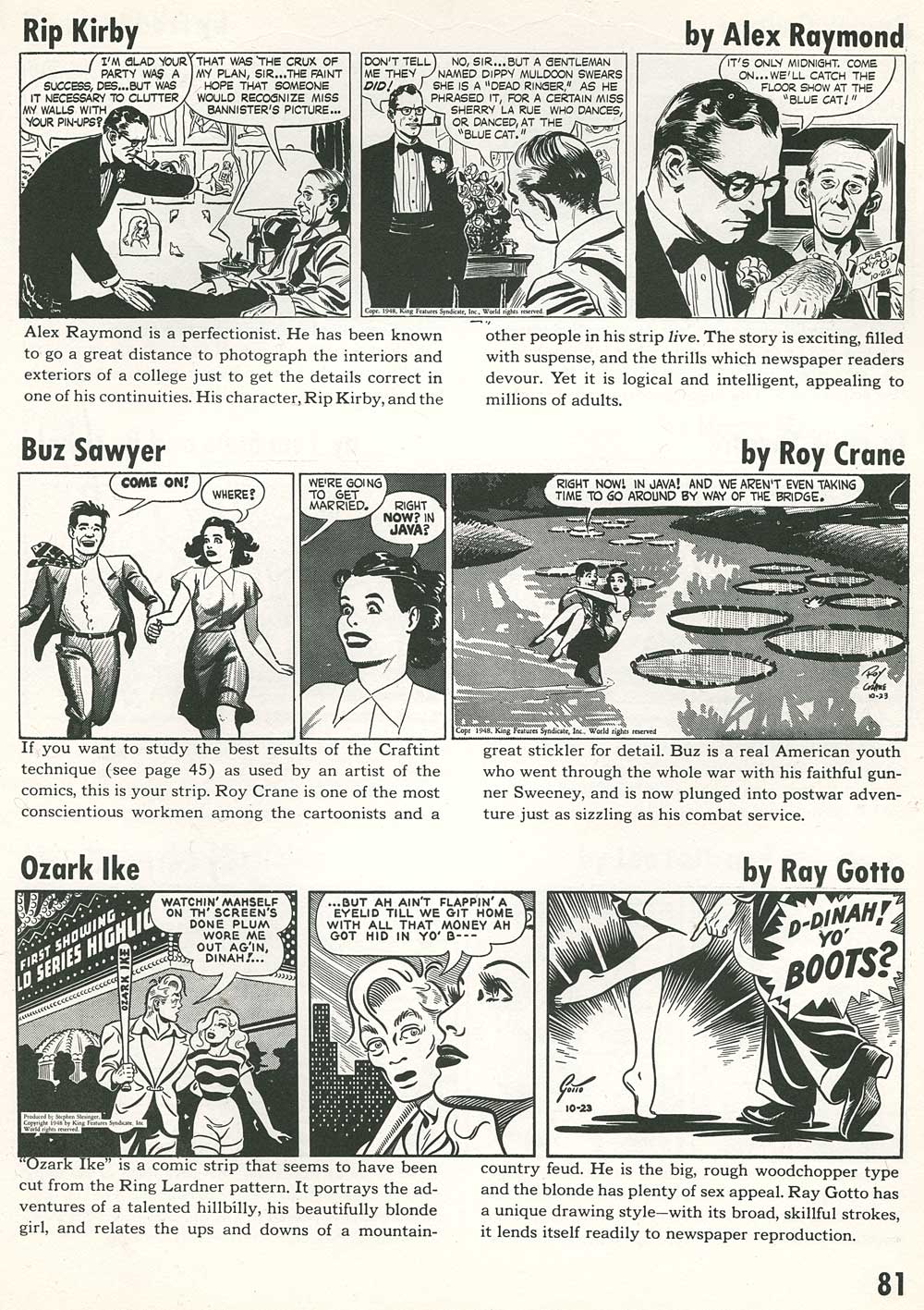
Alex Raymond is best known for creating the comic strip, Flash Gordon in 1933. He was responsible for several other important strips as well, as creator or ghost artist, including Rip Kirby, Jungle Jim, Tim Tyler’s Luck and Tillie the Toiler. His strip, Secret Agent X9 was created in collaboration with Dasheill Hammett. He died in a car accident in 1956.

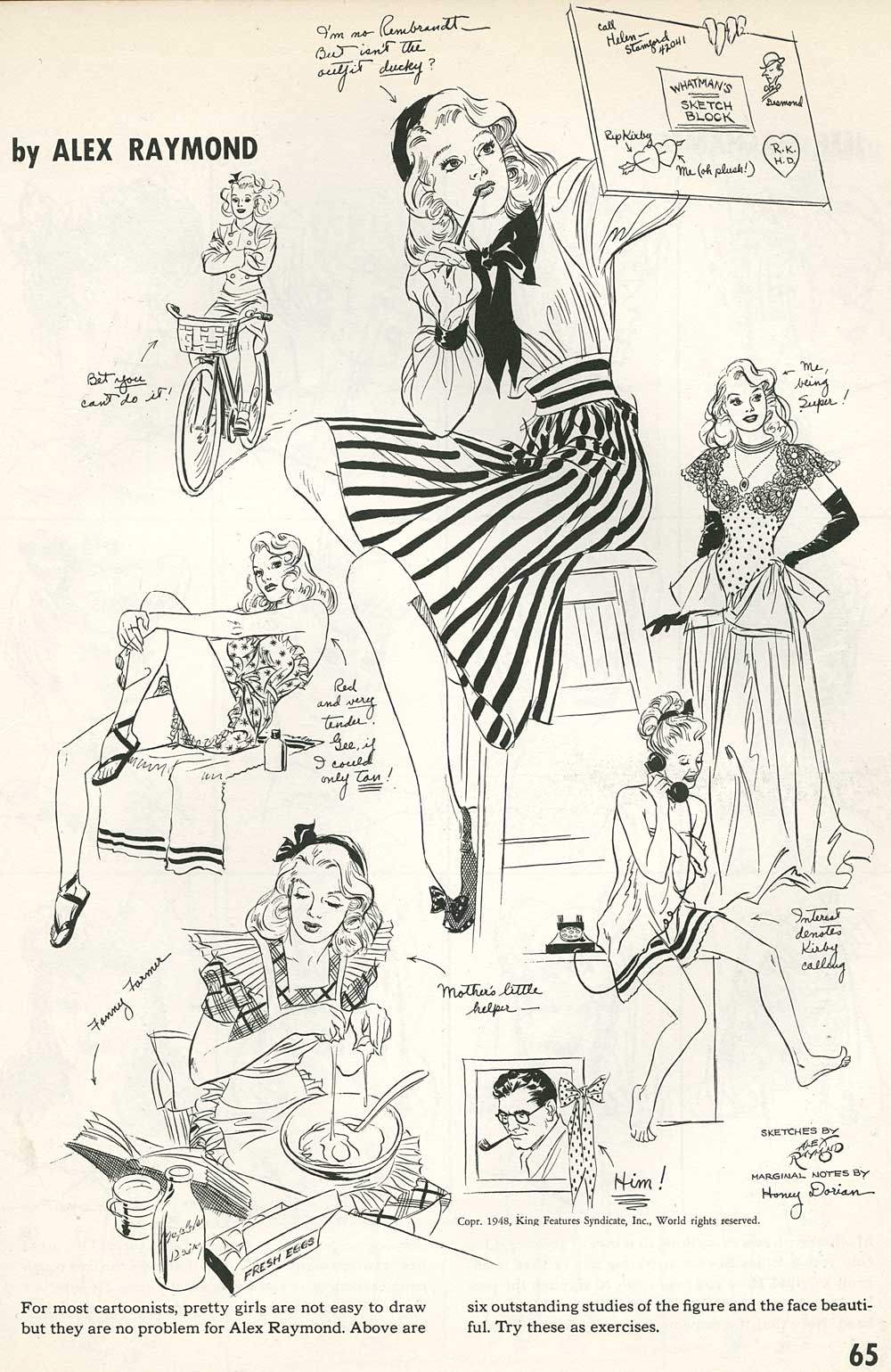
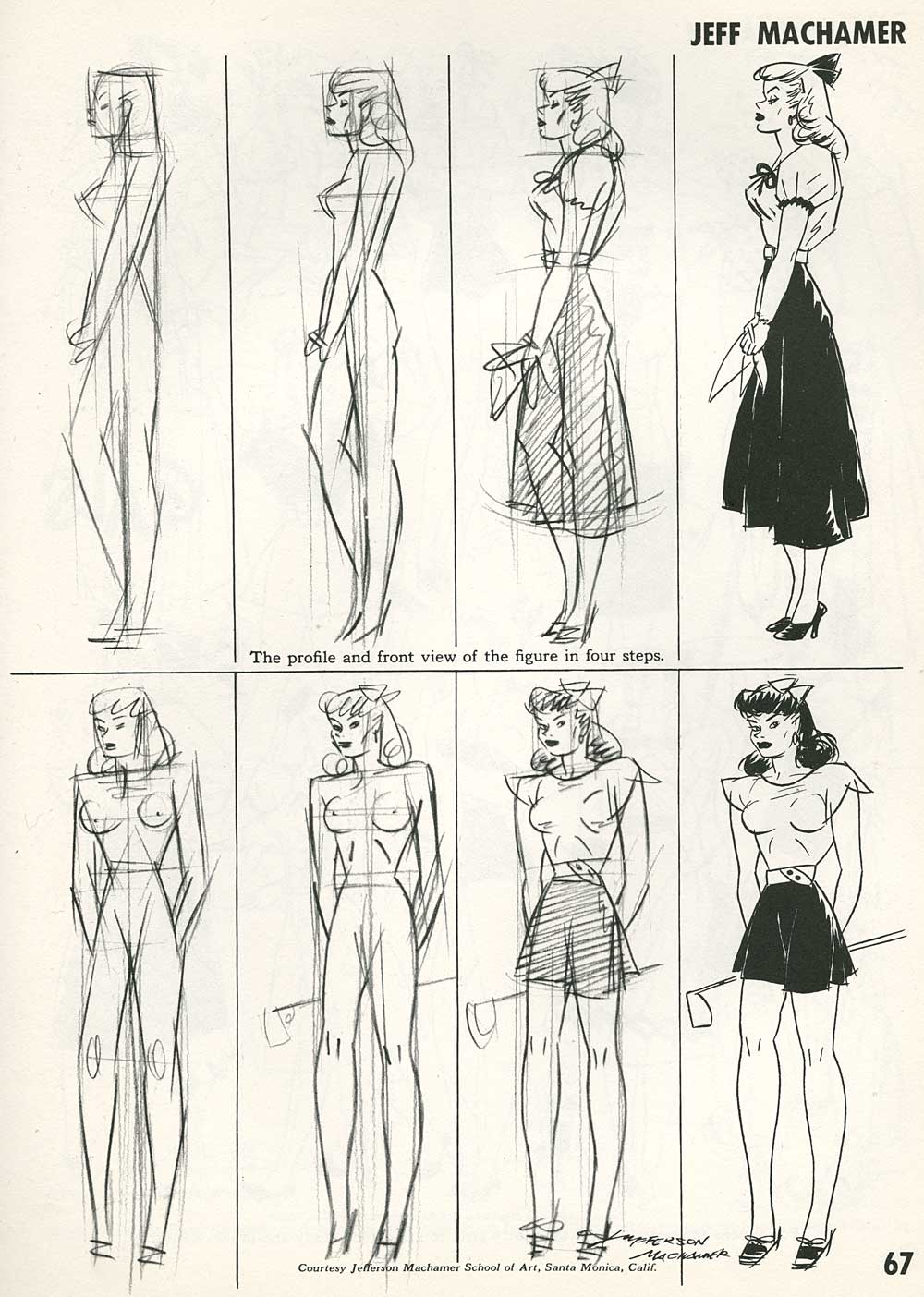
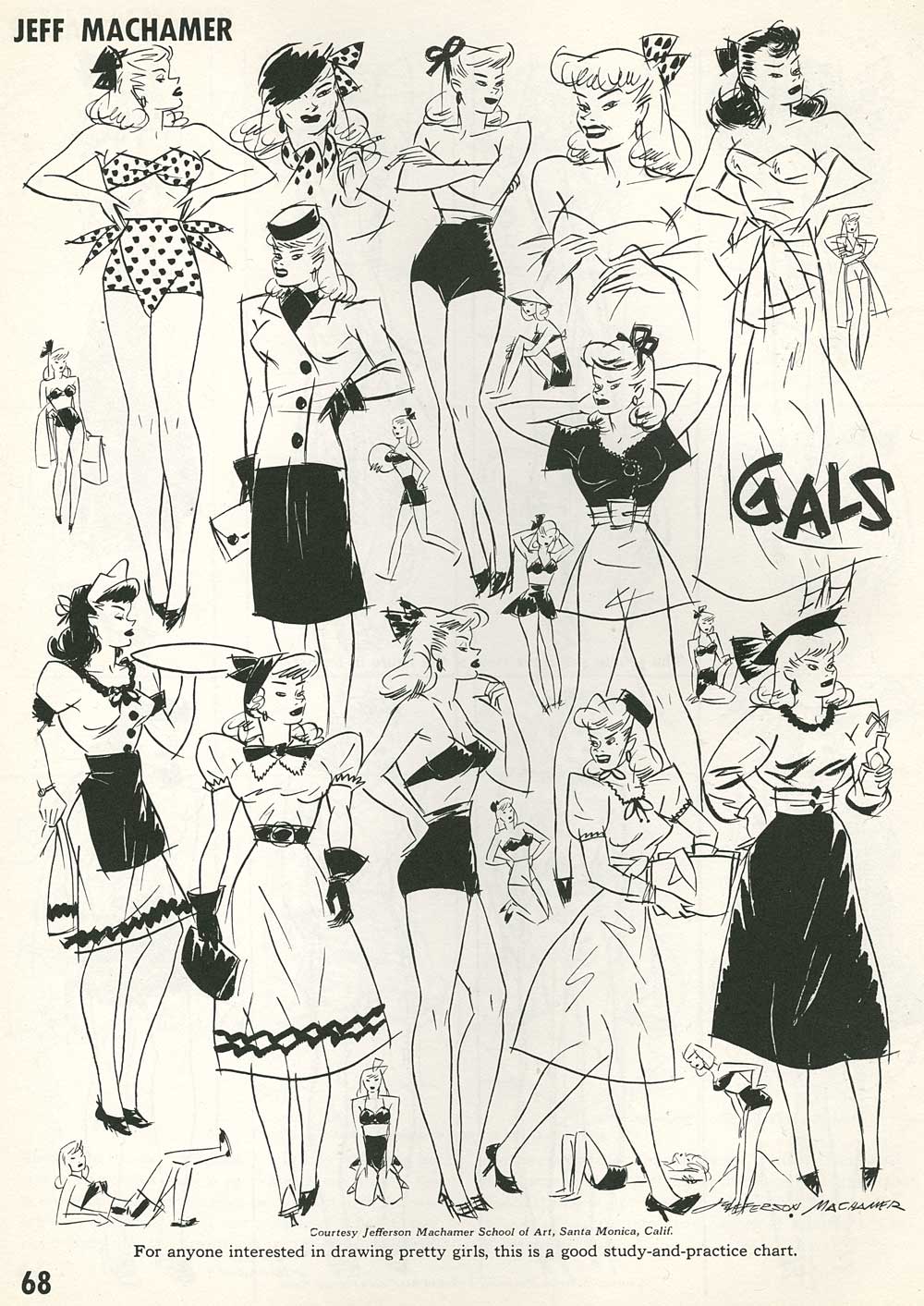
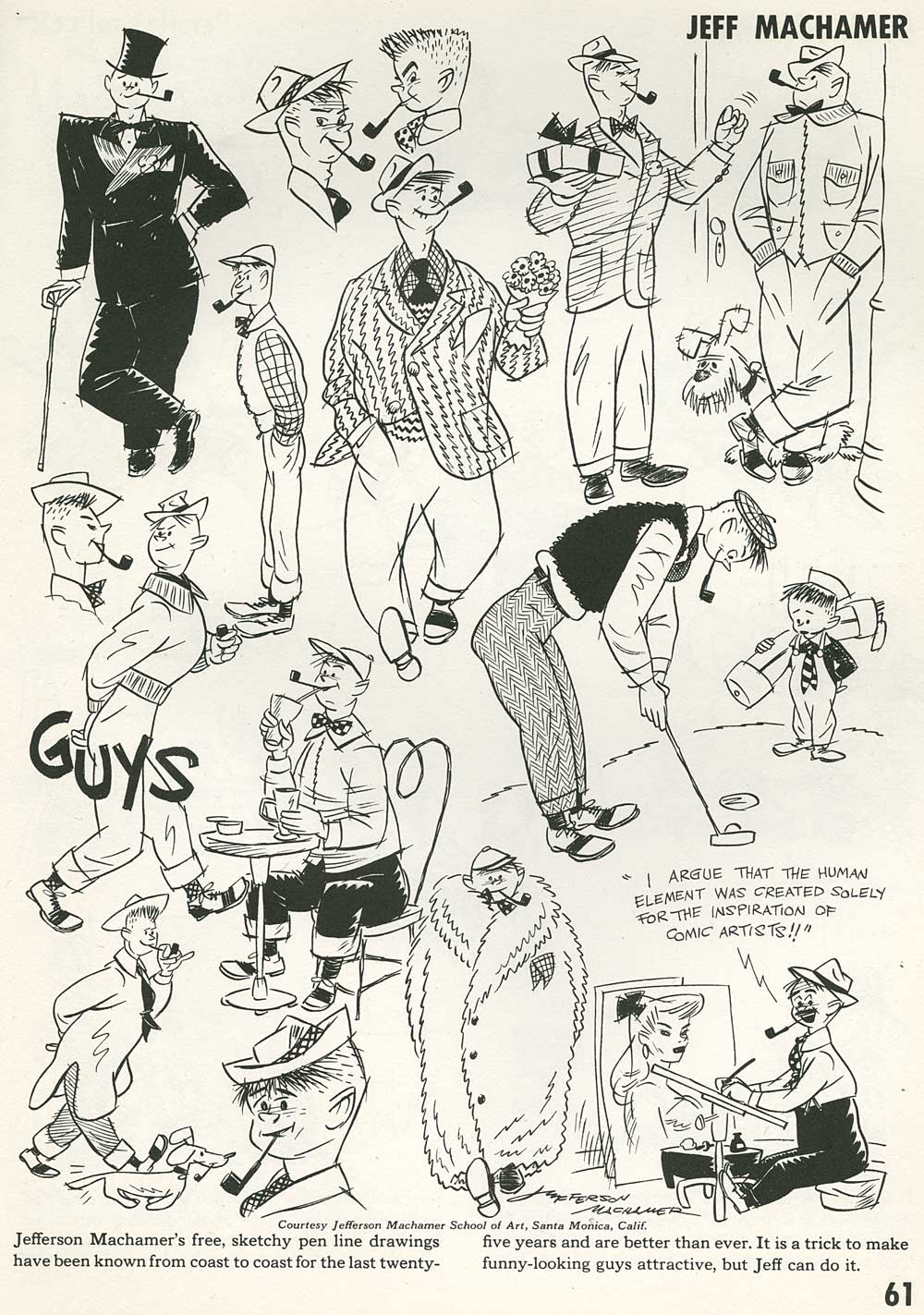
Thomas Jefferson Machamer began as a staff artist on the Kansas City Star in the early 1920s, and soon moved to New York, where he secured work with the New York Tribune. He made his name with his cartoons of pretty girls in Judge magazine in the late 1920s. In 1932, his strip, Gags & Gals debuted in the New York Mirror. He continued to be active in both newspaper cartoons and magazine illustration throughout the 40s and 50s, and passed away in 1960.
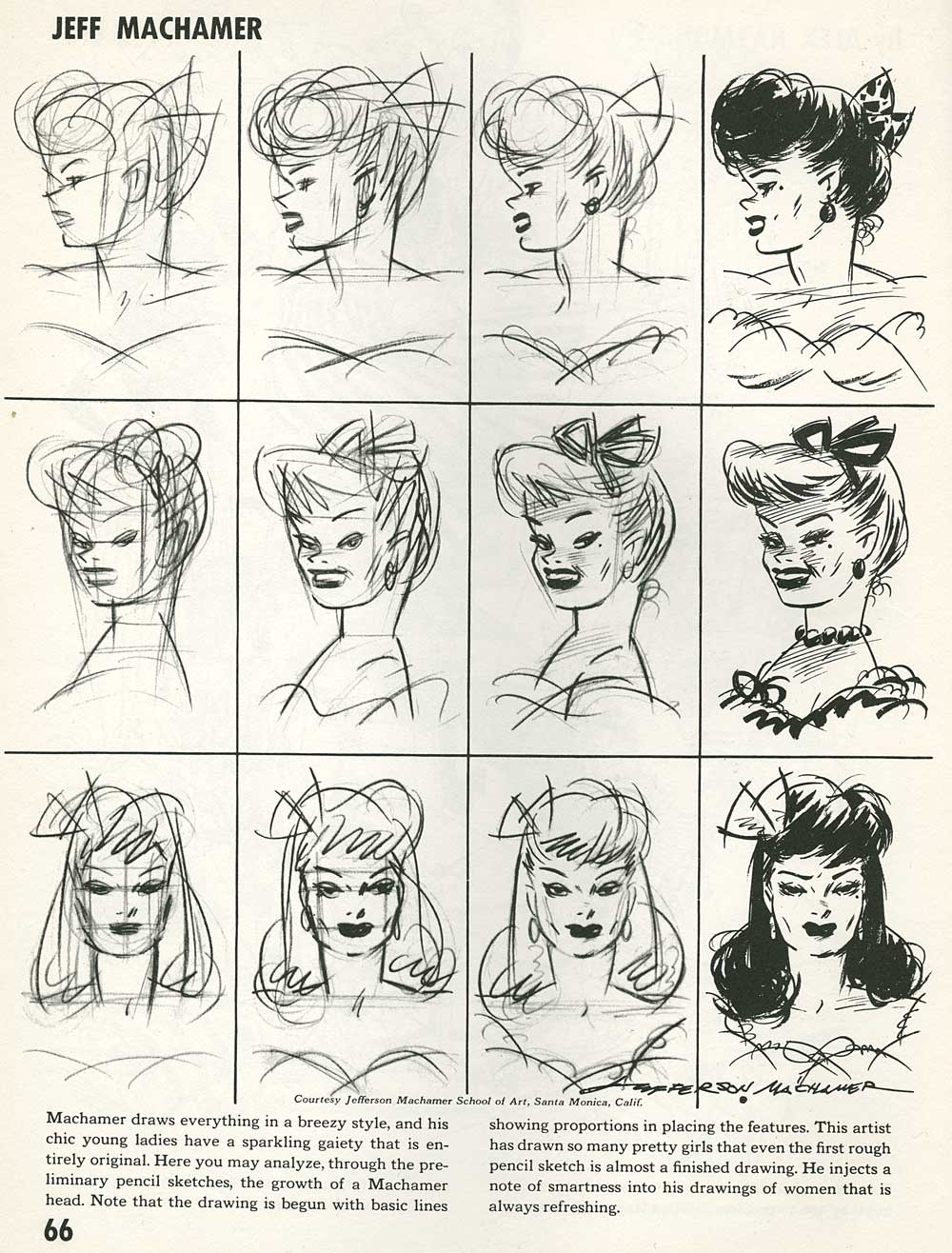
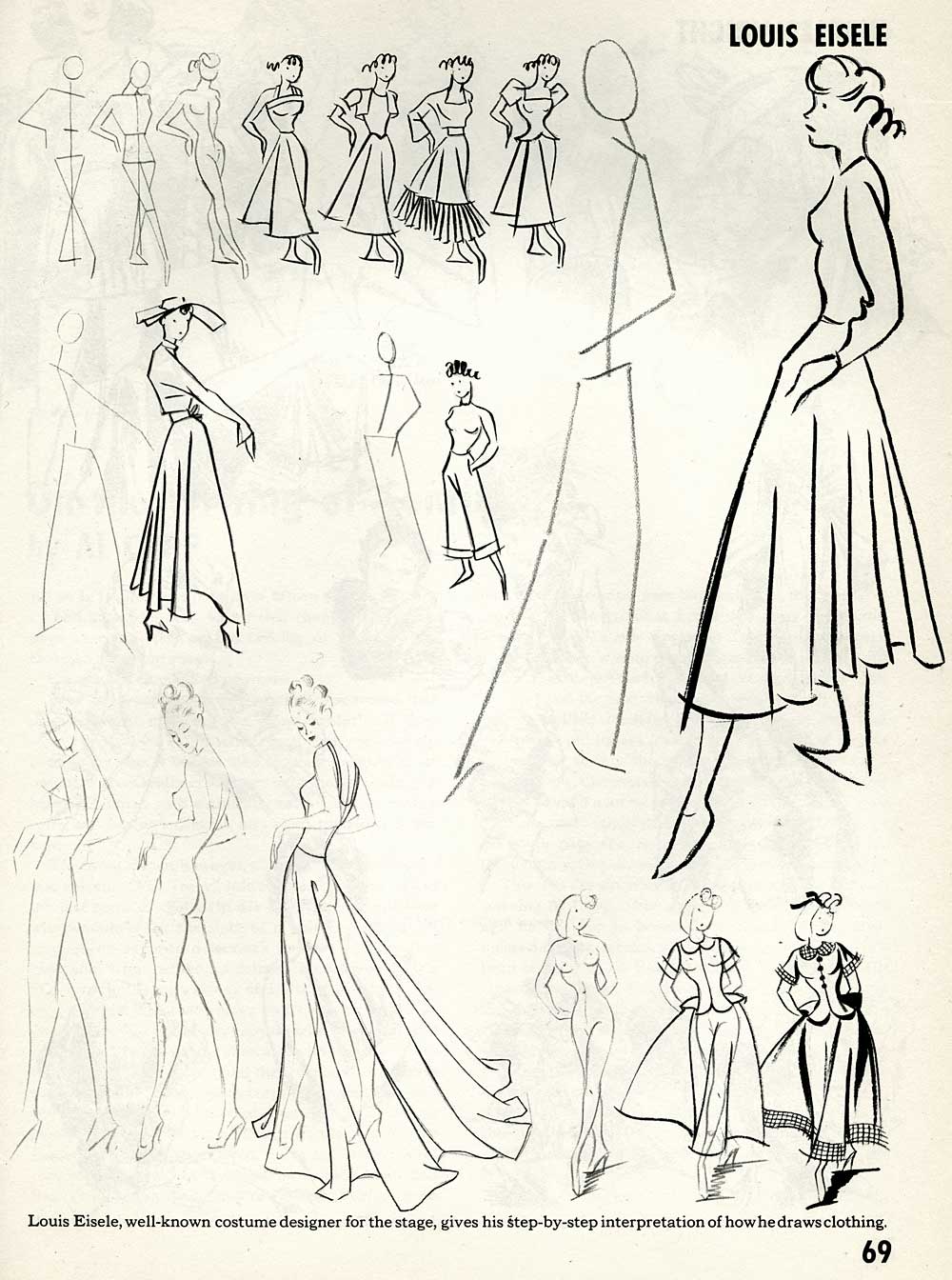
I don’t have any information on Louis Eislele. If anyone out there knows his biographical details, please post them to the comments below.
Charles Voight was known as a “girl specialist” with illustrations and comics in the New York World and Life magazine in the early decades of the 20th century. His strips included Petey Dink and Betty. He passed away in 1947.

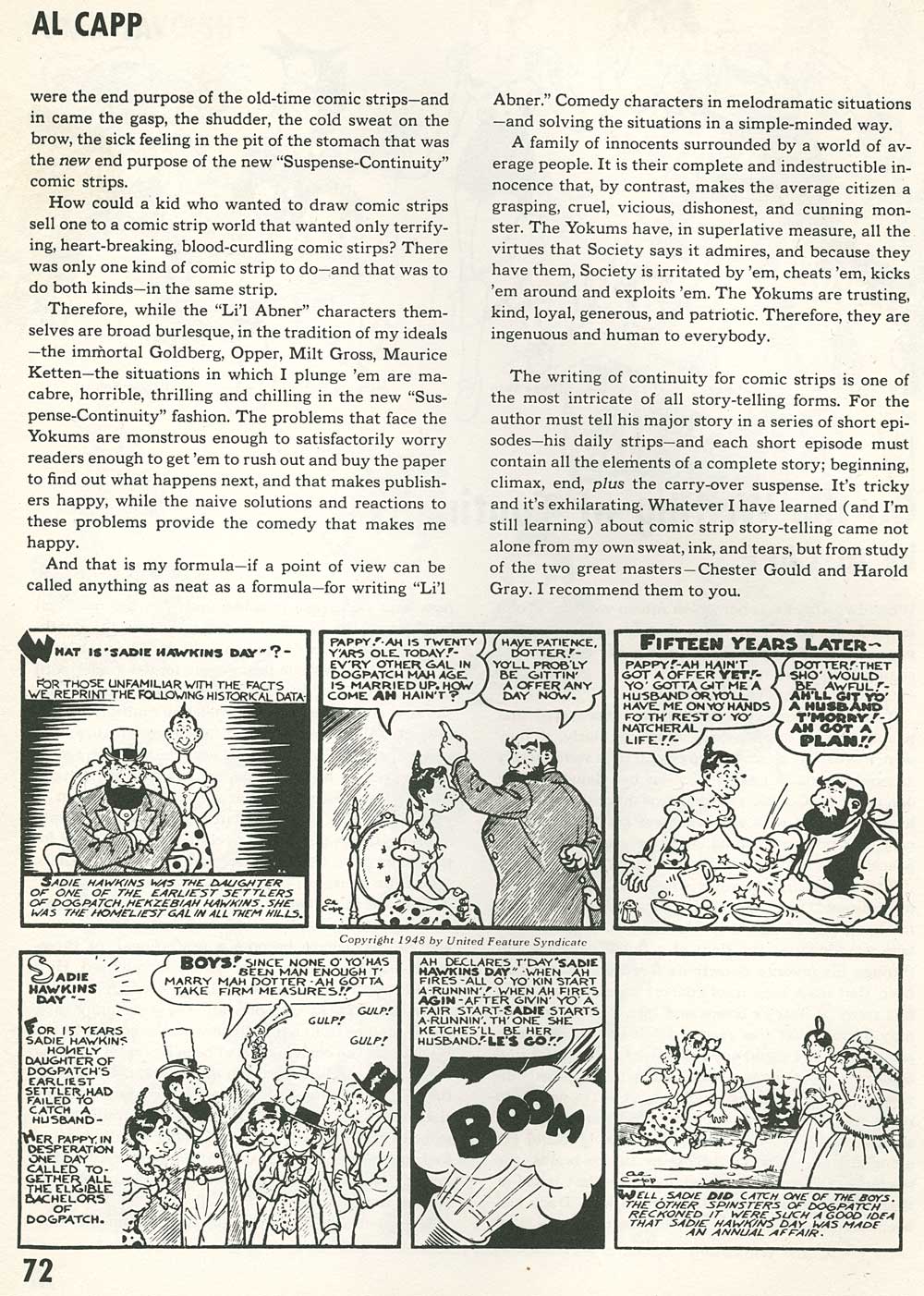
By Al Capp
At the age of nine, Al Capp lost a leg in a streetcar accident. He became the youngest syndicated cartoonist in the country at age 19 with his strip, Colonel Gilfeather. He ghosted the strip Joe Palooka for Ham Fischer for a while, before striking out on his own with Li’l Abner in 1934. The strip was among the most popular of all time, entering the popular culture with Capp’s creations like "Sadie Hawkins Day", "Kickapoo Joy Juice" and "The Shmoo". Capp’s strip inspired a Broadway musical and feature film and ran until 1977. Capp died two years later.


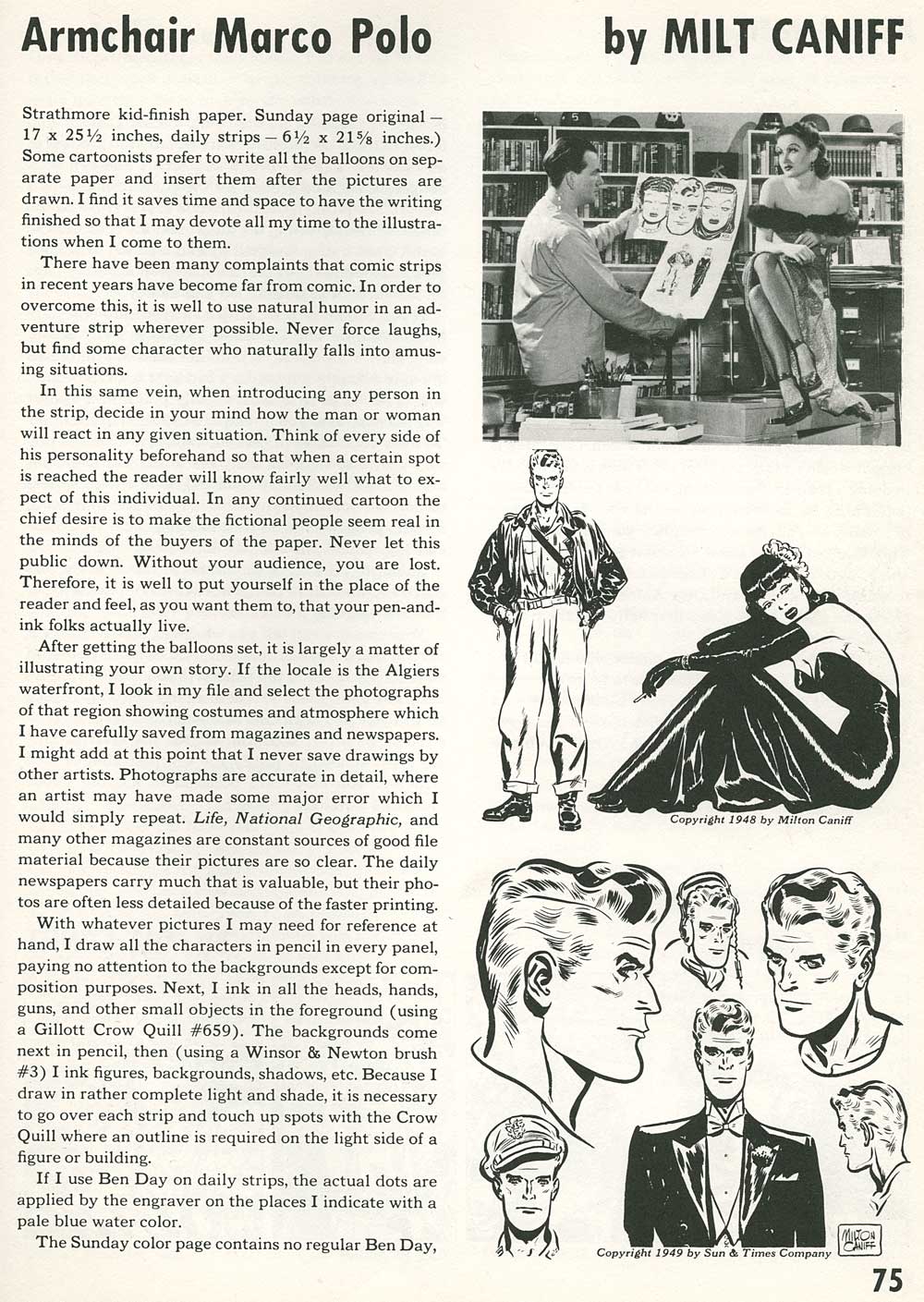
By Milton Caniff
Milton Caniff was born in Ohio in 1907. He took a job as a staff artist with the Associated Press in 1932, and soon inherited Al Capp’s strip Colonel Gilfeather when Capp left the syndicate. In 1934, Caniff created the comic strip he is best known for, Terry and the Pirates. The series was hugely popular throughout the war years, but Caniff didn’t own the copyright- it belonged to The Chicago Tribune/New York Daily News. He left the comic behind to create a new one, Steve Canyon, which spawned a short-lived television series and ran until Caniff’s death in 1988.


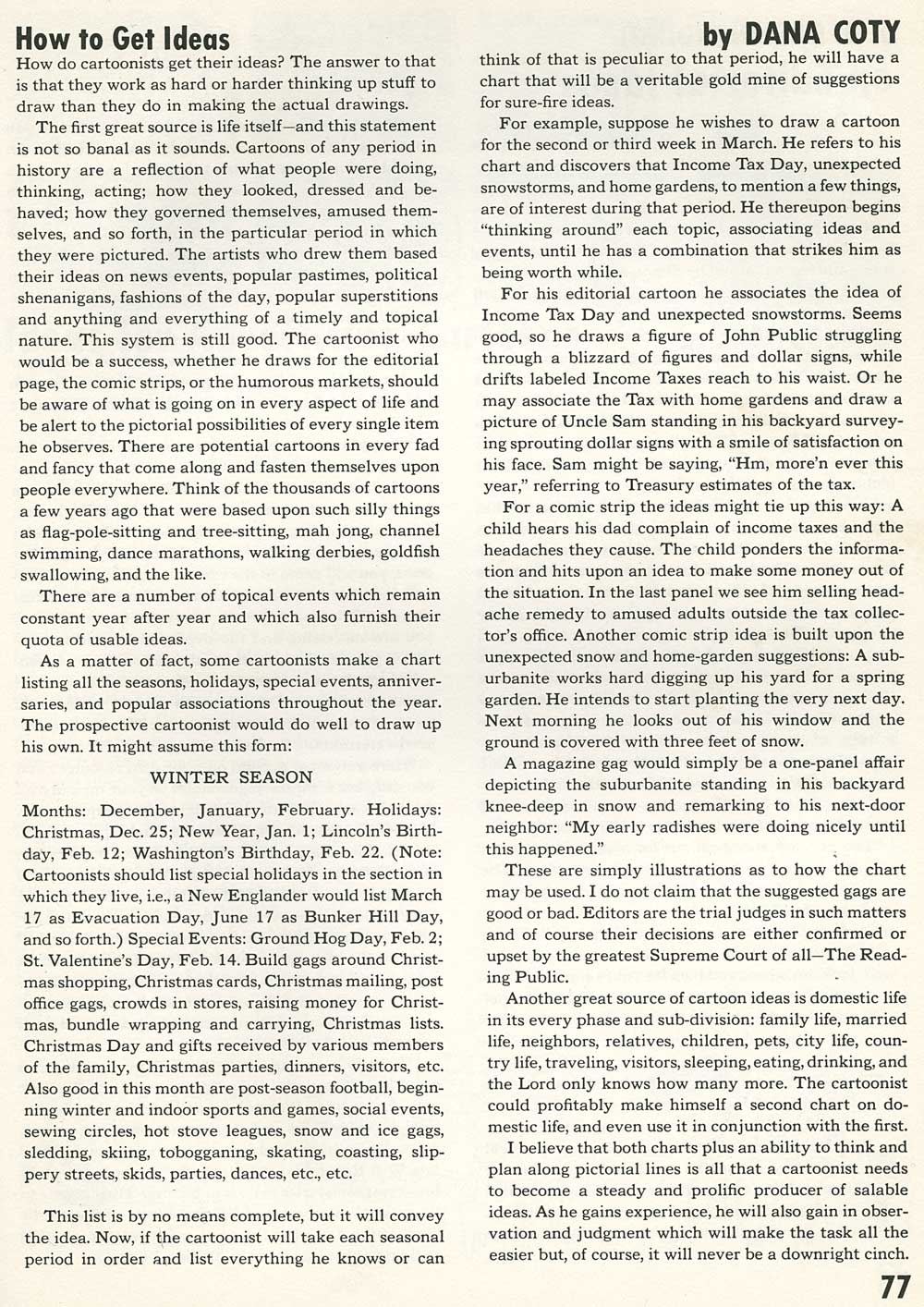
In this section, there are three articles on how to get fresh ideas, Byrnes goes through the newspaper analyzing the appeal of various comic strips, and Chic Young and Hal Foster are featured.
By Dana Coty
I don’t have much information on Dana Coty (Dec. 19, 1901 – March 19, 1962) aside from the fact that he worked at Disney in the mid-30s, and was a story man at Famous Studios.
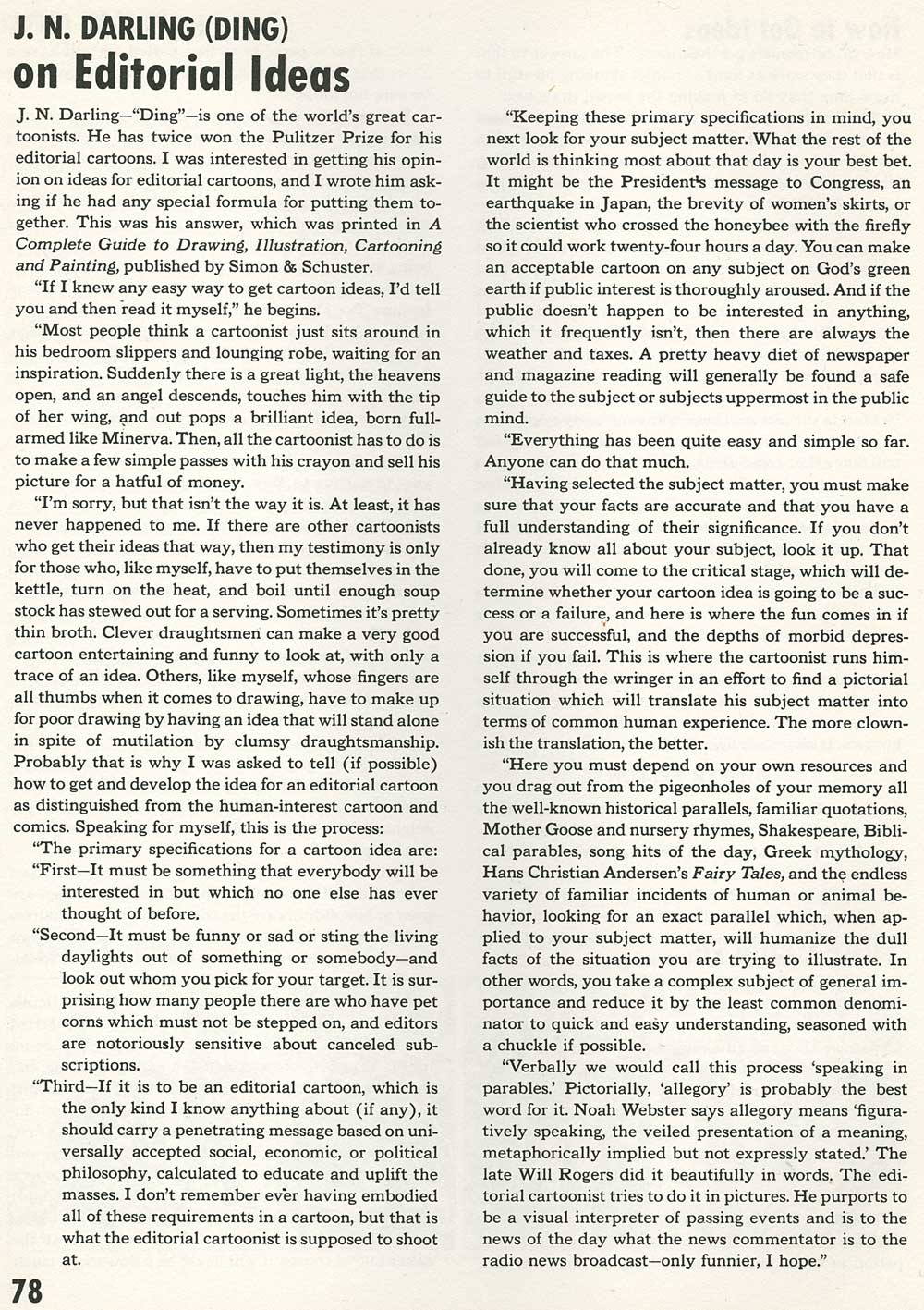
on EDITORIAL IDEAS
 "Ding" Darling was a Pulitzer Prize winning cartoonist for the Sioux City Journal, The Des Moines Register, the New York Herald Tribune and the New York Globe. His editorial cartoons dealing with conservation causes were a staple of the opinion sections of many papers for decades. He passed away in 1962.
By Sam Cobean
 Sam Cobean was an inbetweener on Snow White, barely surviving on $16 a week, when he joined the strikers fighting for the creation of the Screen Cartoonists Guild. After returning to work when the contract was settled, Sam realized that Disney was not the place for him and took a job as a copy boy at the Washington Post. There, he developed an interest in political cartoons. During the war, he worked in a unit producing training cartoons and pamphlets along with cartoonist Charles Addams. Addams introduced him to the editor of the New Yorker, and Cobean’s cartoons appeared there for many years afterwards. In 1950, he created a book of cartoons, titled "Cobean’s Naked Eye" which was a bestseller. He died in a car accident in 1951.

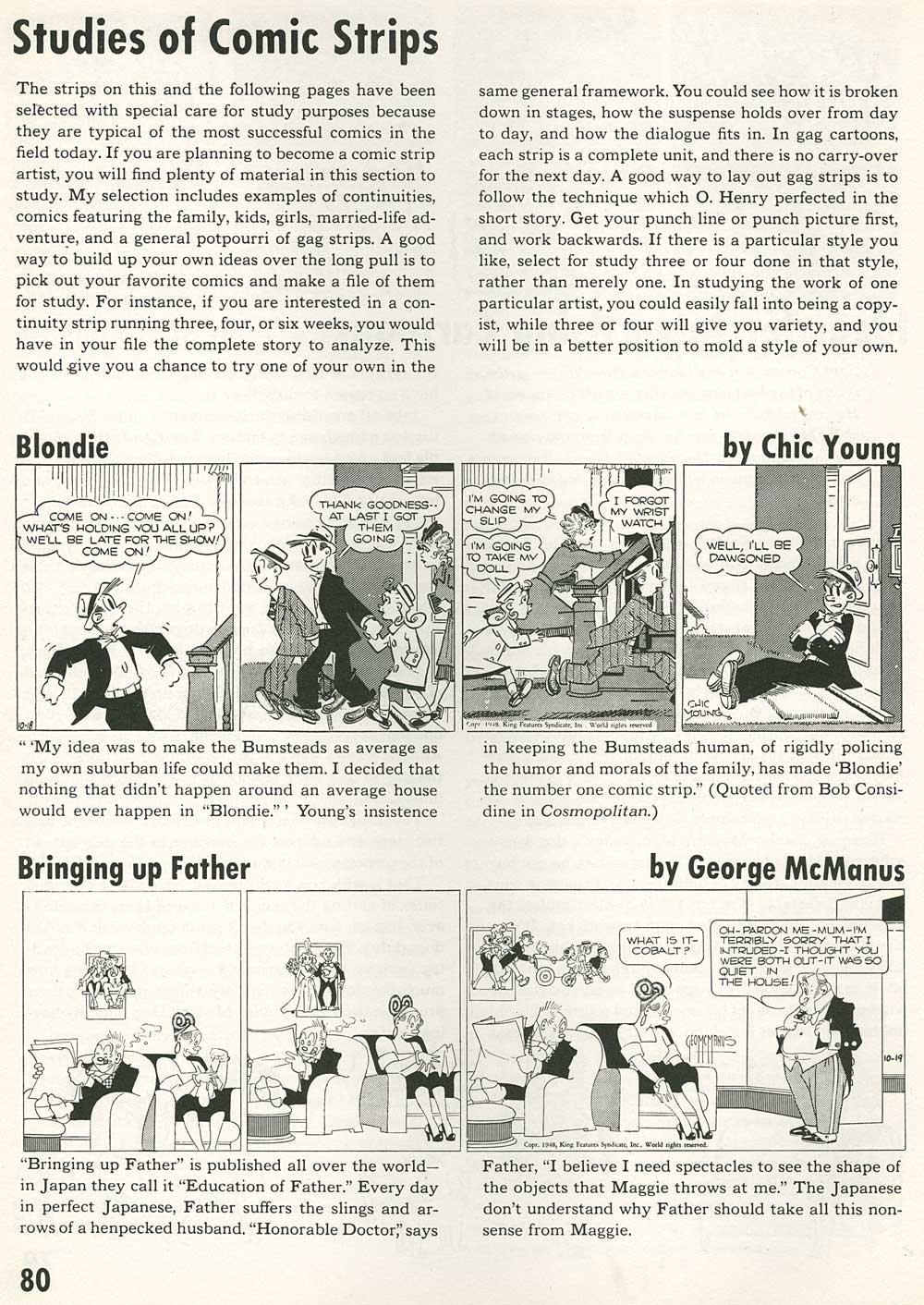
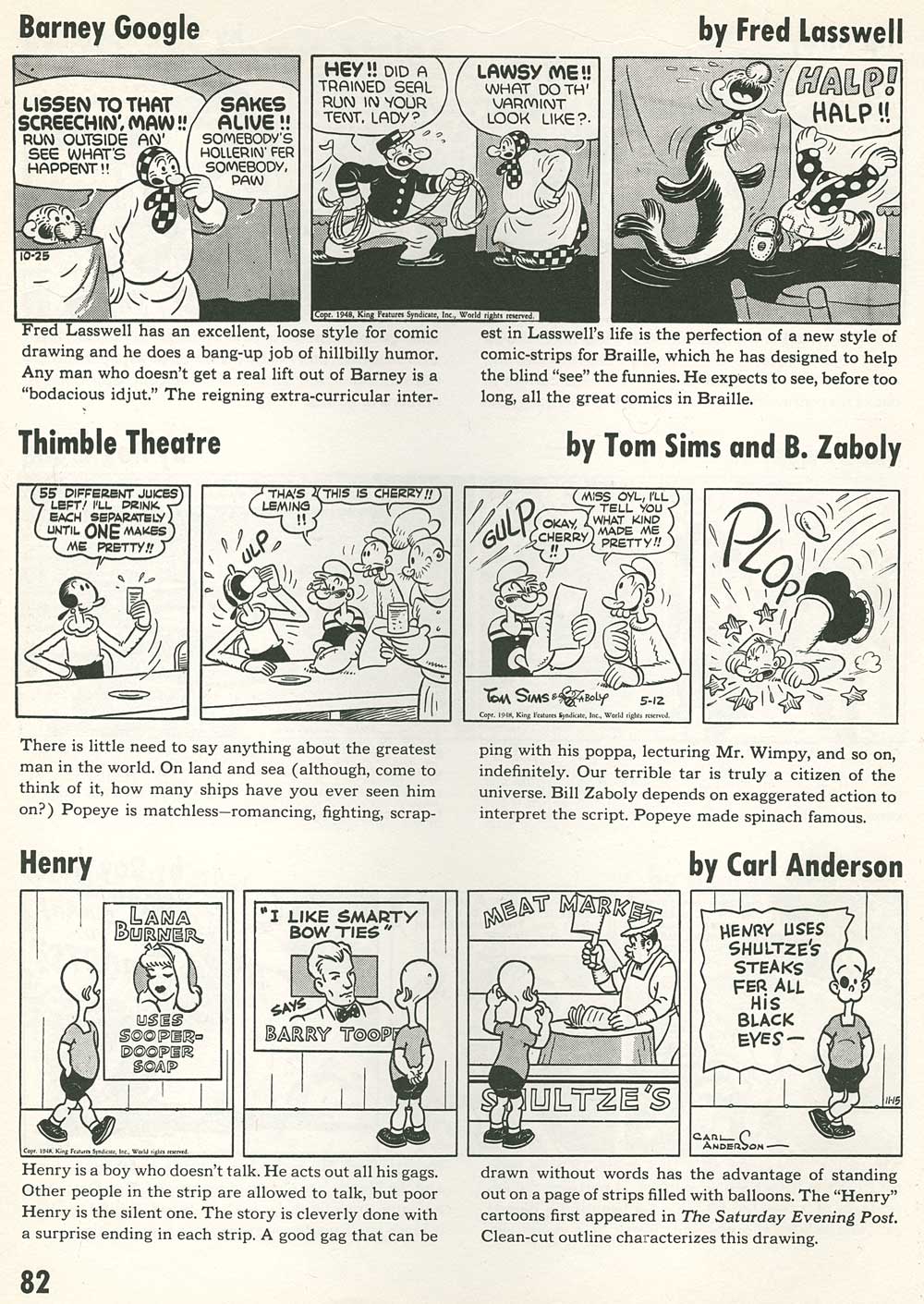
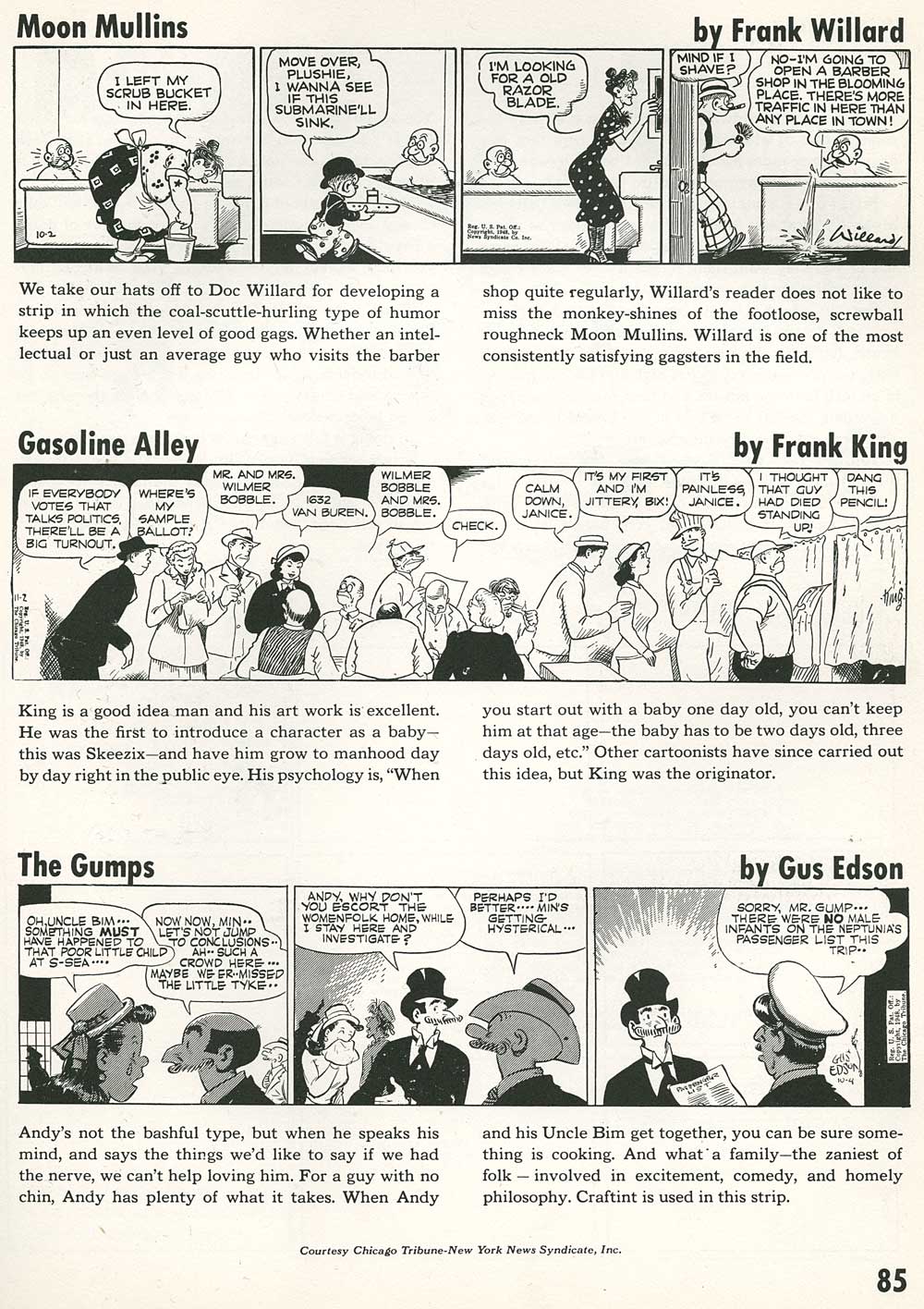
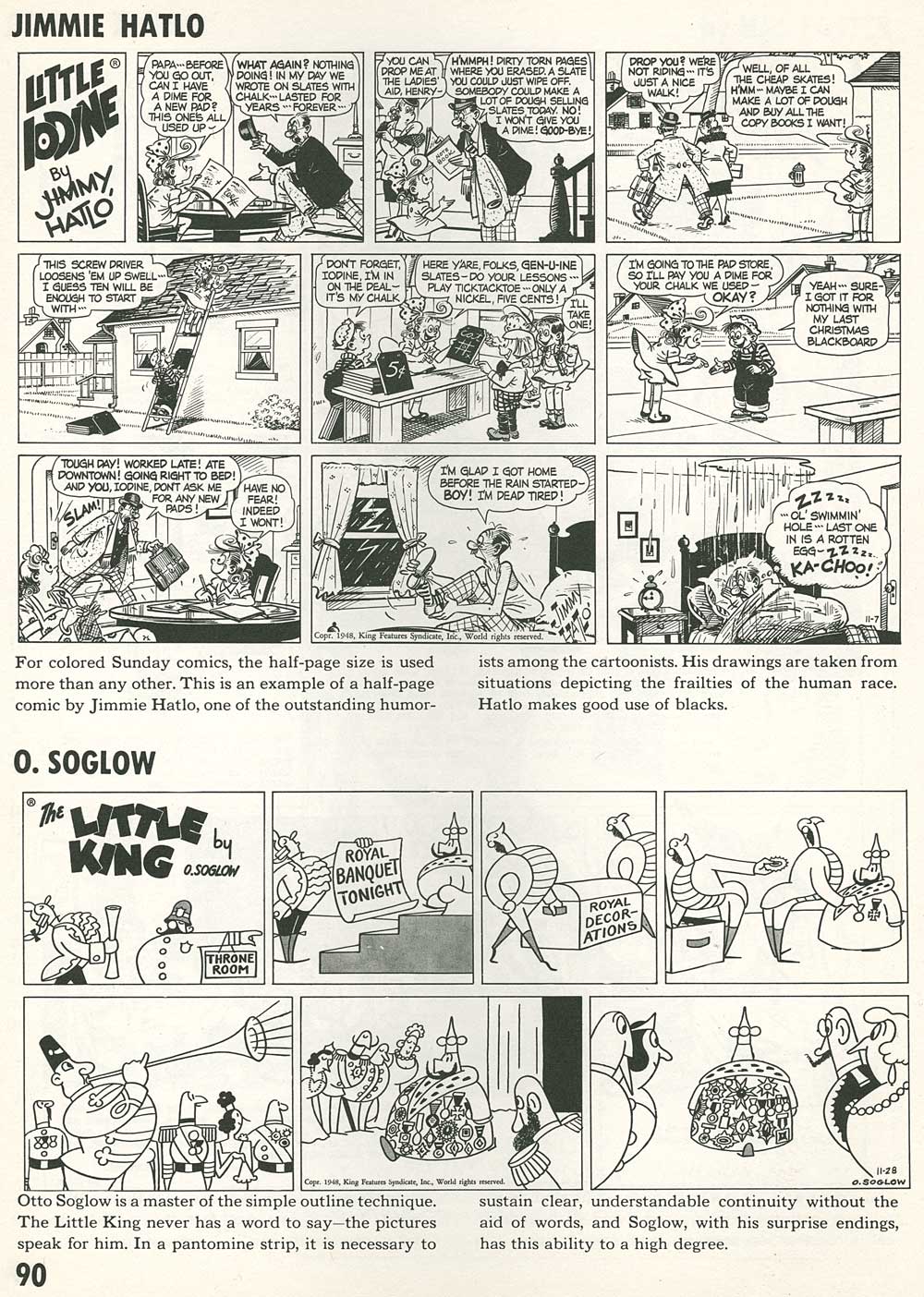
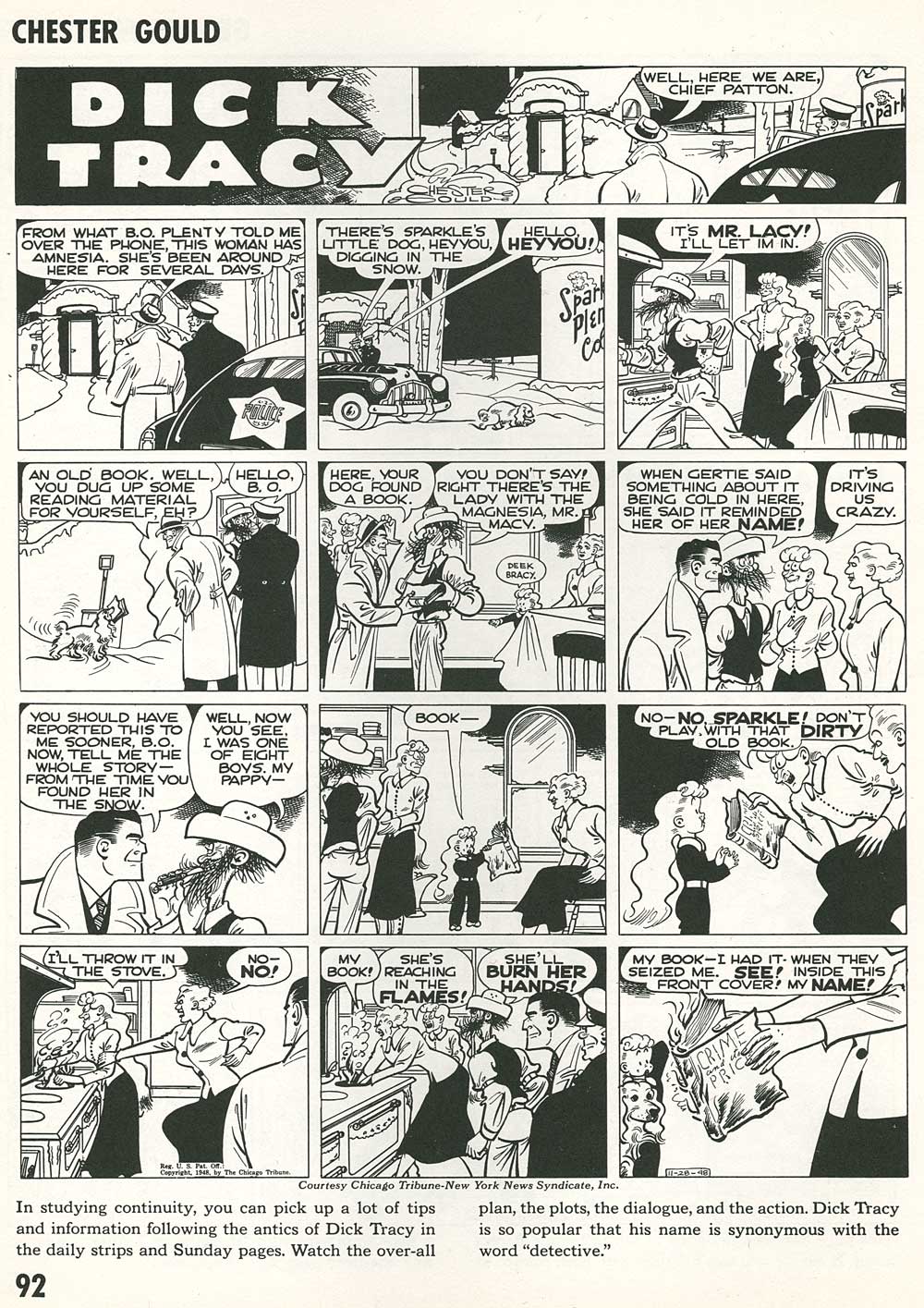
In this section, Gene Byrnes analyzes the style and appeal of various contemporary newspaper comics. The most interesting thing about the strips he features is the high level of draftsmanship, and the diverse variety of styles and approaches to the medium. Newpaper comics were once considered the pinnacle of cartooning… but today, they have plunged to its nadir. Comparing Prince Valiant to Drabble or Bringing Up Father to Cathy is a depressing task. It’s shameful that so great an artform has been allowed to deteriorate so far. I hope there are aspiring cartoonists out there who are willing to take up the difficult task of restoring the comics page to its rightful place in American culture again. This overview is a good place to start investigating the forgotten art of newspaper cartooning.

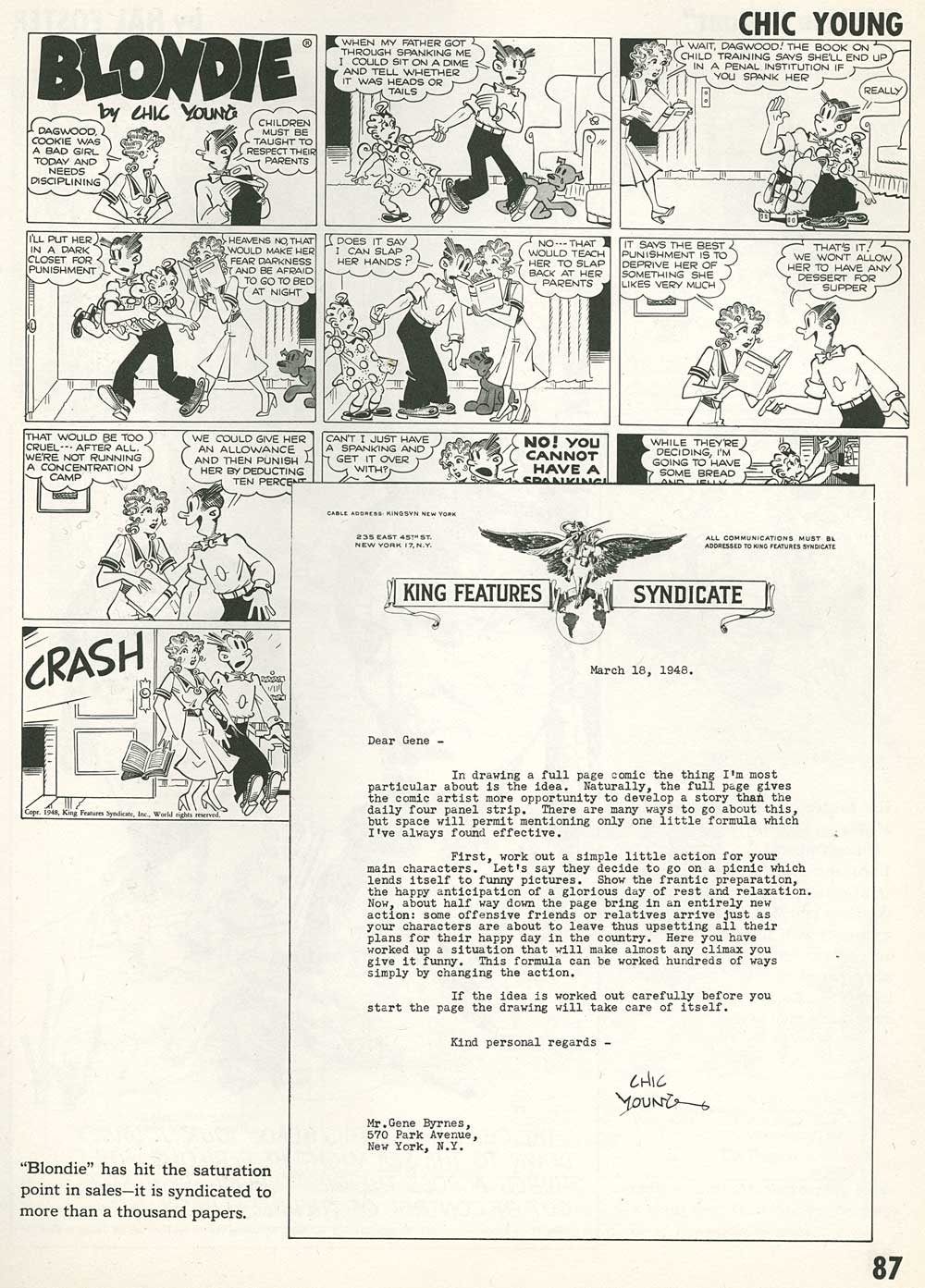
Featuring Chic Young & Hal Foster

 Chic Young was born in 1901 and began his career as a newspaper cartoonist in 1923. His first strip for King Features was Dumb Dora and in 1930, he created the strip, Blondie, one of the longest running newspaper comics of all time. He drew it until he passed away in 1973, and his son, Dean continues to write it to this day. Blondie was hugely successful and spawned film and TV adaptations.

 Hal Foster was raised in the wilds of Halifax, Nova Scotia where he was an avid boater and outdoorsman. He dropped out of school in the ninth grade and began a course of self education studying sketching and anatomy. He set art aside to become a hunting guide and gold prospector, but at age 28, he decided to devote his life to a career in art. He received classical training at the Chicago Art Institute, the National Academy of Design and the Chicago Academy of Fine Arts. In 1927, he was contracted to do a comic strip adaptation of Edgar Rice Burroughs’ Tarzan of the Apes. 1n 1937, Foster introduced an original property, Prince Valiant, the most successful adventure strip of all time. Foster produced the strip for over 40 years, passing away in 1982.


Other artists featured in this section are Jimmy Hatlo, Otto Soglow, George McManus, Chester Gould and Frank King… all worthy of spending a few minutes Googling and reading up on.


The posts I present here at Animation Resources aren’t intended to be the last word on any subject, particularly one as large and multifaceted as the history of cartooning. My hope is that you use these posts as a springboard for your own investigation. Take the names and examples I present here and start searching the web for more… scour bookstores and flea markets… and expand your frame of reference beyond just what is presented here. I wish I had a source of "hot tips" like this when I was first starting out. Take advantage of this great resource we’re building.
Many thanks to Marc Crisafulli and David King for sharing this great book with us.
Stephen Worth
Director
Animation Resources

This posting is part of the online Encyclopedia of Cartooning under the subject heading, Newspaper Comics.
THIS IS JUST THE TIP OF THE ICEBERG!
Animation Resources has been sharing treasures from the Animation Archive with its members for over a decade. Every other month, our members get access to a downloadable Reference Pack, full of information, inspiration and animation. The RefPacks consist of e-books jam packed with high resolution scans of great art, still framable animated films from around the world, documentaries, podcasts, seminars and MORE! The best part is that all of this material has been selected and curated by our Board of professionals to aid you in your self study. Our goal is to help you be a greater artist. Why wouldn’t you want to be a member of a group like that?
Membership comes in three levels. General Members get access to a bi-monthly Reference Pack as well as a Bonus RefPack from past offerings in the in-between months. We offer a discounted Student Membership for full time students and educators. And if you want to try out being a member, there is a Quarterly Membership that runs for three months.
JOIN TODAY!
https://animationresources.org/membership/levels/
FREE SAMPLES!
Not Convinced Yet? Check out this SAMPLE REFERENCE PACK! It will give you a taste of what Animation Resources members get to download every other month! That’s 560 pages of great high resolution images and nearly an hour of rare animation available to everyone to download for FREE! https://animationresources.org/join-us-sample-reference-pack/
 Animation Resources depends on your contributions to support its projects. Even if you can’t afford to join our group right now, please click the button below to donate whatever you can afford using PayPal.







 by
by