Archive for the ‘course’ Category

Monday, September 24th, 2012

Exhibit: Zim’s Cartoons and Caricatures

The Zim Book on Cartooning

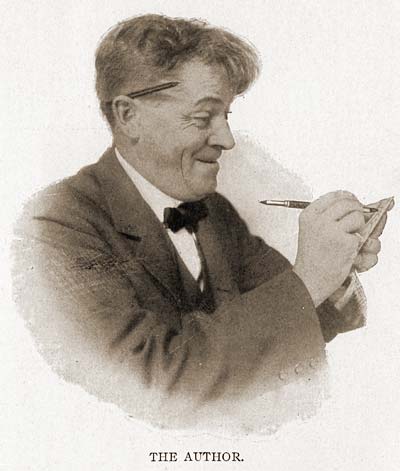
Eugene "Zim" Zimmerman was born in 1862 in Switzerland, and his family emigrated to the United States when he was seven. As a poor immigrant, Zim witnessed the “melting pot” of American culture first hand. His depictions of ethnic minorities were pointed, but honest and well observed. Although he is pretty much forgotten today, he was very well known in his time, and his humor captured the essence of turn-of-the-century America.
The Zim Book on Cartooning

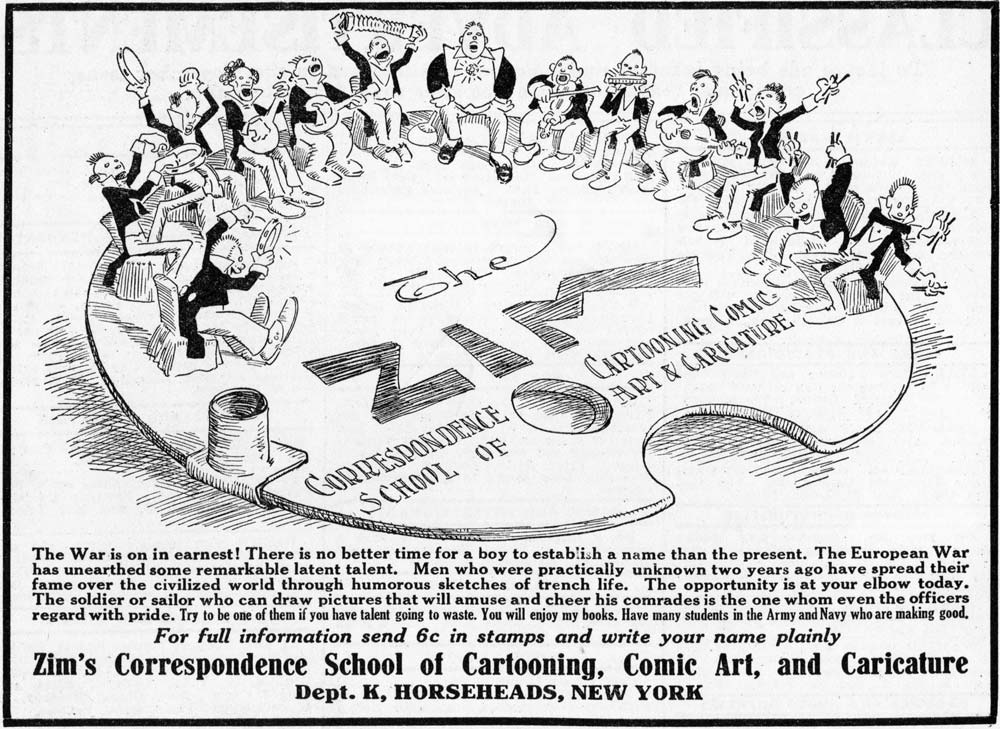
Zim was the founder of the so-called "Grotesque" school of caricature, and was the first caricaturist to incorporate exaggerated cartooniness not only in the faces of his subjects, but in the bodies as well. Zim worked for Puck and Judge, the two top humor magazines of their day. Along with caricatures by George McManus and Frederick Burr Opper, Zim’s caricature of a moon faced grinning kid (an example of which appears on page 3 of this book) was said to be one of the earliest inspirations for Mad magazine’s mascot character, Alfred E. Neuman.
The Zim Book on Cartooning

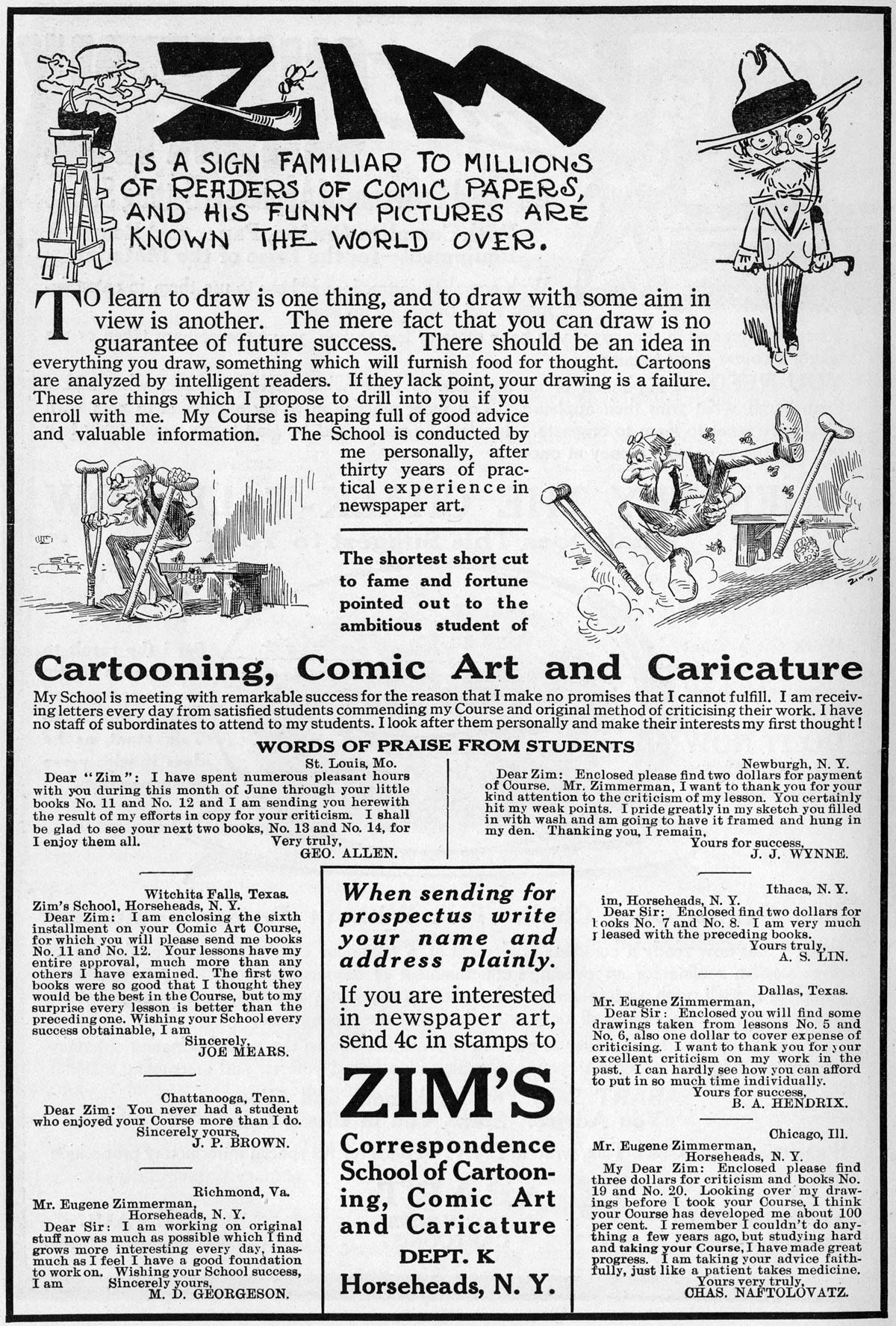
Zim was a prolific artist, with more than 40,000 illustrations published in his lifetime. He retired from Judge in 1897 and founded the American Association of Cartoonists and Caricaturists. He was also a writer and teacher. His columns ran in Cartoons magazine during the early years of the century, as did ads for his correspondence course in cartooning.
The Zim Book on Cartooning

Animation Resources supporter Marc Schirmeister has been searching high and low for a copy of Zim’s early educational materials with no luck. But recently this 1910 book, packed with tips for the aspiring cartoonist, turned up in a used bookstore in Arizona…

Order The Zim Book on Cartooning

It’s worth noting that the price tag on the cover is an important clue to the value of these lessons to contemporary artists. According to the Consumer Price Index, $5 in 1910 is equivalent to $116 today. Five dollars represented a full day’s labor to many of the cartoonists who bought this book. Zim’s name in gold letters on the cover was the selling point that made so many aspiring cartoonists part with the “five plunks (in real Money)” as Zim so colorfully puts it in his introduction.
Order The Zim Book on Cartooning

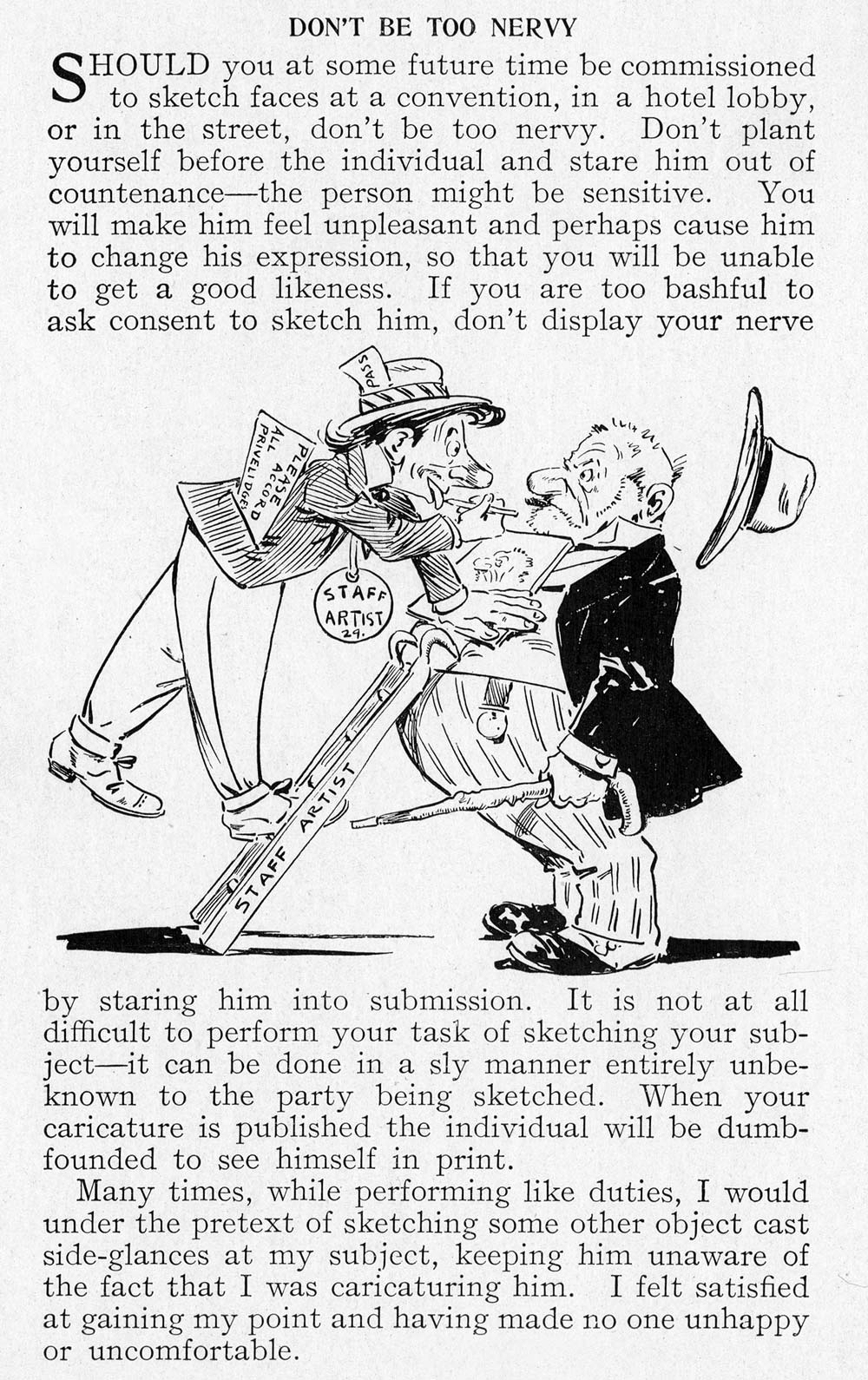
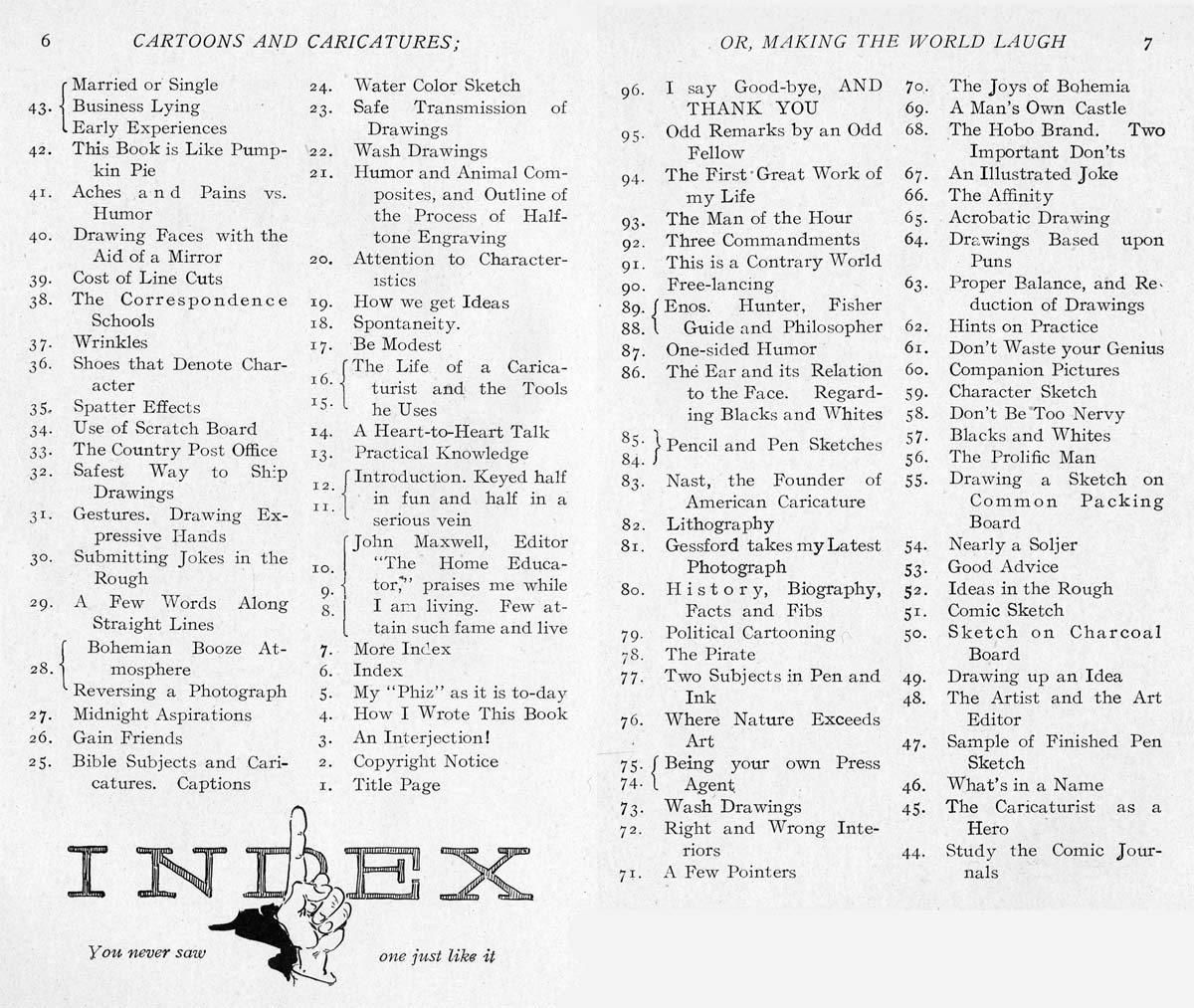
These 100 pages are packed with great cartoons, helpful drawing tips, technical information and business advice for the aspiring cartoonist. Most importantly, Zim passes along his unique philosophy of life, and offers a shining example of how an artistic career as a caricaturist can be incorporated into a person’s lifestyle. At the time this book was written, Zim had thirty years of experience under his belt, and had attained the highest level in his field.

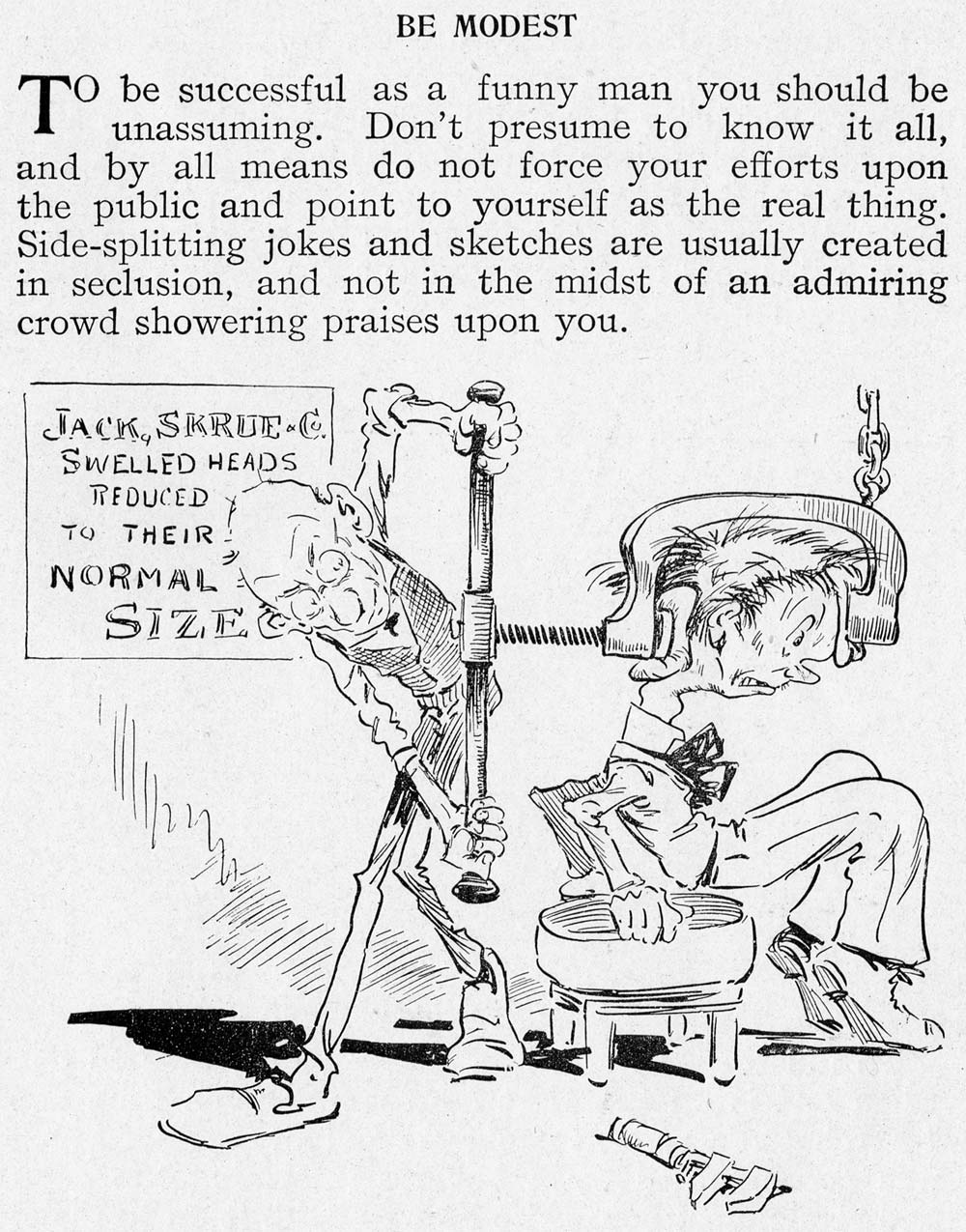
Here are just a few choice snippets from this great book…
The Zim Book on Cartooning
Guess who?

If you are a fan of caricature, check out Will Finn’s latest post and the blog of my favorite caricaturist, Marlo Meekins.

Stephen Worth
Director
Animation Resources
Eugene Zim ZimmermanEugene Zim Zimmerman

This posting is part of a series of articles comprising an online exhibit devoted to Eugene “Zim” Zimmerman.

Thursday, March 29th, 2012

Education: W L Evans Cartooning Course

W L Evans Cartooning Course Brochure

In the teens and twenties, cartooning was a burgeoning field. Every newspaper and magazine employed a crew of artists to fill their pages with topical one panel cartoons and comic strips. Schools were not yet teaching the trade, so several artists took it upon themselves to create mail order cartooning courses.

Here a promotional brochure advertising the W. L. Evans Course in Caricature and Cartooning. Shaped like a miniature artist’s portfolio, and packed with great vintage cartoons and sales information, this brochure outlines why students should take up the noble art of cartooning.

THE W. L. EVANS COURSE (1913)
Promotional Brochure

W L Evans Cartooning Course Brochure

A cartoonist is a power. His audience is the boundless public. He is talked about. His work is admired in society. He meets the most prominent people, and becomes personally acquainted with them. He is a critic of the world’s happenings.

And he receives a large salary for his work.

W L Evans Cartooning Course Brochure

W L Evans Cartooning Course

In 1913, Elzie Segar, aged 18 began a correspondence course headed up by the Cleveland Leader cartoonist, W. L. Evans. The course cost a dollar per lesson and it took Segar a year and a half to complete the 20 lessons. By 1917, he had landed a job penning the "Charlie Chaplin Comic Capers" and "Looping the Loop" strips. In the ad above, Segar is quoted as saying, "I’m getting along fine, and it’s all your fault."

W L Evans Cartooning CourseW L Evans Cartooning CourseDecades later, Segar made mention of his early education in his strip, Thimble Theater. In 1934, his character, Sappo took the W. L. Evans Cartooning Course and delighted readers with cartoon drawings made from letters of the alphabet. Segar wasn’t the only cartoonist who got his start with this course. Chester Gould of Dick Tracy fame was a graduate of the W. L. Evans course, as was Dennis the Menace creator, Hank Ketcham.

Here are the first two lessons that got these great cartoonists started on their career path. If there is interest, I will post more of this landmark course.

W L Evans Cartooning Course
W L Evans Cartooning CourseW L Evans Cartooning Course

THE PLATES
W L Evans Cartooning Course

THE W. L. EVANS COURSE (1916)
Lesson Two

W L Evans Cartooning Course Lesson Two
W L Evans Cartooning Course Lesson TwoW L Evans Cartooning Course Lesson Two
W L Evans Cartooning Course Lesson Two

STUDENTS: Print this stuff out and USE IT!

Stephen Worth
Director
Animation Resources

INSTRUCTIONINSTRUCTION

This posting is part of an online series of articles dealing with Instruction.

Friday, September 16th, 2011

Instruction: $100k Animation Drawing Course 10 – Models / Substance And Style

NOTE: Do not move on to this lesson unless you have completed Lesson Nine

LESSON TEN

Read John Kricfalusi’s introduction to this lesson at…

Animation School Lesson 10A: Model Sheets

Animation School Lesson 10B: Substance and Style

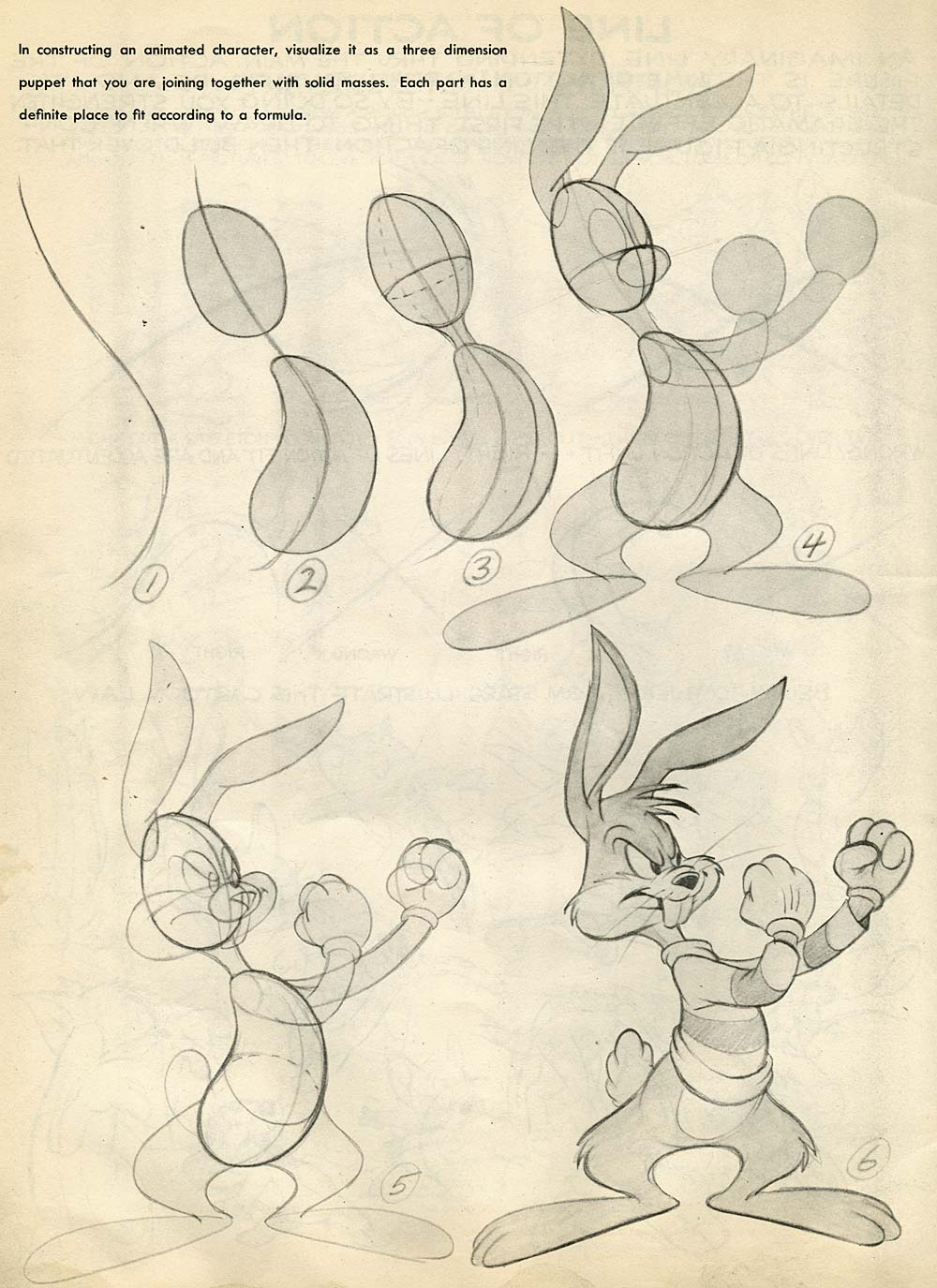
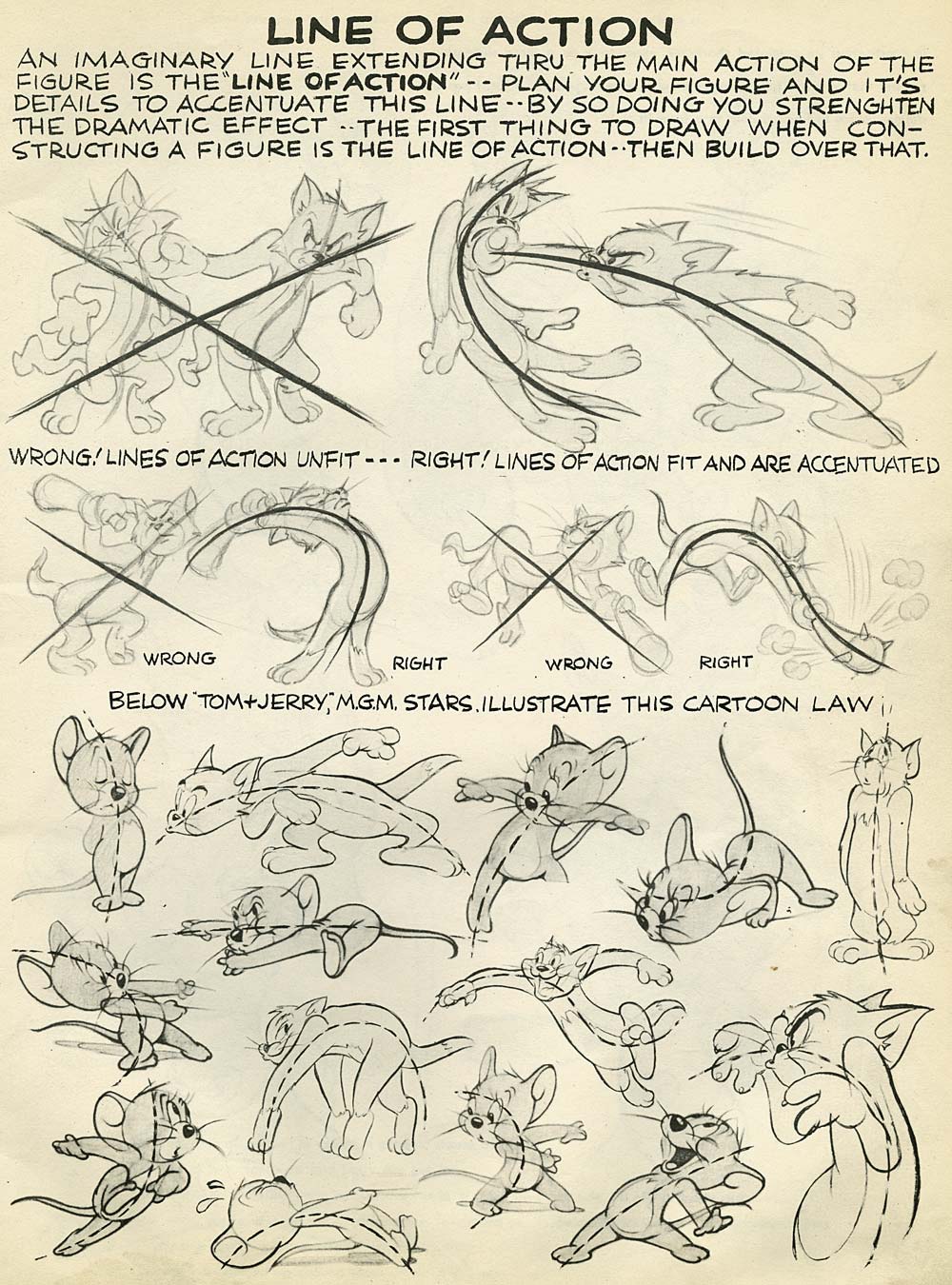
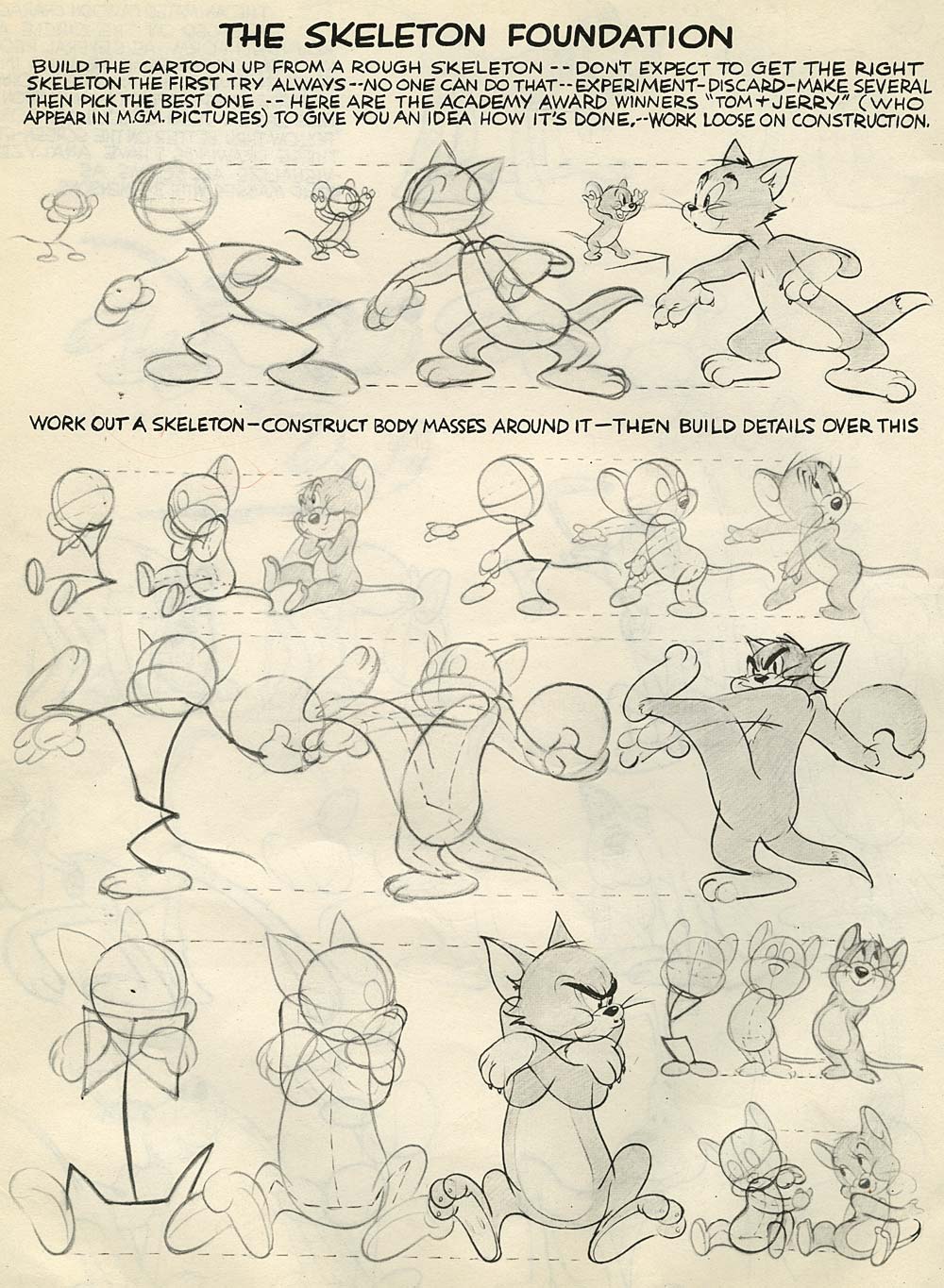
Print out and refer to these pages from the Preston Blair book, keeping in mind the following concepts…

CONTSTRUCTION

Preston Blair

LINE OF ACTION
Preston Blair

FLUID POSES
Preston Blair

CLEAR SILHOUETTES – NEGATIVE SHAPES
Preston Blair

APPEAL & CUTENESS
Preston Blair

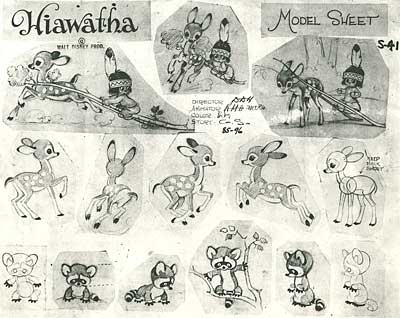
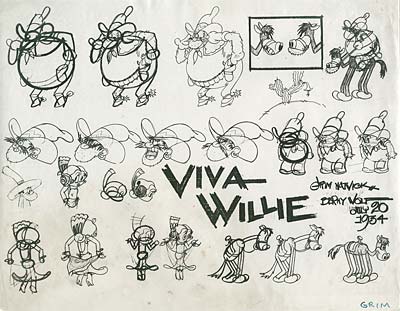
And print out and draw from the model sheets on these pages that John uses as examples on his blog…

Reluctant Dragon Model Sheets

Model Sheets by Hurter and Thorson

Mice and Duck Model Sheets

More Disney Model Sheets

Terrytoons Model Sheets

Iwerks Model Sheets
Berny Wolf’s Iwerks Model Sheets

When you are satisfied with your drawings, post them on your blog.

PLEASE NOTE: The procedure for getting your blog listed on this page has changed. Due to the overwhelming response to this course, I don’t have time to add each student’s link by hand. Your assignment will be automatically linked at the bottom of this page if you…

  • Click on “links to this post” at the bottom of this posting.
  • Click on “create a link”.
  • Copy and paste the HTML code into your completed assignment for lesson number 9.
  • Publish your post.

Your page will automatically be added to the list of links.

Do not delete or edit your posts or change the title after you have posted them. You will need them later to chart your progress.

Stephen Worth
Director
Animation Resources

INSTRUCTIONINSTRUCTION

This posting is part of an online series of articles dealing with Instruction.